Automated archive / Apex Legends
Overclocked Meta, Deathbox Respawns, and Xbox Instability in Apex Legends
Overclocked is pushing Apex Legends’ systems to the edge, with Axle, Deathbox Respawns, and ranked map rotations reshaping the meta even as Xbox stability wobbles. This week’s sector intel breaks down how Respawn is balancing design ambition against live-ops triage.
AI-generated summary. This archive article does not have a current recorded source check. Check linked sources before relying on details. Editorial policy
Strategic Overview
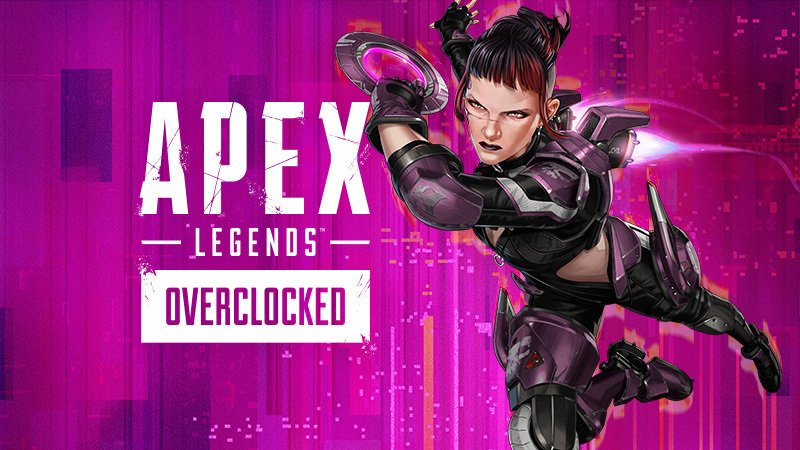
Apex Legends’ Season 29 "Overclocked" is less a routine patch and more a full-system overclock on Respawn’s live-service machine. The introduction of Axle, sweeping survivability changes like Deathbox Respawns, and calibrated buffs for Conduit and Vantage are reshaping the live meta at the same time that engineering teams are firefighting Xbox-specific crashes and voice comms outages. For anyone tracking #gamedev and live-ops strategy, this week is a clean case study in how a mature service shooter juggles feature velocity against platform stability.
Legend Design: Axle and the High-Velocity Meta
Overclocked’s headline is Axle, a combat racer legend who effectively weaponizes movement. Her kit — amplified slide control via Drift, on-demand acceleration corridors via Nitro Gates, and a hunting drone in Kickstart — is a direct escalation of Apex Legends’ long-term bet on movement as power budget.
In #gamedev terms, Axle is a deliberate attempt to destabilize entrenched engagement patterns. By giving squads a toolset that chains mobility, tracking, and pressure, Respawn is nudging the time-to-third-party window even tighter. This is less about raw damage and more about macro tempo: how fast a team can rotate, re-engage, and convert weak opponents.
Balancing that, Deathbox Respawns remove one of the most punishing friction points in the BR loop: the beacon hunt. Allowing on-site revives straight from a fallen ally’s deathbox keeps squads in the fight and compresses downtime between wipes. It also changes risk calculus around thirsting — if you can’t confirm eliminations quickly, you’re inviting an almost immediate counter-push.
Balance Recalibration: Conduit, Vantage, and Ash
The Overclocked patch notes read like a targeted correction pass on under-realized fantasy.
Conduit: From Backline Battery to Frontline Engine
Conduit’s redesign leans into her core identity as a sustain anchor. Dual Radiant Transfer charges dramatically increase her flexibility in redistributing shields mid-fight, while upgraded Energy Barricade jammers and new amplification tiers make her barriers more than a stalling tactic. From a design perspective, Respawn is clearly trying to justify her pick rate in higher-skill lobbies by making her shielding decisions more skill-expressive and timing-dependent.
Vantage: Locking in Recon Supremacy
Vantage’s buff suite is about fluidity and uptime. A 2x canted sight on Sniper’s Mark and smoother Echo Relocation address long-standing friction in her kit, while passive ultimate charge during Spotter’s Scope use rewards players who are constantly scanning and feeding information. The improved team tracking pushes her further into a true recon role, reinforcing a triangle of information legends (Bloodhound, Seer, Vantage) with distinct engagement ranges.
Ash: Keeping Pace with Overclocked Velocity
While the brief notes Ash as part of the tuning pass, the key takeaway is meta positioning: as Axle raises the movement ceiling, Ash’s kit needs to remain relevant in a world where rotations and chases are faster and more chaotic. Expect her to be tuned as a surgical counterpoint to Axle’s aggression, maintaining value through hard punish windows and execution pressure.
Ranked Systems: 4.5-Hour Map Rotations
The global rollout of 4.5-hour ranked map rotations is a systems-level response to player fatigue. After a successful late-Season 28 trial in East Asia, Respawn is standardizing shorter map windows to mitigate the psychological drag of being stuck on a disliked map for an entire play session.
From a #gamedev and live-ops perspective, this is a strong example of data-driven iteration: test in a single region, monitor engagement and retention, then scale globally. The stated goal is to continue micro-variations in rotation duration, which suggests Respawn is still searching for the precise cadence that maximizes variety without fragmenting player mental models of drop spots and macro routes.
Solo-Queue Recalibration: Skill-Based Lobby Offsets
One of the more quietly significant decisions this week is the commitment to reroute solo-queue players into lobbies with slightly lower average skill in both ranked and unranked later this split. This is an explicit acknowledgment of a structural imbalance: coordinated three-stacks have a baked-in advantage that pure MMR can’t fully compensate for.
Rather than dismantling trio-based design, Respawn is experimenting with MMR offsets as a pressure valve. For #indiegame and systems designers watching from the outside, this is a notable design pattern: instead of separate solo queues (which fragment matchmaking), you tilt the playing field via subtle MMR adjustments to protect solo experience without blowing up queue times.
Platform Stability: Xbox Under the Microscope
On the engineering front, this week has been rough on Xbox:
- Commerce issues are blocking in-client purchases of the Ultimate+ Battle Pass tier, forcing players to route through the Microsoft Store as a workaround.
- Crash events specifically targeting Xbox Series hardware have been isolated, with a hotfix in the pipeline.
- Voice comms on Xbox are currently fully muted while engineers dissect crash telemetry — and critically, cross-platform audio is disabled as part of the containment strategy.
This is a textbook example of live-ops triage: prioritize stability and data collection over short-term player comfort. Disabling voice across platforms is a blunt but clear signal that Respawn is willing to temporarily sacrifice social cohesion to protect session integrity and gather clean crash data.
Parallel to this, there’s an ongoing investigation into FPS degradation tied to specific CPU profiles. While details are sparse, calling out CPU-linked performance publicly is a subtle but important move: it frames the issue as a targeted optimization problem rather than a blanket performance regression.
Monetization & EA Play: Battle Pass for the Publisher
The EA Play Arsenal Sync for Apex Legends reframes subscription value in a way that’s increasingly common across AAA ecosystems. Monthly weapon charms for Apex, rotating rewards across EA’s broader catalog, up to 10-hour trials on new releases, and a standing 10% discount on digital purchases collectively function as a meta-battle pass for the entire publisher.
For players, the Apex Legends weapon charm drops are a relatively low-friction cosmetic drip that keeps the game in rotation even when they’re exploring other EA titles. For EA, it’s a retention loop that bridges franchises and smooths revenue volatility between major seasons.
Cosmetic Pipeline: Overclocked Premium Battle Pass
On the cosmetics front, the Overclocked Premium Battle Pass Split 1 leans into a prototype, high-tech aesthetic: Legendary skins for Conduit and Crypto, plus the "Energy Efficient" Nemesis skin, reinforce the season’s overclocked, hardware-pushing theme. This is more than just visual flavor; it’s a cohesive narrative wrapper that ties legend identity, weapon skins, and systemic changes (like Deathbox Respawns and Axle’s high-speed kit) into a unified seasonal story.
Watch: Transmitting Gameplay footage from the field: Apex Legends Overclocked Trailer
Exploit Management: Axle’s Infinite Slide Neutralized
The rapid neutralization of Axle’s infinite slide exploit is another signal of Respawn’s current live-ops posture. Movement exploits in Apex Legends can snowball quickly into TikTok- and YouTube-driven meta shifts, especially when they’re visually flashy. Closing this down early protects competitive integrity and prevents the ranked environment from being warped around a single bugged interaction.
Sector Outlook: What to Watch Next Week
Looking ahead, three vectors are worth monitoring:
- Meta Stabilization: How quickly Axle’s pick rate normalizes, and whether Deathbox Respawns push overall kill counts and match pacing upward.
- Solo-Queue Health: Player sentiment once the solo MMR offset system goes live, especially at higher ranks where coordinated stacks are most dominant.
- Xbox Recovery Curve: Time-to-fix on voice comms and crashes will be a key indicator of how deeply the underlying tech debt runs.
For now, Apex Legends remains a prime example of a live-service shooter pushing aggressively on new design while still grappling with the messy realities of multi-platform support and high-frequency updates.
Sources and corrections
This archive entry does not have a verified article-source list. Images and video embeds alone are not evidence for every claim.
Found an error? Request a correction. Include the passage and a supporting source.
Your games, in one place
Keep up with Apex Legends
Follow this game to collect its posts in your personal feed. Come back to see what you missed.
More to read about Apex Legends
- Source-checked briefApex Legends update fixes Fighter Mode and Wildcard KO issues
A September 23 Apex Legends update addresses a Firing Range crash, a daily-challenge display problem, and weapon issues in Fighter Mode and Wildcard KO. Fixed a crash tied to using Fighter...
- Source-checked briefApex Legends Street Fighter 6 event runs to October 13
Apex Legends’ Street Fighter 6 crossover runs from September 22 through October 13, 2026. The event adds a Wildcard takeover with third-person Fighter Form and a Street Fighter-themed Olympus...
- Source-checked briefApex Legends update targets Street Fighter 6 event issues
Apex Legends players having problems with the new Street Fighter 6 Wildcard event are advised to download the September 22 update. The announcement says fully closing the game before updating...