Sector Intelligence Report: WWE 2K26 Pushes Toward Pure Ring Psychology and Spectacle Engineering
Back to Reports
Sector Intel
March 1, 2026

Sector Intelligence Report: WWE 2K26 Pushes Toward Pure Ring Psychology and Spectacle Engineering

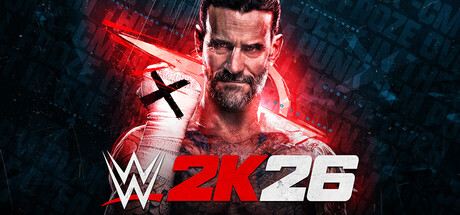
WWE 2K26 key art – next-gen ringside ops online

// Sector Intel: WWE 2K26 key art – next-gen ringside ops online

Sector Overview: WWE 2K26 Locks In on Simulation-First Ring Control

The last seven days of WWE 2K26 intel paint a clear picture: this year’s build is less about chaotic button-mashing and more about methodical ring psychology. Hands-on previews describe an engine that punishes sloppy inputs, rewards timing, and leans hard into momentum-driven grappling. For #gamedev watchers, that signals a deliberate shift in systemic design—away from arcade volatility and toward a more simulation-heavy wrestling sandbox.
Across Creator Fest sessions, long-form gameplay drops, and Superstar-led breakdowns, 2K is effectively running an open systems audit in public. From stamina tuning and collision reads to submission logic and crowd-response simulation, WWE 2K26 is being framed as a live-fire test of a new combat firmware rather than a routine annual patch.

Combat Firmware: Grappling Logic, Stamina, and Ring Psychology

Recent 40-minute gameplay uplinks showcase three full matches that highlight the core design thesis: clean chaining, sharp collision, and earned high spots. Animations read less like canned sequences and more like modular states that transition based on timing windows and positional context.
Hands-on reports flag three key vectors:

1. Momentum-Driven Offense

The new timing windows and stamina gates mean sustained offense has to be built, not spammed. Missed strikes and ill-timed grapples now incur meaningful risk, forcing players to think in terms of phases—probing, momentum swing, and payoff—mirroring real-world ring pacing.

2. Collision & Limb Targeting

Developer commentary on the I Quit Match highlights cleaner collision around ringside props and more granular limb damage feedback. From a systems-design perspective, this suggests a more deterministic damage model: weapons and contextual attacks are being tuned to communicate cause-and-effect clearly, a crucial foundation for competitive balance and long-term retention.

3. Submission & Surrender Logic

The I Quit Match mode is doubling as a stress test for WWE 2K26’s revamped submission stack. Referee-driven voice-over surrender cues and revised stamina tuning work together to sell the drama of a slow, inevitable tap-out. This is spectacle built on top of readable mechanics—exactly the blend a modern wrestling sim needs.

Match-Type Telemetry: Inferno and I Quit as Systems Showcases

The introduction of Inferno and a more fully realized I Quit match isn’t just a content beat; it’s a design statement.

Inferno Match: Environmental Pressure as a Mechanic

The Inferno Match footage confirms fire zones functioning as both hard hazards and soft positional pressure. Stamina drain and ring positioning become intertwined: pushing your opponent toward the flames is as much about spacing control as it is about raw damage. For designers, this is an example of environmental rules reinforcing the core combat loop rather than sitting on top of it as a novelty.

I Quit Match: Narrative-Driven Systems

The I Quit Match leans into referee VO, contextual weapons, and limb-specific damage to create a narrative arc inside the ruleset. The match type is effectively a sandbox for surrender storytelling—where the UI, audio, and stamina systems all conspire to make the final "I quit" feel mechanically inevitable and emotionally earned.

Modes & Progression: MyFaction and The Island as Retention Engines

Over 25 minutes of footage from MyFaction and The Island modes reveals 2K’s live-service and progression calculus.

MyFaction: Squad-Building Ops Hub

MyFaction continues to operate as WWE 2K26’s card- and squad-building backbone. The latest intel frames it as a tactical hub: players assemble rosters, optimize synergies, and push through curated match ladders. For #indiegame and #gamedev teams studying retention loops, MyFaction is a case study in blending collectible economies with authored scenarios that showcase the engine’s best angles.

The Island: Survival Loop in a Wrestling Shell

The Island is the most intriguing new theater—a contained environment tuned for escalating encounters and survival-tier pacing. Telemetry suggests:
  • Escalation-based encounters that ramp difficulty and spectacle.
  • Location-specific theatrics and presentation layers tuned for broadcast-style drama.
  • A loop that encourages repeated runs, making it an ideal testbed for tuning rewards, drop rates, and experimental rule-sets.
This mode positions WWE 2K26 not just as a sim, but as a systems playground where designers can iterate on encounter design without breaking the core competitive meta.
Joe Hendry entrance tech and broadcast-grade camera scripting in WWE 2K26

// Sector Intel: Joe Hendry entrance tech and broadcast-grade camera scripting in WWE 2K26

Presentation Stack: Entrances, Cameras, and Crowd Simulation

The Joe Hendry entrance reveal serves as a microcosm of WWE 2K26’s presentation priorities. Motion-captured theatrics, synchronized crowd response, and broadcast-style camera scripting all indicate a focus on superstar-specific polish.
Creator Fest sessions and the Xbox Podcast feed both emphasize broadcast-grade cameras and refined animations tuned for next-gen hardware. The goal is clear: make every entrance and signature spot feel like a televised moment, not a reused animation bank.
Crowd-response simulation is a particularly important lever. If the engine can dynamically react to move variety, match pacing, and comeback swings, it becomes a powerful feedback loop—teaching players what "good" ring psychology looks like via crowd heat.

CM Punk’s Showcase Scrutiny: A Veteran’s Calibration Pass

CM Punk’s live tactical review of early Showcase gameplay is more than marketing. Treat it as a calibration pass from a veteran operator:
  • Move fidelity: Does the digital execution match real-world timing and impact?
  • Ring psychology: Are transitions, comebacks, and false finishes structured like an actual Punk match?
  • Crowd and camera sync: Do the presentation layers spike at the right narrative beats?
For the dev team, this kind of high-profile feedback loop is invaluable. It effectively turns Showcase into a co-authored narrative system—where real-world performers validate not just likeness, but the logic of how their matches unfold.

Dev-Facing Takeaways

From a sector-intel standpoint, WWE 2K26’s last-week telemetry suggests:
  • A simulation-heavy pivot in core combat, with timing and stamina as primary levers.
  • Match types (Inferno, I Quit) used as mechanical showcases, not one-off novelties.
  • Modes like MyFaction and The Island positioned as retention and experimentation labs.
  • A presentation stack that treats entrances and cameras as systems, not just cosmetics.
  • Superstar-driven feedback (CM Punk, Creator Fest) integrated as live design validation.
For studios tracking wwe 2k26 as a reference point, the message is clear: the future of licensed sports-entertainment sims lies at the intersection of systemic rigor, broadcast-level spectacle, and authentic performer collaboration.

Visual Intel Captured

Intel 1
Intel 3
Intel 4
Intel 7
Intel 9
Intel 13
Intel 18
Subject Sector

WWE 2K26

Visual Concepts

Step into the adrenaline-fueled world of WWE 2K26, where the excitement of 'co-op extraction shooters' meets the visual splendor of Unreal Engine 5. With CM Punk's legendary 'Best In The World' Showcase, wrestle through iconic moments and relive the grandeur of the wrestling universe. Dive into a robust tactical gameplay loop that challenges you to be the strongest digital titan amid a high-octane cybernetic coliseum where every decision counts.

Engage Game Page
Keywords Cache
wwe 2k26
WWE 2K26 gameplay
WWE 2K26 Inferno match
WWE 2K26 I Quit match
WWE 2K26 The Island mode
WWE 2K26 MyFaction
wrestling game development update
sports game ring psychology
broadcast presentation in sports games
#gamedev
#indiegame