Automated archive / WWE 2K26
WWE 2K26 Tightens Its Live-Service Grip With Smarter Stories, Sharper Systems
WWE 2K26’s latest intel drop focuses on systemic refinement: ethical MyFaction monetization, a more authored-yet-branching MyRISE, and a Universe mode that treats you like a true showrunner. For developers, it’s becoming a live case study in how to evolve a yearly sports-entertainment franchise without detonating...
AI-generated summary. This archive article does not have a current recorded source check. Check linked sources before relying on details. Editorial policy
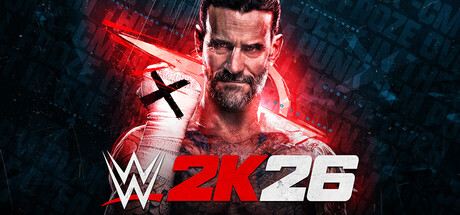
Sector Overview: WWE 2K26 Enters Systems Consolidation Phase
WWE 2K26’s latest intel drop shows a team less interested in surface-level spectacle and more focused on systemic control: monetization guardrails in MyFaction, authored-yet-branching narrative flows in MyRISE, and a Universe/Creations stack tuned for long-horizon simulation. For #gamedev teams watching how a major sports-entertainment franchise iterates under live-service pressure, WWE 2K26 is quietly becoming a case study in risk-managed evolution rather than wholesale reinvention.
Across the last week, 2K’s messaging cadence has been deliberate: one beat on economy and trust, one on narrative tooling, one on sandbox control. The subtext is clear—WWE 2K26 is trying to keep its hardcore sim audience while still operating inside a modern engagement and monetization framework.
MyFaction: Monetization Matrix Under Surgical Review
The most sensitive node in WWE 2K26’s design stack is MyFaction, and the latest briefing openly acknowledges that. Dev leads are dissecting mixed-gender match rules, pack economy, and the hard line on microtransactions—specifically, how far they can be pushed before player trust fractures.
Instead of doubling down on pure spend incentives, the team is tuning:
- Progression curves – Slower, grind-heavy ladders are being rebalanced to keep free and low-spend players in the loop longer.
- Reward structures – More emphasis on play-driven unlocks, not just RNG from packs, to stabilize perceived fairness.
- Matchmaking & engagement loops – Systems are being recalibrated so that long-term engagement isn’t solely tethered to wallet depth.
For designers and producers, this is a live test of ethical monetization at AAA scale. WWE 2K26 is still a commercial product with card packs and cosmetics, but the framing has shifted from “maximize ARPU” to “avoid a trust collapse event.” If they land this balance, it becomes a reference point for any #indiegame or AAA team trying to keep a card-based mode viable without burning their community.
MyRISE: From Season Simulator to Story Ops Center
Watch: Transmitting Gameplay footage from the field: WWE 2K26 MyRISE campaign slice
The first 23-minute slice of WWE 2K26’s MyRISE reveals a mode repositioned as a “story ops center” rather than a loose season simulator. The design philosophy here is hybridization: a more authored narrative funnel fused with persistent, branching career logic.
Key structural shifts:
1. Authored Narrative Funnel
The early game is clearly more directed. Presentation, camera work, and pacing are tuned to feel like a curated episode of weekly TV. This gives the team more control over:
- Onboarding for new players.
- Tone-setting for your created superstar’s first big beats.
- Ensuring early choices feel weighty and legible.
2. Branching Choice-Impact Matrices
Under the hood, the devs highlight revamped choice-impact matrices—essentially, cleaner mapping between player decisions and career outcomes. For #gamedev narrative designers, this is about:
- Reducing “fake choice” moments where branches converge too quickly.
- Making rivalry paths, alliances, and heel/face dynamics persist longer.
- Ensuring that narrative variables feed back into match cards and presentation logic.
3. Weekly-Show Cadence Tech
The presentation stack is tuned for a weekly-show cadence, which matters for pacing and retention. The goal is to mimic the emotional rhythm of televised wrestling: promos, angles, blow-off matches, and cool-downs. Technically, that means:
- Tighter sequencing between cutscenes and matches.
- Rivalry scripting that escalates over multiple weeks.
- Less disjointed hopping between storylines.
For developers, MyRISE in WWE 2K26 is an example of how to reconcile authored content with systemic branching without losing clarity for the player.
Universe & Creations: Procedural Federation, Player as Booker
Watch: Transmitting Gameplay footage from the field: WWE 2K26 Universe & Creations systems briefing
The Universe & Creations briefing positions WWE 2K26 as a federation simulator where the player acts more like a showrunner than a casual fan.
Deeper Booking Logic
The booking AI is described as more reactive and granular. Every variable—who you push, who you bury, where you place a feud on the card—ripples through a season’s logic. For systems designers, this hints at:
- Expanded state tracking for rivalries, alliances, and title scenes.
- Card-building algorithms that respond to both player input and simulated audience interest.
- Longer-term arcs where booking decisions have cumulative consequences.
Granular Rivalry Scripting
Rivalries now feel more like configurable systems than pre-baked templates. That suggests:
- Parameterized feuds (intensity, duration, stipulations, participants).
- Event triggers that unlock specific cutscenes or match types based on feud state.
- The ability to orchestrate multi-person angles that evolve dynamically.
Upgraded Creation Pipeline
The Creations suite—arenas, superstars, shows—is being treated as a content pipeline, not just a toy box. The key angle for #gamedev and #indiegame creators:
- Better integration of custom content into Universe logic.
- More robust tagging and metadata so the game can “understand” your creations.
- A stronger link between user-generated content and emergent season narratives.
This is less about isolated customization and more about feeding a simulation that interprets and reacts to what you build.
Strategic Takeaways for Developers
For teams tracking WWE 2K26 as a live-service and systems design reference:
- Monetization: MyFaction is a live test of how far you can push card-based economies without detonating trust. Watch how progression and rewards evolve post-launch.
- Narrative Systems: MyRISE illustrates a middle path between linear story modes and fully emergent career sims—especially relevant for sports and combat-focused titles.
- Simulation & UGC: Universe & Creations show how user content can be elevated from cosmetic flair to a core driver of systemic storytelling.
WWE 2K26 isn’t tearing down the ring and rebuilding from scratch. Instead, it’s tightening bolts on the pillars that keep a yearly sports-entertainment title standing: economy integrity, narrative coherence, and simulation depth.
Closing Scan: WWE 2K26’s Position in the 2026 Cycle
As more gameplay and system breakdowns surface, WWE 2K26 is positioning itself as a stability-first entry with targeted overhauls where the friction was highest. For players, that means a safer, more legible experience. For developers, it’s a live lab in how to iterate responsibly on a franchise that can’t afford a catastrophic misstep.
In a market where yearly sports titles risk stagnation, WWE 2K26’s approach—measured systemic refinement over flashy reinvention—might be the most radical move of all.
Sources and corrections
This archive entry does not have a verified article-source list. Images and video embeds alone are not evidence for every claim.
Found an error? Request a correction. Include the passage and a supporting source.
Your games, in one place
Keep up with WWE 2K26
Follow this game to collect its posts in your personal feed. Come back to see what you missed.