Automated archive / Tom Clancy’s Rainbow Six Siege
Solid Snake Breaches Siege As Ubisoft Charts Final Mission for Year 11
Solid Snake has breached Rainbow Six Siege just as Ubisoft confirms Year 11 as the game’s final operational cycle and Xbox Game Pass spins up the first official 1v1 circuit. This week’s intel shows a tactical FPS giant turning its endgame into a live-service design masterclass.
AI-generated summary. This archive article does not have a current recorded source check. Check linked sources before relying on details. Editorial policy
Strategic Overview
Tom Clancy’s Rainbow Six Siege just delivered one of its densest intel drops in years: a headline crossover with Solid Snake, confirmation that Year 11 will be the game’s final operational cycle, and a new officially backed 1v1 competitive circuit via Xbox Game Pass. For a live service that has defined tactical FPS design for a decade, this week’s signals read like a controlled demolition—carefully staged, tightly messaged, and aimed at locking in Siege’s legacy before the servers eventually dim.
From a #gamedev perspective, Ubisoft is effectively running a live case study in sunsetting a flagship PvP title while still shipping meaningful content, meta shifts, and crossover experiments that feel less like a farewell tour and more like a last big push. For #indiegame teams studying long-tail support, Siege’s Year 11 arc is a masterclass in pacing, communication, and player retention under an announced end-of-life horizon.
Snake in the System: Metal Gear Solid Crossover
The Metal Gear Solid Update formally deploys Solid Snake into Rainbow Six Siege as an elite Operator skin, fusing stealth iconography with Siege’s high‑fidelity breach-and-clear sandbox. The reveal and gameplay transmissions emphasize three key design levers:
1. Stealth Fantasy in a Non-Stealth Engine
Siege has never been a pure stealth game, but its soundscape, destructible environments, and gadget interplay already support low-visibility play. Integrating Snake as an elite skin—rather than a standalone, bespoke Operator—lets Ubisoft inject Metal Gear flavor without destabilizing the established operator ecosystem.
Codec-inspired cosmetics, FOXHOUND-flavored visual language, and animation tweaks give players a stealth-ops fantasy layer while keeping the underlying hitboxes, gadgets, and timings consistent. This is a smart #gamedev move: crossover resonance without balance chaos.
2. Meta Perception vs. Meta Reality
The activity feed frames Snake’s arrival as a potential meta disruptor: “new infiltration vectors” and “intel disruption opportunities.” In practice, because this is a skin-based deployment, the competitive meta won’t meaningfully shift on a mechanical level. The real impact is psychological and experiential:
- Readability pressure: High-profile skins can alter how quickly players visually parse threats, especially in tense CQB environments.
- Engagement spikes: Expect a short-term uptick in pick rates for the Operators who receive Snake-themed treatments, skewing play patterns in casual and ranked.
For live-service designers—especially #indiegame teams experimenting with cosmetic crossovers—this is a reminder that visual content can move player behavior even when it doesn’t touch stats.
3. Cross-Brand Live Ops as Retention Tool
Dropping a franchise icon like Solid Snake during a declared final year is strategically precise. It signals that Ubisoft intends to keep Siege culturally relevant up to the finish line, using cross-IP events to maintain media oxygen and social chatter while the roadmap winds down.
Final Mission: Year 11 as Controlled Sunset
The “Final Mission” Year 11 cinematic finally confirms what the community has speculated on for years: Rainbow Six Siege is entering its terminal operational cycle. Narratively, the trailer leans into veteran Operators confronting obsolescence, rivalry, and the looming shutdown of the program. Strategically, it accomplishes three things:
1. Framing the Endgame
By labeling Year 11 as the last, Ubisoft moves Siege from an open-ended live service into a finite narrative arc. That framing lets the team:
- Build toward thematic closure across seasons.
- Justify bolder balance experiments without worrying about ultra-long-term stability.
- Create event milestones (final Invitational-era metas, last new content drops) that are inherently newsworthy.
For game studios, this is a blueprint on how to sunset a PvP title without simply “turning off the lights.” The end becomes a feature, not an afterthought.
2. Maximizing Late-Stage Content Impact
The briefing suggests “one last surge of content, balancing, and narrative closure.” Expect:
- Aggressive balance passes to keep the final-year meta fresh.
- High-impact cosmetics and crossovers (Snake is likely not the last big swing).
- Possibly experimental modes or limited-time events that would be too risky in a growth phase.
This is the rare moment where a mature competitive title can take creative risks because the runway is known and finite. It’s a powerful sandbox for #gamedev experimentation under live-fire conditions.
3. Legacy Positioning
By clearly messaging “legacy status,” Ubisoft is preparing Siege to live on as a reference point in competitive FPS design. For developers, Siege will remain a go-to case study in:
- Destruction-driven level design.
- Asymmetric operator balance.
- Audio-first information warfare.
How Year 11 is handled will heavily influence how future tactical shooters—and even smaller #indiegame projects—think about lifespan, sunset comms, and community management.
Competitive Field Notes: Smoke, 1v1s, and Meta Telemetry
The Rainbow Six Invitational Finals data flag Smoke as the MVP defender at the highest tier. His gas canisters are dictating plant timings, forcing repositioning, and punishing late executes. In a final-year context, that dominance is more than just a pro-play anecdote—it’s a live benchmark for where defensive control currently sits in Siege’s tactical spectrum.
For designers, Smoke’s Invitational performance raises questions:
- How much area denial is “healthy” in a game so dependent on tight timing windows?
- Where is the line between strategic delay and oppressive stall?
With Year 11 framed as a last chance to tune the ecosystem, it wouldn’t be surprising to see targeted adjustments—if not to Smoke directly, then to how attackers manage tempo and utility around him.
1v1 NOW: Xbox Game Pass and the Duelist Experiment
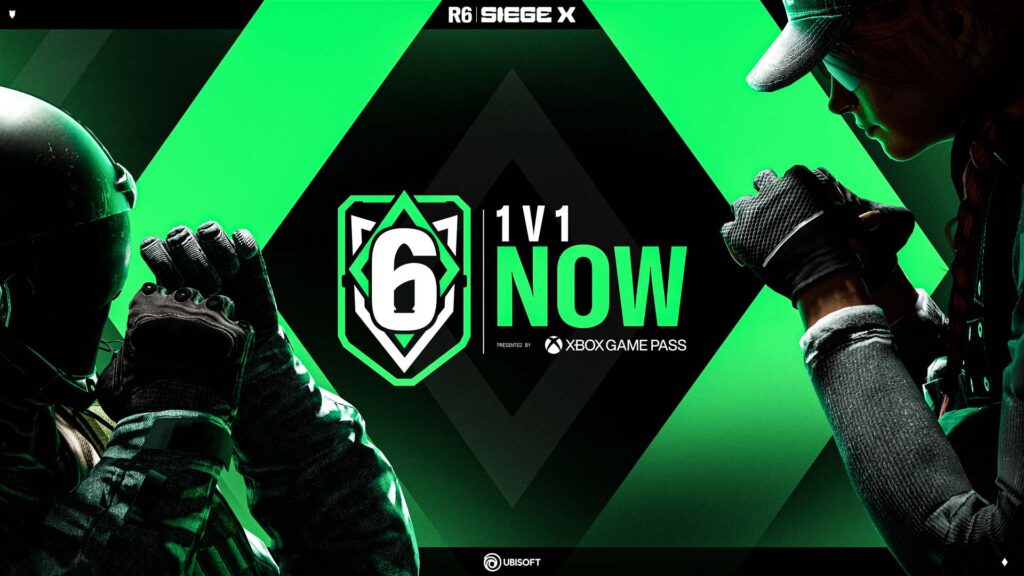
The launch of the 1V1 NOW circuit by Xbox Game Pass marks the first officially sanctioned 1v1 competition in Tom Clancy’s Rainbow Six Siege. On paper, this is a hard pivot from Siege’s 5v5 DNA—but it’s also a clever systems test.
1. Stress-Testing Core Mechanics Without the Squad Layer
Stripping down to 1v1 isolates:
- Map knowledge: angle discipline, off-meta lines of sight, and micro-rotations.
- Utility discipline: no teammates to cover gaps; every gadget choice is magnified.
- Mechanical precision: aim, recoil control, and peeking fundamentals with zero backup.
For #gamedev teams, this is like running a lab environment inside live ops. The telemetry from 1v1 play can surface:
- Overpowered sightlines or spawn interactions.
- Operators who scale too well (or too poorly) in low-pop scenarios.
- Audio clarity issues when there’s only one source of enemy noise.
2. Alternative Competitive On-Ramps
Official 1v1s also act as a lower-friction entry point to competition. Players intimidated by full-stack ranked or scrim culture can test themselves in a more personal, duel-driven format. That broadens the competitive funnel—critical in a title’s final years when onboarding fresh blood gets harder.
For #indiegame competitive projects, the lesson is clear: alternative modes that remix core systems can extend engagement and surface new data without needing a full sequel.
Sector Outlook: High-Impact Final Year, High-Value Lessons
This week’s intel frames Tom Clancy’s Rainbow Six Siege as a live-service giant entering its final act with intent, not inertia. Solid Snake’s insertion delivers a marquee crossover that reinforces Siege’s stealth-tactics identity. The Final Mission cinematic sets expectations for a finite, curated Year 11. And the 1V1 NOW circuit experiments with format while harvesting rich telemetry.
For developers, Siege’s current trajectory is a rare, real-time playbook on how to:
- Announce an end-of-life window without collapsing player trust.
- Use crossovers to keep cultural momentum late in the lifecycle.
- Leverage experimental competitive formats to stress-test core systems.
As Year 11 unfolds, Siege won’t just be closing a chapter for tactical FPS players—it will be writing a reference manual for the next generation of competitive shooters, from AAA to #indiegame labs.
Sources and corrections
This archive entry does not have a verified article-source list. Images and video embeds alone are not evidence for every claim.
Found an error? Request a correction. Include the passage and a supporting source.
Your games, in one place
Keep up with Tom Clancy’s Rainbow Six Siege
Follow this game to collect its posts in your personal feed. Come back to see what you missed.