Automated archive / Tom Clancy’s Rainbow Six Siege
Solid Snake Breaches Siege as Year 11 Sets ‘Final Mission’ Parameters
Rainbow Six Siege just locked in Year 11 as its ‘Final Mission’ while simultaneously deploying Solid Snake, elevating Smoke in the Invitational meta, and greenlighting an official Xbox Game Pass 1v1 circuit. Ubisoft is turning Siege’s endgame into a live laboratory for tactical design, balance, and crossover strategy.
AI-generated summary. This archive article does not have a current recorded source check. Check linked sources before relying on details. Editorial policy
Weekly Sector Intelligence: Rainbow Six Siege Ops Status
Tom Clancy’s Rainbow Six Siege just entered one of the most pivotal weeks in its lifecycle: a legacy-defining Year 11 “Final Mission” confirmation, a meta-shaping esports spotlight on Smoke, an officially sanctioned Xbox Game Pass 1v1 circuit, and one of the most surprising crossover deployments yet — Solid Snake breaching Siege’s tactical stack. For #gamedev watchers and competitive tacticians alike, this is the clearest signal yet that Ubisoft is steering Siege toward an intentional, curated endgame rather than a slow fade-out.
Final Mission Protocol: Year 11 Confirmed as Terminal Cycle
Ubisoft has formally marked Year 11 as Rainbow Six Siege’s last full operational year, framing the decision through the “Final Mission” cinematic rather than a dry service announcement. The trailer positions veteran Operators confronting program shutdown as an in-universe inevitability, giving narrative shape to what is functionally a long-tail live service sunset.
From a development update perspective, this matters for two reasons:
1. Controlled Sunset vs. Content Drift
By planting a hard endpoint, the team can:
- Lock in a finite roadmap for reworks, balancing, and final content drops.
- Avoid feature creep, instead prioritizing stability, competitive integrity, and legacy preservation.
- Potentially deliver a final wave of narrative closure — something many long-running live titles never get.
For #gamedev teams studying long-term live ops, Siege’s Year 11 framing is a case study in how to turn a shutdown into a design constraint rather than a marketing liability.
2. Legacy Status and Competitive Continuity
Calling out “legacy status” in the communication hints at:
- Ongoing server and ranked support post-Year 11, at least for a defined period.
- A likely shift from “expansion” to maintenance mode, where meta changes are surgical rather than experimental.
Esports organizers and tournament admins should read this as a green light for short- to mid-term planning, but not an indefinite horizon.
Tactical Systems Cross-Integration: Solid Snake Infiltrates Siege
Watch: Transmitting Gameplay footage from the field: Solid Snake Gameplay – Metal Gear Solid Update
The most headline-grabbing move this week is the Metal Gear Solid Update, deploying Solid Snake into Rainbow Six Siege as an elite Operator skin and crossover package. This isn’t a standalone #indiegame cameo; it’s a deliberate fusion of two stealth legacies.
Crossover Design: Iconography Meets Competitive Constraints
The implementation leans into codec-flavored cosmetics, FOXHOUND-styled swagger, and stealth-ops visual language, while keeping Siege’s competitive framework intact. From a design standpoint, Ubisoft is threading three needles:
- Readability – Skins must remain clearly identifiable in high-pressure CQB situations. Snake’s silhouette and gear have been adapted to fit Siege’s established operator readability rules.
- Non-pay-to-win – The update emphasizes cosmetic identity, not stat advantages. Any stealth fantasy is expressed through animation, sound design, and VFX polish, not mechanical bonuses.
- Lore Compatibility – The trailers frame Snake’s presence as a tactical doctrine crossover rather than canon merger, preserving both IPs while still letting fans play out the infiltration fantasy.
Meta Impact: Perception vs. Practical Change
While Solid Snake arrives primarily as a visual and thematic layer, the community perception of stealth is likely to spike:
- Expect higher pick rates on intel denial and sound-masking gadgets, as players lean into the fantasy of silent entries and information warfare.
- Content creators will weaponize the crossover for high-visibility clips, which in turn can temporarily skew operator popularity and public matchmaking behavior.
For designers, this is a reminder that cosmetic theming alone can nudge player behavior, even without direct mechanical buffs.
Esports Telemetry: Smoke as Invitational MVP
The Rainbow Six Invitational Finals data stream confirms Smoke as the de facto MVP at the highest competitive level. His kit — gas canisters for area denial, plant delay, and funnel control — is dictating the tempo of late-round executes.
From a balance and #gamedev analytics standpoint, Smoke’s dominance highlights:
- Round Economy Control: His utility compresses time, forcing attackers into suboptimal plants or rushed executes.
- Map Design Synergy: Tight chokes, narrow doorways, and default plant spots magnify his impact.
- Spectator Clarity: Smoke’s utility is visually readable, making him both powerful and broadcast-friendly.
Expect internal design discussions around whether this level of dominance is acceptable mastery or a meta imbalance that needs post-Invitational tuning.
1v1 NOW: Xbox Game Pass Opens a New Competitive Lane
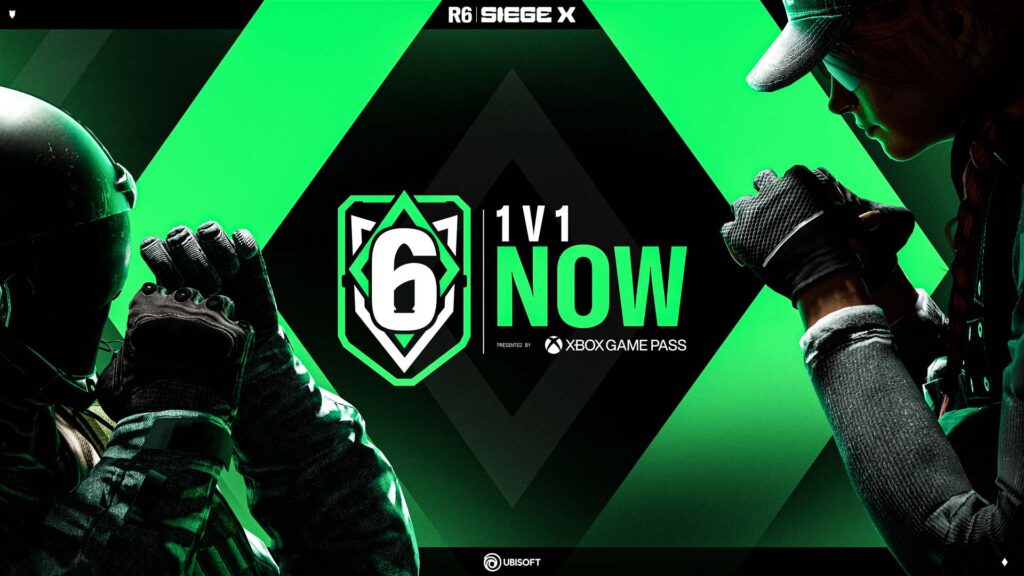
Xbox Game Pass has authorized “1V1 NOW”, the first officially recognized 1v1 competition in Tom Clancy’s Rainbow Six Siege. Stripping away the classic 5v5 structure, this format is a stress test of pure mechanical skill, map knowledge, and utility discipline.
Design Implications of a 1v1 Siege Mode
While not a full-blown mode baked into the core client (yet), the competition surfaces several design-relevant signals:
- Operator Tuning in Isolation: Some operators are balanced around team synergies. 1v1 brackets instantly expose who remains viable when you remove stack coordination.
- Map Micro-Layouts: Duels highlight specific angles, rotations, and micro-choke points that can be overshadowed in 5v5 macro strategy.
- Data-Rich Telemetry: Ubisoft and Xbox can mine this event for engagement patterns, clutch behavior, and utility usage in ultra-low team contexts.
For aspiring #indiegame and competitive shooter developers, this is a live experiment in recontextualizing a team-based design for duelist play without rewriting the entire ruleset.
Strategic Outlook: Siege’s Endgame as a Design Laboratory
Taken together, this week’s developments suggest that Rainbow Six Siege’s final years won’t be a quiet wind-down. Instead, Ubisoft appears to be using the Year 11 runway as a controlled laboratory:
- Narrative closure via the Final Mission cinematic and explicit end-of-life framing.
- Cross-IP experimentation through Solid Snake, testing how far a tactical shooter can lean into stealth iconography without compromising clarity.
- Competitive format diversification with 1v1 NOW, probing new ways to package Siege’s core mechanics.
- High-level balance telemetry from the Invitational, where Smoke’s dominance will likely inform the next wave of tuning.
For tom clancy’s rainbow six siege, the message is clear: the operation may be entering its final phase, but the design and competitive experimentation are still running hot. The next few updates will be essential viewing for anyone tracking long-term live service strategy and tactical shooter evolution.
Sources and corrections
This archive entry does not have a verified article-source list. Images and video embeds alone are not evidence for every claim.
Found an error? Request a correction. Include the passage and a supporting source.
Your games, in one place
Keep up with Tom Clancy’s Rainbow Six Siege
Follow this game to collect its posts in your personal feed. Come back to see what you missed.