Back to guides and news
Gaming
March 9, 2026
Sector Intelligence Report: How Tides of Tomorrow Turns Solo Campaigns into a Networked Time-Sea
Sector Intelligence Report // Tides of Tomorrow
The last seven days have been busy in the Tides of Tomorrow sector. Pre-orders are live, the deployment window is locked to April 22, and the team has begun lifting the veil on how its networked narrative systems and bold visual design will actually function in the wild. This week’s intel points to a single throughline: this is a solo-first #indiegame that quietly behaves like a shared simulation.
Chrono Currents Go Live: Pre-Orders and Branching Timelines
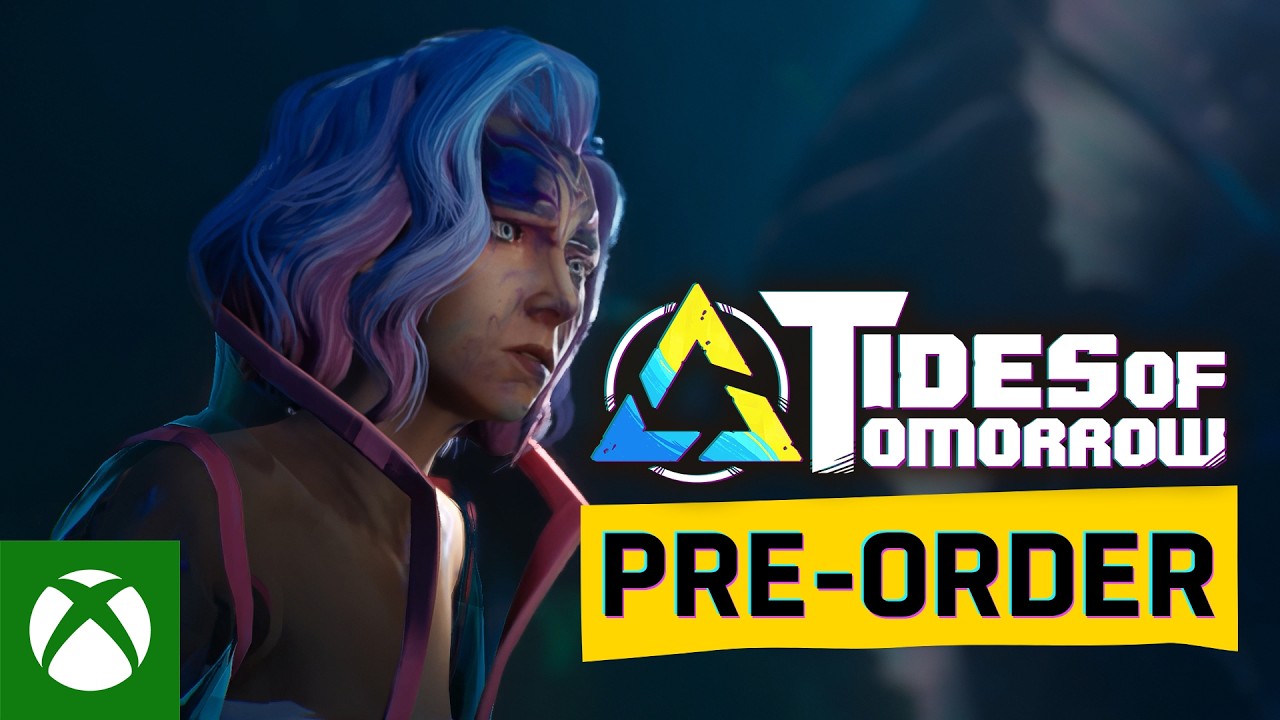
The first major signal in the activity feed is the Chrono Currents Online broadcast, confirming that Tides of Tomorrow has opened pre-order access. Underneath the in-universe flavor, there are several concrete details worth flagging for #gamedev watchers:
- Branching, time-twisted campaign – The campaign is described as a seafaring journey where “every choice mutates the future timeline.” That phrasing suggests more than standard branching dialogue trees; it implies systemic state changes that ripple across multiple runs.
- Run-based structure with narrative variance – References to “waves that crash differently with each run” frame the game as replayable by design. Expect a structure closer to a narrative roguelite or time-loop adventure than a one-and-done story.
- Dynamic relationships and shifting factions – Relationship states and faction allegiances appear to be core levers. From a design perspective, this opens the door to:
- Persistent reputation systems
- Emergent alliances and betrayals
- Long-tail consequences that only surface in later timelines
For players, the takeaway is straightforward: committing to a pre-order isn’t just an early ticket; it’s a stake in a simulation that’s built to be re-run, re-bent, and re-broken.
Online Story-Link: Solo Campaigns, Shared Ocean
The most significant development update this week is the reveal of Tides of Tomorrow’s Online Story-Link protocol, announced alongside the April 22 launch window.
Asynchronous Influence, Not Traditional Co-op
The Story-Link system is framed as a way for solo operations to covertly affect other agents’ stories across the network. This is not drop-in/drop-out co-op—this is closer to:
- The subtle messaging of Death Stranding’s shared world
- The ghostly presence systems of Dark Souls or Nier: Automata
- Or the data-driven narrative remixing seen in some experimental #indiegame projects
Key implications:
- Your choices become someone else’s context. A decision you make about a faction, a port city, or a key character may alter how those elements manifest in another player’s run.
- The network is the meta-plot. While each player experiences a contained story, the aggregate of player decisions becomes a kind of soft canon—an evolving backdrop that shifts probabilities, outcomes, or even available story branches.
For #gamedev observers, the interesting question is how the team is structuring this data flow. Are they:
- Tracking global choice frequencies and nudging future events procedurally?
- Logging specific world-state configurations and injecting them as variants into other campaigns?
- Or curating hand-authored permutations that unlock as the network evolves?
Whatever the approach, it positions Tides of Tomorrow as a test case for networked narrative design—a space that’s still relatively under-explored compared to online combat or co-op.
Pre-Order Bundle: Delta Agent DLC and Cosmetic Signals
The Story-Link reveal also confirmed a pre-order bundle:
- Delta Agent DLC – Likely a narrative or mechanical variant agent, potentially with unique starting conditions or relationships that further stress-test the branching systems.
- Exclusive Tidewalker and boat skins – Cosmetic, but important in a game where identity and traversal are core pillars. In a networked narrative, cosmetics also double as social signals: other players may encounter echoes or records of your customized vessel, reinforcing the sense of a shared ocean.
Chromatic Systems: Why Stylization Wins Under Pressure
The Chromatic Systems Report gives us a clear view into the art and UX philosophy driving Tides of Tomorrow. The team is intentionally rejecting sterile photorealism in favor of bold chromatic contrast and high legibility under pressure.
Color as a Tactical Language
The intel emphasizes that environments, UI, and character silhouettes are engineered as tactical signposts. That suggests:
- Color-coded gameplay states – Hazard zones, safe routes, interactable objects, and faction territories likely have distinct chromatic identities.
- Silhouette-first character design – Clear, readable shapes that communicate role and intent at a glance, essential in tense or time-sensitive scenarios.
- UI that merges with the world – Expect overlays, markers, and navigational tools that are visually integrated but unmistakably readable.
This approach aligns with best practices in modern #gamedev UX: stylization isn’t just an aesthetic choice, it’s a functional clarity upgrade—especially important when you’re juggling:
- Branching narrative prompts
- Relationship shifts
- Environmental hazards in a near-future seascape
Worldbuilding Through Technicolor
The phrase “deliberately stylized, near-future seascape” hints at a world that is:
- Grounded, but not literal – Technology and seafaring infrastructure feel plausible, yet heightened by color and form.
- Narratively encoded in its palette – Factions, regions, and temporal states of the world may be distinguished by their chromatic signatures, making the timeline’s evolution visually legible.
For an #indiegame leaning heavily on replayability and narrative mutation, this is a smart trade: every return trip to the same harbor or stormfront can look and feel different, even before you surface the underlying story changes.
Sector Outlook: A Living Sea of Timelines
With pre-orders active, an April 22 launch window locked, and the Online Story-Link system now publicly framed, Tides of Tomorrow is positioning itself as more than a stylish narrative adventure. It’s a networked time-sea, where solo voyages quietly rewrite the conditions for everyone else.
For players, the message is simple: if you’re interested in narrative experiments that treat the internet as more than just a matchmaking server, this is one to watch. For #gamedev professionals, Tides of Tomorrow is shaping up to be a valuable case study in asynchronous, data-driven storytelling—and in how bold visual design can keep that complexity readable at a glance.
Keep following Tides of Tomorrow
News, guides, posts, and game details in one place.
Open the game hub, then save it to build your personal Breach feed.
More images and video
About the game
Tides of Tomorrow
Periphery Interactive
Mission profile: Tides of Tomorrow is a plasticpunk narrative adventure where players operate as Tidewalkers, enigmatic entities interconnected across parallel timelines. Each solo mission can subtly alter another player’s story-state via the Online Story-Link system, creating a living web of cause-and-effect. Expect character-driven narrative, choice-based progression, and visually distinct seafaring environments. Keywords: narrative adventure, branching stories, asynchronous multiplayer, stylized plasticpunk world.
Open game pageTopics
Tides of Tomorrow
tides of tomorrow pre-order
tides of tomorrow release date
tides of tomorrow online story-link
networked narrative
asynchronous storytelling
indie narrative game
stylized game art
bold chromatic contrast
game UX readability
game development analysis
#gamedev
#indiegame