Automated archive / Tides of Tomorrow
How Tides of Tomorrow Turns Solo Campaigns into a Networked Time-Sea
Tides of Tomorrow is turning solo campaigns into a networked narrative experiment, where your choices quietly reshape other players’ timelines. With pre-orders live and an April 22 launch locked in, the stage is set for one of 2026’s most ambitious story-first indie releases.
AI-generated summary. This archive article does not have a current recorded source check. Check linked sources before relying on details. Editorial policy
Sector Intelligence Report // Tides of Tomorrow
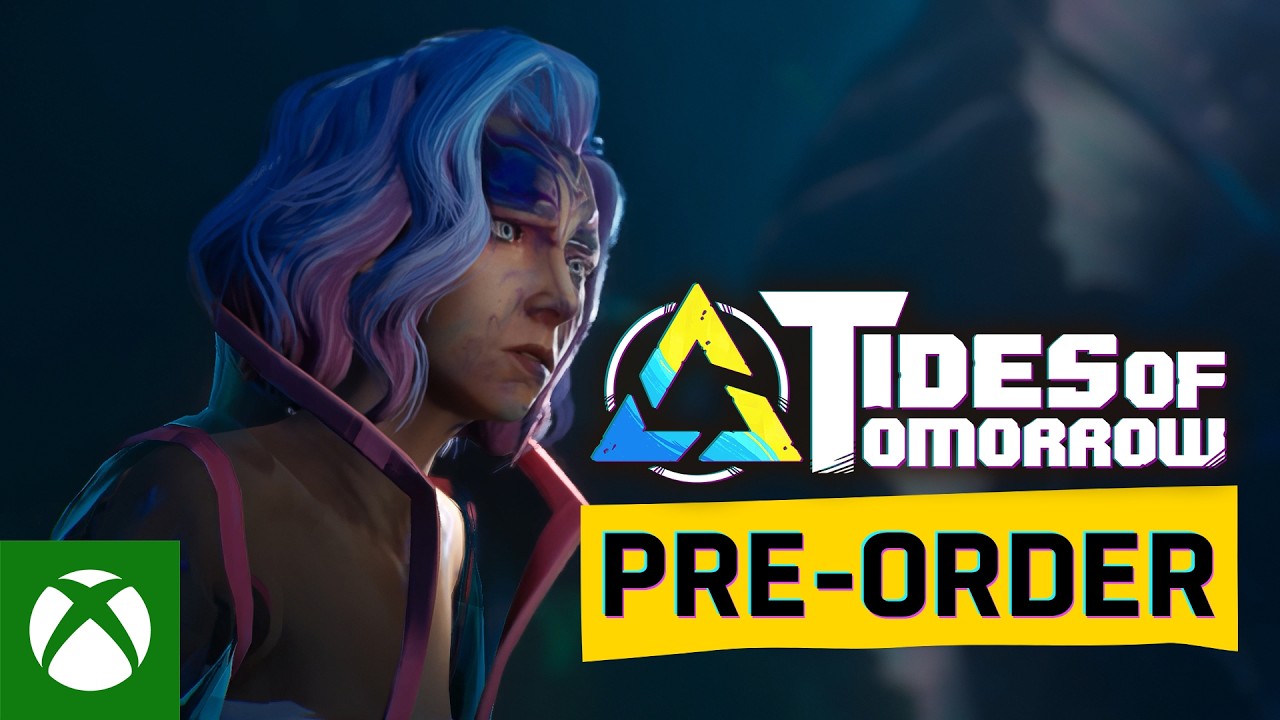
Tides of Tomorrow is quietly positioning itself as one of the more ambitious narrative #indiegame launches of 2026, and this week’s intel drop clarifies three critical vectors: pre-orders are live, the deployment window is locked to April 22, and its headline feature — the Online Story-Link system — is aiming to make solo campaigns feel subtly, persistently multiplayer.
This isn’t just another branching story; it’s a networked narrative experiment where your choices ripple across other players’ timelines.
Chrono Currents Go Live: Pre-Orders and Campaign Structure
The latest Chrono Currents Online dispatch confirms that Tides of Tomorrow pre-orders are now active, framing the campaign as a “branching, time-twisted seafaring” operation. The key design promise is that every decision mutates the future timeline — not just your own, but potentially those of other agents running parallel operations.
From a #gamedev perspective, this implies:
- Heavily stateful narrative systems that track relationship flags, faction alignment, and macro-world conditions across multiple runs.
- Run-based structure where each completed campaign can be treated as a data point that feeds back into future playthroughs and, through Story-Link, into other operatives’ worlds.
- Replay-first design: the studio is clearly betting on players returning for multiple timelines rather than a single canonical route.
The pre-order package also folds in the Delta Agent DLC plus cosmetic Tidewalker and boat skins, suggesting a live-ops mindset even for a primarily narrative-driven experience. Cosmetics are a low-friction way to support post-launch content without destabilizing the story economy.
Online Story-Link: Solo Play, Networked Consequences
Watch: Transmitting Gameplay footage from the field: Official Tides of Tomorrow Pre-Order Trailer
The standout system in this week’s development update is the Online Story-Link protocol. On paper, it’s a subtle but potentially disruptive idea: you play solo, but your decisions are quietly broadcast into a shared narrative substrate that can alter conditions in other players’ campaigns.
Key implications for design and player experience:
1. Asynchronous Narrative Influence
Unlike traditional co-op, Story-Link looks closer to an asynchronous social layer:
- Your choice to back a specific faction, save or abandon a character, or reroute a critical convoy could become a remote variable for another player’s world state.
- These influences likely manifest as altered faction strength, different quest availability, or changed character attitudes in someone else’s timeline.
If executed cleanly, it avoids the scheduling friction of multiplayer while still delivering the feeling of a living network of agents.
2. Preserving Authorial Control
One of the hardest #gamedev problems in this space is preserving a coherent authored story while letting other players meddle with your variables. The messaging hints at “covert” effects rather than overt invasions of your run, which is a smart constraint:
- Expect bounded influence surfaces — specific systems (economy, reputation, world tension) that can be safely perturbed.
- Narrative beats likely remain locally authored, with Story-Link tuning the context and stakes rather than rewriting core plot events.
That balance will define whether Tides of Tomorrow feels elegantly reactive or chaotically noisy.
Visual Engineering: Technicolor as Tactical Language
The Chromatic Systems Report gives us a sharper look at the project’s visual philosophy. Rather than chasing photorealism, Tides of Tomorrow leans into bold chromatic contrast, dense worldbuilding, and high readability — an increasingly common stance in #indiegame visual direction, but here it’s explicitly framed as a tactical decision.
Design takeaways:
1. Color as Gameplay, Not Decoration
Every color choice is described as a “tactical signpost”:
- Environment hues likely encode danger levels, traversal affordances, or faction presence.
- UI elements appear tuned for legibility under pressure, which is crucial when decisions carry long-tail narrative consequences.
- Character silhouettes are engineered for instant recognition, which matters when relationships and loyalties are central to the branching structure.
This is visual design as information architecture, not just vibe, aligning with modern accessibility and UX best practices in #gamedev.
2. Near-Future Seascape as Systems Canvas
The stylized near-future oceanic setting isn’t just aesthetic dressing; it’s a convenient canvas for systemic storytelling:
- Shifting tides and routes can mirror the branching timeline structure.
- Floating settlements and mobile fleets provide modular hubs for faction dynamics and recurring NPCs.
- The sea itself becomes a mutable layer of risk and opportunity, ideal for telegraphing systemic change driven by Story-Link.
In other words, the world is built to broadcast state changes — your actions, and the echoes of other players’ actions, should be visually legible at a glance.
April 22 Deployment: What to Watch Next
With an April 22 launch window confirmed, Tides of Tomorrow is entering its final pre-release sprint. For developers and systems-minded players tracking this project, key watchpoints over the coming weeks include:
- Granularity of Story-Link influence: How visible are other players’ impacts, and can you opt out or tune their intensity?
- Run structure and meta-progression: Does the game support long-term agency across multiple timelines, or is each playthrough siloed with light carryover?
- Post-launch roadmap: The inclusion of Delta Agent DLC in pre-orders hints at ongoing narrative or systems expansions.
As an experiment in networked narrative design, Tides of Tomorrow is one of the more intriguing titles on the near horizon. If the team can align its chromatic visual language, branching story architecture, and Story-Link infrastructure into a cohesive whole, this could become a reference point for how solo campaigns quietly intersect in the next wave of connected storytelling.
Sources and corrections
This archive entry does not have a verified article-source list. Images and video embeds alone are not evidence for every claim.
Found an error? Request a correction. Include the passage and a supporting source.
Your games, in one place
Keep up with Tides of Tomorrow
Follow this game to collect its posts in your personal feed. Come back to see what you missed.