Automated archive / Tides of Tomorrow
How Tides of Tomorrow Is Rewiring Solo Campaigns Into a Shared Ocean
Tides of Tomorrow just locked in an April 22 launch and opened pre-orders, but the real story is its Online Story-Link system—solo campaigns quietly rewriting each other across a shared ocean. With bold chromatic art direction and branching timelines that promise real consequences, this is a connected narrative...
AI-generated summary. This archive article does not have a current recorded source check. Check linked sources before relying on details. Editorial policy
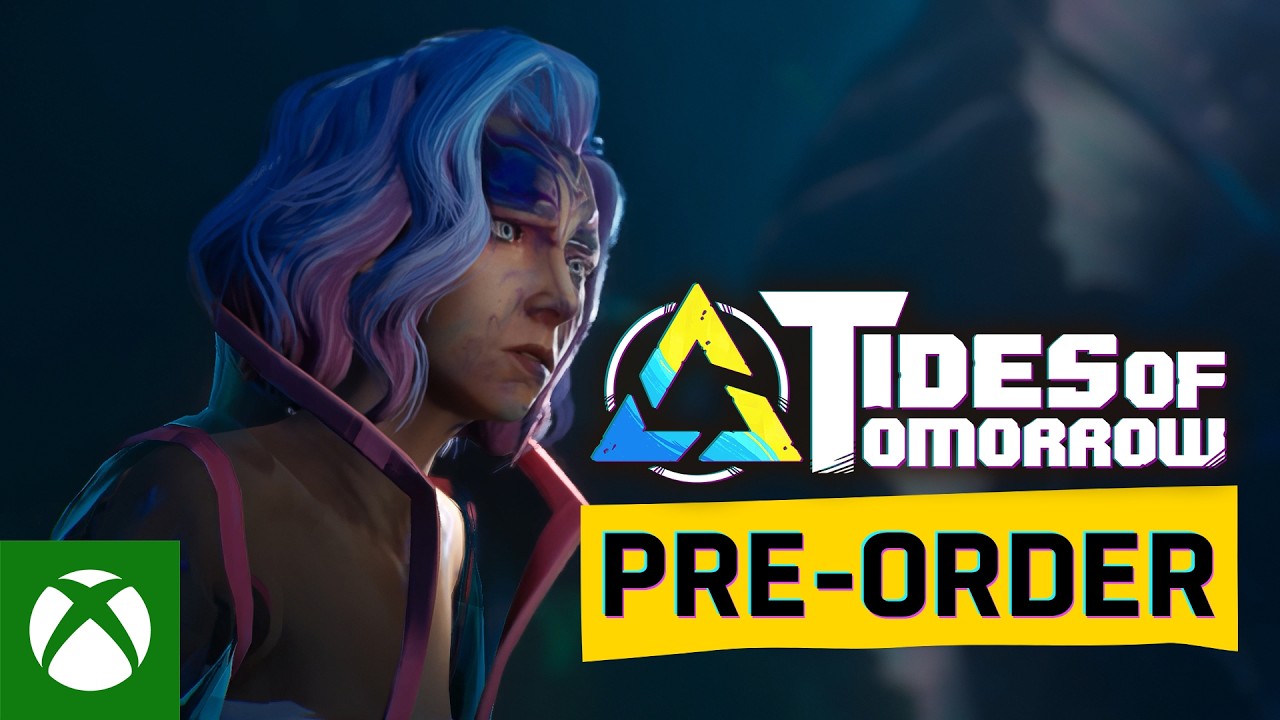
Sector Intelligence Report // Tides of Tomorrow – Week of March 5
Tides of Tomorrow is quietly shaping up to be one of the most ambitious narrative #indiegame launches on the near horizon, and this week’s signals lock in two critical coordinates: a firm April 22 deployment window and the opening of pre-order uplinks. Under the surface, though, the more interesting story is how its Online Story-Link system and bold chromatic art direction are being engineered to support a branching, time-twisted seafaring campaign that’s legible under pressure and persistently networked.
Chrono Currents Online: Pre-Orders and a Mutating Campaign
The latest transmission confirms that Tides of Tomorrow has entered the pre-order phase, positioning players as operatives boarding a campaign where every decision mutates the future timeline. This isn’t just marketing copy; the framing suggests a systemic narrative architecture where state changes ripple across multiple runs.
The pitch: a time-twisted, seafaring campaign in which dynamic relationships, shifting factions, and narrative waves "crash differently with each run." From a #gamedev perspective, that implies:
- Branch-heavy story design that can meaningfully reconfigure core beats rather than just swapping out flavor text.
- Stateful faction logic, where alliances and hostilities persist and compound across playthroughs.
- Run-aware narrative surfacing, ensuring that repeated content feels recontextualized rather than recycled.
Pre-orders also bundle the Delta Agent DLC with exclusive Tidewalker and boat skins. That’s a clear signal that the team is already thinking about long-tail personalization: visual identity as a way to make each operative’s timeline feel distinct, even before systemic divergence kicks in.
Networked Narrative Systems: Solo Campaigns, Shared Ocean
The most compelling intel this week centers on the Online Story-Link system, which allows solo operations to covertly affect other agents’ campaigns across the network. This is not traditional co-op; it’s more akin to a narrative mesh where your decisions subtly rewrite someone else’s reality.
Key takeaways from the briefing:
- Asynchronous influence: Players run solo, but their outcomes feed into a shared data layer that can alter conditions, factions, or narrative seeds in other players’ worlds.
- Soft-touch connectivity: There’s an emphasis on solo adventures first, with the online layer acting as an invisible current rather than a mandatory social feature.
- Replayability through community variance: No two players will encounter the same balance of factions and narrative states over time, as the wider player base continuously perturbs the network.
From a systems design standpoint, this is a high-wire act. The team must map narrative variables that are:
- Globally legible (so changes feel meaningful), yet
- Locally stable (so your story doesn’t become incoherent), while
- Resistant to griefing (so community input can’t simply break the experience).
If Tides of Tomorrow can keep those plates spinning, it could carve out a distinct niche in the narrative #indiegame space—somewhere between single-player immersive sim and lightly networked story roguelite.
Chromatic Systems: Stylized Seascapes Built for Clarity Under Fire
The Chromatic Systems Report outlines an art direction that rejects sterile photorealism in favor of bold chromatic contrast, dense worldbuilding, and high readability. For #gamedev teams, this is a clear case study in how visual language can be engineered as a tactical tool.
The team is explicitly tuning:
- Color as function – Each hue is a signpost: faction identity, threat level, interaction affordances, or emotional tone.
- Silhouette clarity – Characters and vessels are designed to be instantly readable against the near-future seascape, even when the screen is crowded.
- UI integration – Interface elements appear to be woven into the world’s visual grammar rather than pasted on top, preserving immersion while keeping information density high.
In a branching, time-sensitive campaign, this emphasis on legibility is more than an aesthetic choice. It underpins the player’s cognitive bandwidth: the faster you can parse the scene, the more headspace you have for consequential decisions that will echo through your own timeline—and potentially someone else’s.
Strategic Outlook: Why This Matters for Narrative-Driven Indies
With an April 22 launch window locked and pre-orders live, Tides of Tomorrow is entering the critical phase where expectations harden. The week’s intel paints a project betting on three pillars:
- Branching timelines with real teeth, not just binary endings.
- Online Story-Link networking that lets solo campaigns subtly collide.
- Deliberately stylized, high-contrast visuals that keep the experience readable as narrative and systemic complexity ramps up.
For the broader #gamedev sector, this is one to watch as a potential template: not live-service, not purely offline, but a hybrid model where narrative states are the shared currency. If the execution matches the ambition, Tides of Tomorrow could help redefine what a connected single-player campaign looks like in the indie space.
Sources and corrections
This archive entry does not have a verified article-source list. Images and video embeds alone are not evidence for every claim.
Found an error? Request a correction. Include the passage and a supporting source.
Your games, in one place
Keep up with Tides of Tomorrow
Follow this game to collect its posts in your personal feed. Come back to see what you missed.