Automated archive / The Outlast Trials
Holy Fire, Hex Traps, and Crowd Control: Venator Crashes The Outlast Trials’ Rituals
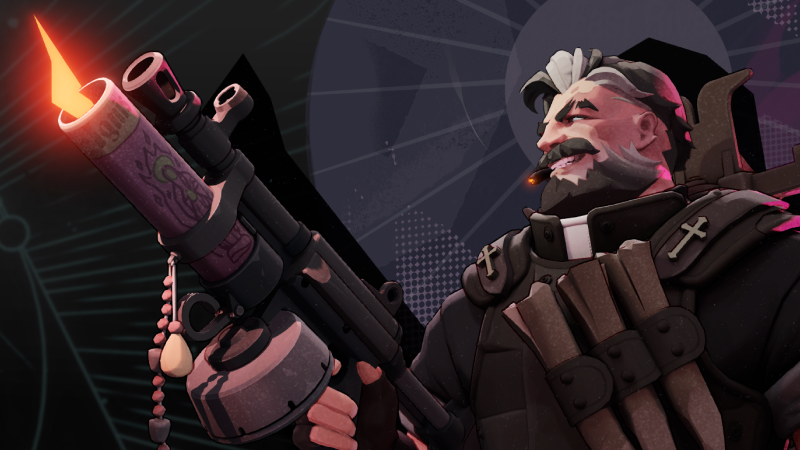
Venator has entered The Outlast Trials’ ritual roster, bringing anti-heal grenades, hex traps, and a devastating ultimate that rewrites co-op survival tactics. With only two heroes left to be revealed, Murkoff’s escalation strategy is coming into sharp focus.
AI-generated summary. This archive article does not have a current recorded source check. Check linked sources before relying on details. Editorial policy
Sector Intelligence Report: The Outlast Trials – Venator Joins the Hunt
Murkoff’s nightmare lab just got a new enforcer. In this week’s Sector Intelligence Report for the outlast trials, we’re dissecting the arrival of Venator, a ritual hunter built around ruthless crowd control, area denial, and anti-healing pressure. With only two heroes left to be revealed in the ongoing ritual roster, this drop signals a clear escalation in both mechanical complexity and encounter pacing.
Venator’s Kit: Designed to Break Formations
From the intercepted New York signal, Venator’s toolkit reads like a hard-counter to coordinated survivor play:
Consecrating Grenade – Anti-Heal and Space Control
- Core function: Weakens foes and blocks their healing.
- Design implication: In a game where resource scarcity and moment-to-moment triage already define the tension curve, an anti-heal tool is brutal. It forces squads to reposition, delay recovery windows, and commit to riskier routes.
- #gamedev lens: This is a classic soft-disable rather than a hard stun. It preserves player agency while still punishing predictable behavior like stacking in chokepoints to heal.
Hex-Lined Snap Traps – Lockdown and Route Denial
- Core function: Locks targets in place, likely on key traversal paths.
- Encounter impact: These traps turn familiar lanes into psychological minefields. Even if players never trigger them, the threat alone slows pace and raises stress.
- Level design synergy: Expect Murkoff to pair these with tight corridors, blind corners, and multi-level sightlines, amplifying paranoia in co-op runs.
Gutshot – Short-Range Knockback
- Core function: Knocks back anything that gets too close.
- Pacing impact: Gutshot gives Venator a way to reset distance, punishing melee gambits or panic rushes. It’s a soft answer to players who try to “face tank” or overwhelm AI through proximity.
- Tuning note for #indiegame devs: Knockback is a powerful feel tool—it communicates impact clearly without relying solely on damage numbers. When tuned well, it shapes rhythm more than raw lethality.
Ira Domini – Ultimate Area Annihilation
Venator’s ultimate, Ira Domini, is framed as “divine annihilation” for anything still standing. While the exact mechanical parameters aren’t detailed in the signal, its role is clear: a phase-ending tool that punishes overstaying, clustering, or failed disengages.
From a systems perspective, Ira Domini likely:
- Acts as a tempo spike, forcing players to break line-of-sight or abandon objectives.
- Creates high-stakes decision points: finish the task under pressure or bail and reset.
- Serves as a spectacle anchor—the kind of moment that defines a run and fuels shareable clips.
Roster Trajectory: Only Two Heroes Left
The transmission confirms Venator is now part of the ongoing ritual roster, with two heroes left to be revealed. That phrasing strongly suggests a curated, season-like rollout rather than a one-off content drop. For long-term retention, this is smart:
- Cadence: Announcing the next hunter reveal for Monday, February 9th at 2 PM PST sets a predictable rhythm, keeping the community locked into the drip-feed of intel.
- Meta evolution: Each new hunter pressures players to rethink builds, routes, and co-op roles. Venator in particular targets healing and clustering, potentially nudging squads toward more mobile, information-driven play.
- Spectator value: For streaming and content creation, a firepower-heavy enforcer with visible traps and a dramatic ultimate is a clear highlight reel generator.
What This Signals for The Outlast Trials’ Development
For the outlast trials as a live product, Venator’s design sends several clear messages about the current development update direction:
- The team is leaning into role clarity for antagonists—Venator is unmistakably a control and suppression specialist.
- Anti-heal and movement denial point toward a future meta where positioning and timing matter as much as raw stealth.
- The New York ritual framing suggests ongoing lore-linked expansions, tying new mechanics to specific locales and narrative beats.
From a broader #gamedev standpoint, Venator is a case study in how to escalate difficulty and variety without simply inflating numbers. By attacking player habits—healing clusters, safe routes, and close-range desperation plays—the design deepens the experience rather than just making it harsher.
As the next hunter steps into the breach on February 9th, all eyes should be on how Venator reshapes co-op dynamics and whether the final two heroes will complement his control-heavy presence or hard-counter it.
Sources and corrections
This archive entry does not have a verified article-source list. Images and video embeds alone are not evidence for every claim.
Found an error? Request a correction. Include the passage and a supporting source.