Automated archive / The Legend of Heroes: Trails in the Sky SC
Tactical Storytelling at Full Burn in The Legend of Heroes: Trails in the Sky SC
Trails in the Sky SC is back in the sector spotlight, with resurfaced gameplay footage showcasing why its tactical combat and orbment-driven progression still resonate in 2026. For developers, it’s a live blueprint in serialized JRPG storytelling and systems-first design that continues to generate long-tail engagement.
AI-generated summary. This archive article does not have a current recorded source check. Check linked sources before relying on details. Editorial policy
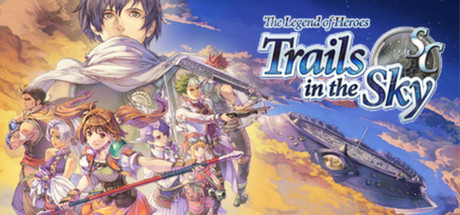
Sector Intelligence Report: The Legend of Heroes: Trails in the Sky SC
The last seven days have seen a noticeable spike in chatter around the legend of heroes: trails in the sky sc, driven by renewed circulation of gameplay footage that foregrounds its tactical combat, orbment depth, and narrative continuity. For developers and designers tracking long-tail engagement on legacy JRPGs, Trails in the Sky SC is quietly functioning as a live case study in how systems-first design and serialized storytelling can sustain relevance years after launch.
Watch: Transmitting Gameplay footage from the field: Trails in the Sky SC official gameplay showcase
Strategic Combat: Grid-Based, Turn-Based, Still Competitive in 2026
The resurfaced gameplay trailer leans hard into tactical turn-based combat and strategic positioning, and that’s where most of the design intel lives:
- Action Time Battle (ATB) with spatial stakes: Turns are ordered on a visible timeline, but the field grid and movement range turn every action into a positional puzzle. Devs looking at modern tactics design can read this as an early hybrid of classic turn-based JRPG flow with SRPG-style board control.
- Crafts and S-Crafts as pacing valves: Character-specific Crafts act as short-cooldown tactical tools, while S-Crafts function as burst options that can be triggered out of turn. From a #gamedev perspective, this is a clean example of how to inject volatility and hype moments into an otherwise predictable turn order without abandoning clarity.
- Boss encounters as systems exams: The trailer’s tougher boss encounters showcase layered mechanics—status manipulation, area denial, and turn-order exploitation. These fights reiterate that Trails SC’s combat design assumes players understand the fundamentals from the first game, then escalates complexity rather than re-tutorializing.
For designers in the #indiegame tactics space, this is a reminder that clarity of information (turn bar, grid, range) plus a few strong, overlapping systems can compete with far more visually complex contemporaries.
The Orbment System: Modular Progression as Narrative Texture
The orbment system—Trails’ signature modular magic and stat framework—features heavily in the circulating footage and commentary. It remains a standout example of how progression systems can support both mechanics and worldbuilding:
- Quartz loadouts as build expression: Orbment slots and quartz combinations determine Arts (spells) and passive bonuses. It’s essentially a programmable spell matrix, and the trailer’s loadout screens emphasize how small configuration shifts dramatically alter combat roles.
- Diegetic technology: Orbments aren’t just a menu; they’re baked into Liberl’s infrastructure, politics, and economy. For narrative designers, this is a sharp case of a core gameplay system doubling as a lore pillar.
- Difficulty tuning through configuration: Commentators highlight how tougher bosses in SC often demand thoughtful orbment planning rather than pure level grinding—a design stance that many modern RPGs still struggle to commit to.
This is a development update in spirit, if not in patch notes: the renewed attention shows how well-architected systems continue to feel “current” when players rediscover them, even without mechanical overhauls.
Serialized Storytelling: Building Directly on a Cliffhanger
The activity feed repeatedly flags “richer narrative stakes that build directly on the first game’s cliffhanger.” That’s not just marketing language; structurally, SC is the second half of a single, larger narrative arc.
- No reset, only escalation: Trails in the Sky SC assumes players have cleared FC (First Chapter). Character arcs, political intrigue, and unresolved mysteries are all in motion from minute one. For writers, this is a strong example of committing to a serialized format rather than soft-rebooting each entry.
- Character-driven tempo: The resurfaced footage and commentary focus on party banter, relationship payoffs, and how field exploration is punctuated by dense dialogue sequences. The game uses its cast as the primary pacing lever, not just combat frequency.
- World continuity as retention tool: Liberl feels persistent and reactive; players returning from FC find a familiar but evolving space. That continuity is a major reason Trails in the Sky SC still generates discussion cycles whenever footage resurfaces.
Old-School Form, Modern Readability
The net’s current nostalgia buzz around Trails in the Sky SC isn’t purely emotional; it’s also about readability and UX in a genre that’s grown visually noisy.
- Clean battlefields and UI: The footage shows restrained VFX, legible hitboxes, and an uncluttered interface. For #gamedev teams, especially in the #indiegame JRPG space, this is a practical reference for how to prioritize legibility over spectacle while still delivering impact.
- Field exploration as information delivery: The trailer’s overworld and dungeon traversal emphasize line-of-sight encounters, chest placement, and environmental hints. Exploration is slow by modern standards, but information-rich.
Takeaways for Developers Monitoring Legacy JRPGs
From a sector-intelligence angle, the renewed circulation of the legend of heroes: trails in the sky sc gameplay highlights a few durable design principles:
- Deep, modular systems (like orbments) age better than one-off gimmicks.
- Turn-based combat stays engaging when timeline manipulation, positioning, and burst tools are thoughtfully layered.
- Serialized storytelling with strong continuity can keep a title discoverable long after release.
As more teams look to blend classic JRPG DNA with modern production realities, Trails in the Sky SC remains a high-value reference point—both as a design blueprint and as a case study in how long-tail community interest can be rekindled through focused, system-forward gameplay showcases.
Sources and corrections
This archive entry does not have a verified article-source list. Images and video embeds alone are not evidence for every claim.
Found an error? Request a correction. Include the passage and a supporting source.