Automated archive / The Legend of Heroes: Trails in the Sky SC
Sector Intelligence: Why *Trails in the Sky SC* Still Sets the Bar for Classic JRPG Design
Falcom’s The Legend of Heroes: Trails in the Sky SC is quietly resurfacing as a design touchstone for tactical JRPGs, with recent gameplay coverage spotlighting its combat depth and orbment customization. For modern gamedev and indiegame teams, it’s a ready-made blueprint for long-form RPG systems and narrative...
AI-generated summary. This archive article does not have a current recorded source check. Check linked sources before relying on details. Editorial policy
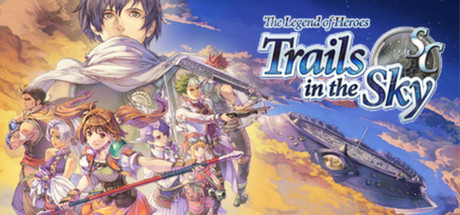
Sector Intelligence Report: The Legend of Heroes – Trails in the Sky SC
Falcom’s the legend of heroes: trails in the sky sc continues to generate quiet but persistent signal across the network, and the latest gameplay spotlight underlines why this 2006-era JRPG remains a design reference point for modern #gamedev and #indiegame teams. The past week’s activity feed has focused on its tactical turn-based combat, orbment customization, and narrative continuity—three pillars that, together, form a blueprint for long-form RPG design.
Tactical Combat as Systems-First Storytelling
The resurfaced gameplay highlights how SC uses its grid-and-turn-based battle system not just for challenge, but for characterization.
- Field positioning as identity: Characters like Estelle, Joshua, and party newcomers don’t just differ in stats; their crafts, movement ranges, and attack patterns reinforce who they are in the story. Frontline bracers feel physically present on the grid, while support casters commit to slower, high-impact arts from safer tiles.
- Turn manipulation as tension: The AT (Action Time) bar and turn bonuses (critical, EP/CP up, etc.) create a constant micro-puzzle. Boss encounters in SC lean hard into this, forcing players to decide between seizing a critical turn or preserving formation integrity.
- Difficulty that escalates the stakes: The report’s mention of “tougher bosses” is not hyperbole. SC assumes players have mastered the first game’s fundamentals, then layers in multi-phase bosses, AoE denial zones, and status-heavy encounters that punish autopilot play.
For developers, this is a reminder that you can reuse core combat scaffolding across entries, but escalate complexity via encounter design and enemy scripting rather than wholesale system rewrites.
The Orbment System: Long-Tail Buildcraft Without Overload
The orbment system remains one of the most instructive aspects of Trails in the Sky SC for designers exploring RPG buildcraft:
- Elemental logic, readable outcomes: Quartz combinations determine what arts a character learns. The mapping from element lines (e.g., Water, Wind, Time) to spell lists is complex under the hood but presented with enough clarity that players can experiment without a wiki.
- Incremental iteration, not constant respecs: Because quartz is slotted into predefined lines, players are nudged toward iteration (“tune this build”) instead of full rebuilds every dungeon. This reduces cognitive fatigue while still rewarding theorycraft.
- Economy as design glue: Orbment upgrades tie directly into the game’s money and sepith economy. Choosing between gear, quartz, and upgrades creates meaningful friction that feeds back into exploration and questing.
Modern #indiegame teams looking to implement deep customization on limited resources can take a page from Falcom’s playbook: reuse a constrained set of components (quartz, lines, elements) to generate a large design surface, rather than building dozens of bespoke skill trees.
Narrative Continuity: Designing a True Second Chapter
The activity feed calls out that SC “builds directly on the first game’s cliffhanger,” which is crucial to understanding its structure.
- No re-introductory bloat: SC assumes knowledge of Liberl, the Bracer Guild, and core cast relationships. That frees up runtime for escalation—political intrigue, higher-stakes conspiracies, and deeper dives into secondary characters.
- Side quests as world maintenance: Bracer jobs and optional investigations function as narrative upkeep, reminding players of the nation they’re fighting to protect. These aren’t just XP dispensers; they are continuity devices.
- Emotional payoffs via mechanical familiarity: Because the combat and orbment systems are inherited, the narrative beats can lean on player mastery. When the game puts you into disadvantaged fights or scripted losses, you feel the stakes because you know the system well enough to recognize when the odds are stacked.
For long-running RPG series, this is a case study in how to treat a “Part 2” not as DLC, but as a true second half of a single, large design.
Exploration, Party Synergy, and Pacing
The resurfaced trailer emphasizes field exploration and party synergy, both of which are central to SC’s pacing model:
- Exploration as rhythm control: Town hubs, highways, and dungeons form a predictable but satisfying loop. This predictability lets the writers time story beats around when players are likely to be over- or under-leveled.
- Synergy via crafts and arts: Crafts (character skills) and arts (magic) are tuned to interlock rather than overlap. Knockbacks, delays, and status inflictions create layers of combo potential that reward players who read enemy patterns and adjust loadouts.
- Modern polish on retro structure: While the core is firmly old-school, QoL touches—clear UI, readable turn order, and consistent signposting—make it more approachable to a contemporary audience.
Sector Outlook
Based on the latest activity, the legend of heroes: trails in the sky sc continues to function as a living reference text for tactical JRPG design. For #gamedev teams, especially in the #indiegame space, the signal is clear: you don’t need photoreal assets or open-world scale to deliver depth. You need tight systemic interlock, narrative continuity that respects player investment, and combat encounters that treat positioning and timing as storytelling tools.
Sources and corrections
This archive entry does not have a verified article-source list. Images and video embeds alone are not evidence for every claim.
Found an error? Request a correction. Include the passage and a supporting source.