Automated archive / Super Mario Galaxy
Super Mario Galaxy Movie Locks Orbit With Final Trailer & New Cosmic Threats
Nintendo’s final Super Mario Galaxy movie trailer locks in its cast matrix and confirms Wart as a new high-value threat in the Mushroom Kingdom’s orbital theatre. Gravity-bending set pieces and deep-cut character picks signal a long-term IP strategy with sharp lessons for gamedev and indiegame teams.
AI-generated summary. This archive article does not have a current recorded source check. Check linked sources before relying on details. Editorial policy

Sector Intelligence Report // Super Mario Galaxy
The Super Mario Galaxy IP just shifted from stable orbit to full cinematic burn. With Nintendo deploying the final Super Mario Galaxy Movie trailer, the roadmap for this cosmic reboot of the Mushroom Kingdom is now live: new cast confirmations, expanded character network, and a clear signal that this isn’t just a nostalgia ping—it’s a multi-year IP fortification strategy with direct implications for #gamedev and #indiegame teams watching from the sidelines.
This week’s transmissions point to three primary vectors: cross-media escalation, villain-tier escalation with Wart, and a renewed emphasis on gravity-bending spectacle that mirrors the original super mario galaxy design philosophy.
1. Final Trailer Deployed: Cast Matrix Fully Locked
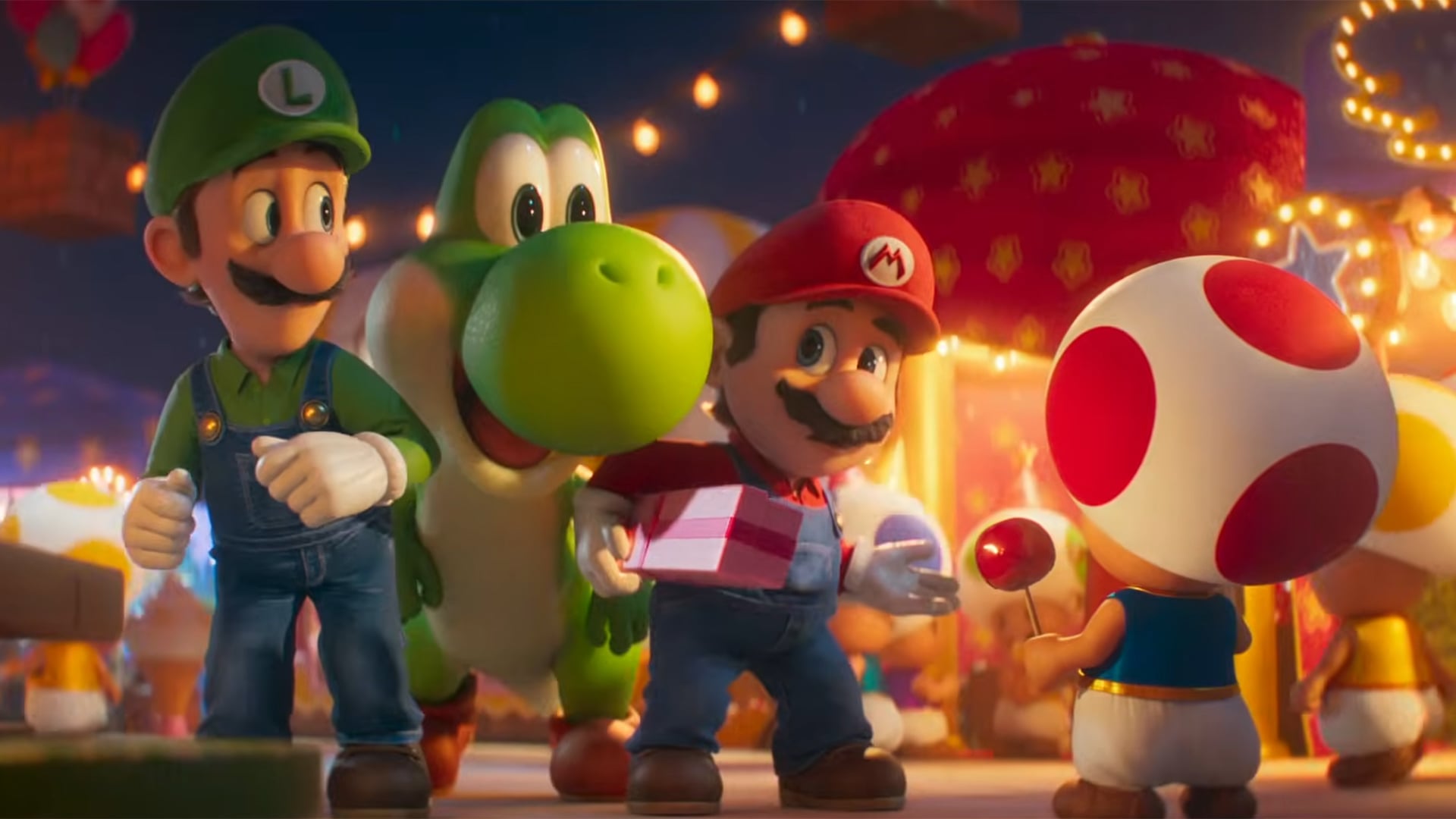
Nintendo’s final trailer confirms that the Super Mario Galaxy movie has completed its primary casting payload. The headline intel: Yoshi and the Honey Queen are now formally in the on-screen constellation, broadening the Mushroom Kingdom’s cinematic network beyond the usual Mario–Peach–Bowser triangle.
From a narrative-systems perspective, Yoshi introduces mobility and traversal identity—traditionally a design pillar in the games—while Honey Queen signals that the film will lean into the more eccentric, planet-specific characters that defined super mario galaxy’s personality. For developers, this is a reminder that strong IP worlds are built not just on protagonists, but on a deep bench of biome-specific NPCs and factions.
The trailer’s composition also suggests a deliberate balance between fan service and onboarding. Visual framing keeps silhouettes and color language immediately readable, even in complex starfield backdrops. That’s a core #gamedev lesson: no matter how wild your setting, player (or viewer) parsing speed must stay high.
2. Orbital Threat Assessment: Wart Confirmed
The most significant tactical update is the confirmation of Wart as an active antagonist in the latest Super Mario Galaxy trailer. Historically underused compared to Bowser, Wart’s arrival signals a willingness to tap deeper Mario lore and diversify the villain roster.
From a design and cinematic standpoint, Wart is a gift: amphibious physiology, projectile-based attacks, and strong visual contrast against the cold, clean geometry of space environments. The activity feed’s language—“projectile pattern disruptions” and “arena control hazards across multiple planetoids”—reads like a boss design spec: multi-phase encounters, pattern recognition, and localized environmental manipulation.
For #indiegame teams, this is instructive. You don’t need a massive cast; you need one or two antagonists with:
- Distinct combat grammar (e.g., bubbles, vegetables, or dreamlike projectiles in Wart’s case)
- Clear silhouette and animation exaggeration for instant readability
- Environmental synergy, where the arena is part of the boss’s identity, not just a backdrop
If Nintendo uses Wart to orchestrate gravity-warped boss arenas—rotating planetoids, shifting gravity wells, destructible cover—it will echo the systemic brilliance of the original super mario galaxy while giving the film its own mechanical identity.
3. Gravity, Spectacle, and the Cinematic Translation of Systems
The final trailer’s telemetry confirms a heavy emphasis on gravity-bending set pieces: Mario slingshotting between micro-planets, debris fields acting as dynamic platforms, and large-scale cosmic bosses framed as moving terrain. This is more than visual flair; it’s a direct adaptation of the game’s systemic heart.
For developers, the interesting part is how these sequences preserve legibility and cause-and-effect in a non-interactive medium. Camera paths are choreographed to mimic player-perspective clarity: horizon lines are stable when stakes are high, then deliberately inverted to sell disorientation without losing spatial logic.
That’s a key #gamedev takeaway: even in chaos, the audience must understand the rule set. Whether you’re shipping a 3D platformer or a 2D #indiegame, your most spectacular moments only land if players can parse the physics and stakes at a glance.
4. IP Strategy: Cross-Media Power-Up for the Next Cycle
The casting choices—Chris Pratt, Brie Larson, Donald Glover—combined with the VFX-heavy space opera framing, signal that Nintendo is not treating this as a one-off experiment. This is an IP infrastructure play.
Anticipate:
- Renewed interest in legacy titles: expect a spike in searches and playtime for super mario galaxy and its sequel.
- Merch and cross-collabs: character-forward designs like Honey Queen and Yoshi are built for licensing.
- Design language bleed-through: if the film’s gravity set pieces resonate, future Mario titles may echo this cinematic grammar in camera work, cutscenes, and even UI.
For #indiegame creators, the macro-lesson is that strong systems-driven identities can survive and even thrive in cross-media adaptation. Super Mario Galaxy’s core loop—gravity manipulation plus compact, theme-rich planetoids—is robust enough to translate into film, merch, shorts, and potentially new experimental formats.
5. Sector Outlook
The Super Mario Galaxy movie’s final trailer doesn’t just mark marketing endgame; it marks the beginning of a new orbit for the franchise. With Wart entering the field, Yoshi and Honey Queen expanding the cast network, and gravity still acting as the franchise’s mechanical and visual spine, this adaptation is positioned as both fan service and future-proofing.
For developers watching from the outer rings, the message is clear: build worlds with strong systemic identities, design antagonists with environmental synergy, and make sure your most ambitious ideas remain legible—whether they’re played with a controller or experienced from a theater seat.
Sources and corrections
This archive entry does not have a verified article-source list. Images and video embeds alone are not evidence for every claim.
Found an error? Request a correction. Include the passage and a supporting source.