Automated archive / Super Mario Galaxy
Super Mario Galaxy Movie Locks Orbit and Expands Its Threat Matrix
Nintendo’s final Super Mario Galaxy Movie trailer locks in its cast matrix, confirms Wart as a major threat, and showcases gravity-bending set pieces that mirror the original game’s design. For developers, this week’s signals are a live case study in long-tail IP strategy and mechanic-to-cinema translation.
AI-generated summary. This archive article does not have a current recorded source check. Check linked sources before relying on details. Editorial policy

Sector Overview: Galaxy IP Enters Full Cinematic Burn
Nintendo has pushed Super Mario Galaxy back into the cultural foreground with a final movie trailer that effectively locks the project into launch-ready status. Across the last seven days of signals, the IP has transitioned from teaser-phase speculation to a fully mapped cinematic operation: confirmed cast expansions, a clearer read on narrative focus, and a sharper look at gravity-bending set pieces that echo the original game’s design DNA.
This isn’t just a marketing beat; it’s a high-orbit reinforcement of one of Nintendo’s most technically and creatively ambitious eras. For #gamedev observers and #indiegame teams studying long-tail IP strategy, Super Mario Galaxy’s renewed push shows how a legacy title can be re-weaponized for a new generation without discarding its core mechanical identity.
Final Trailer Telemetry: Cast Matrix Locked
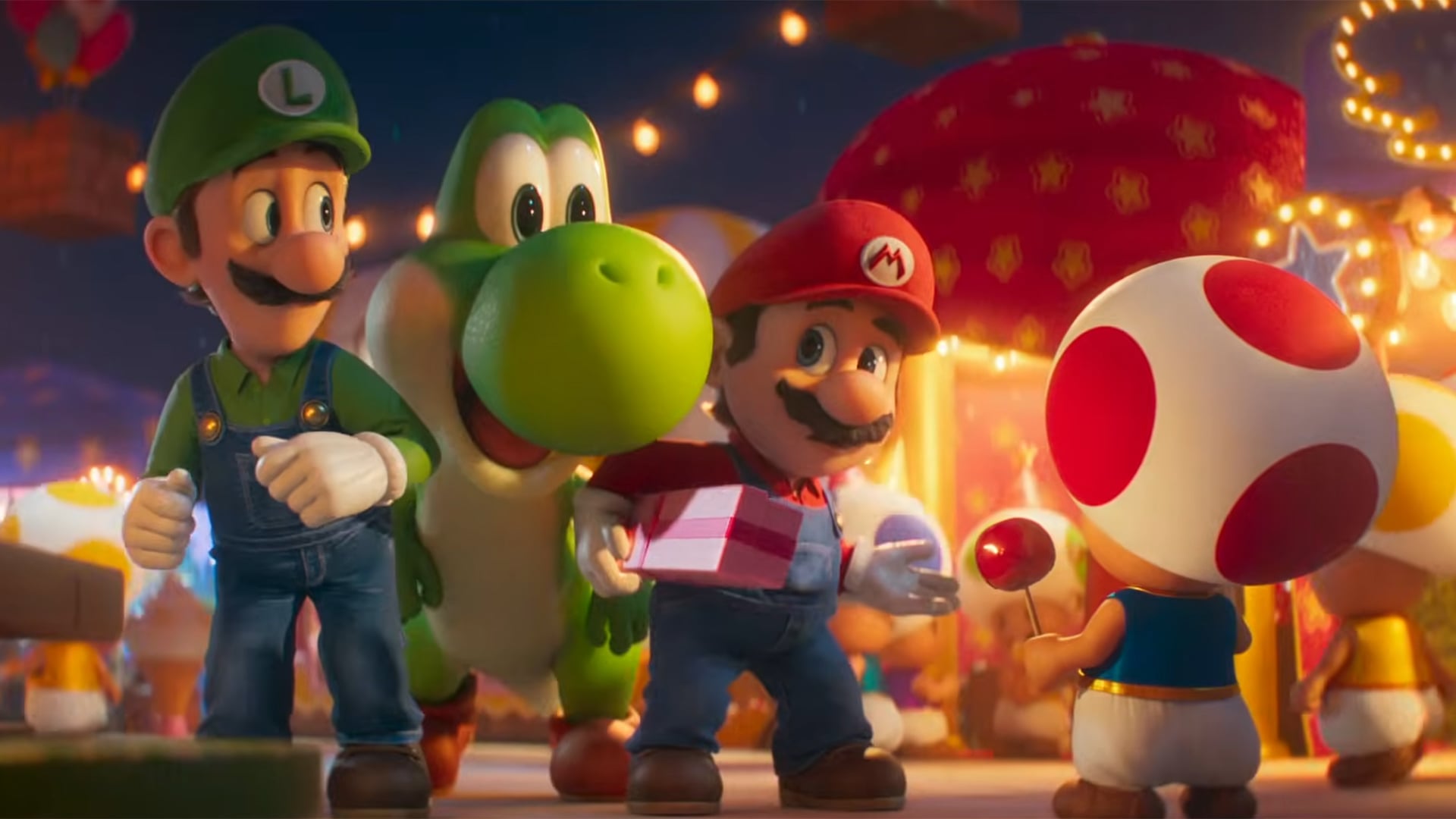
The latest transmission confirms that the Mario Galaxy Movie has entered its final promotional phase, with the cast matrix now effectively locked. New intel highlights Yoshi and the Honey Queen joining the on-screen network of the Mushroom Kingdom, broadening both the emotional range and the visual topology of the film.
From a game development lens, these picks are tactical:
- Yoshi introduces dynamic traversal opportunities and co-op style energy that can echo the game’s momentum-based level design.
- Honey Queen signals that the film will lean into Galaxy’s stranger, more vertical biome design, where surface area and gravity direction become storytelling tools.
The casting of high-profile talent like Chris Pratt, Brie Larson, and Donald Glover, as flagged in the final trailer’s metadata, suggests Nintendo is doubling down on cross-demographic reach. It’s a textbook case of IP leveraging star power as a multiplier rather than a substitute for strong worldbuilding.
Threat Assessment: WART Enters the Gravitational Theatre
The most consequential piece of new intel is the confirmation of WART as an active combatant in the cinematic theatre. Historically sidelined compared to Bowser, Wart’s arrival reshapes the tactical and narrative landscape:
- Amphibious Command Presence: Wart’s design allows for fluid-environment arenas and biome-shifting set pieces that mirror Galaxy’s experimental planetoids.
- Projectile Pattern Disruptions: Expect multi-phase encounters with dense projectile fields—an homage to the game’s pattern-reading platforming challenges.
- Arena Control Hazards: Wart’s presence is a greenlight for environmental storytelling: shifting gravity wells, destructible platforms, and dynamic threat zones.
For #gamedev professionals, Wart’s inclusion is a reminder that dormant villains can be reactivated as fresh content anchors. It’s the kind of move that can later justify DLC, spin-off games, or limited-run events that extend the lifecycle of the IP beyond the film’s theatrical window.
Gravity, Set Pieces, and Design Parity With the Game
The trailer’s VFX payload leans hard into what made the original super mario galaxy so distinct: radial level design, gravity inversion, and planet-hopping traversal. The cinematic language is clearly tuned to echo the game’s systemic design:
- Radial Movement: Shots of Mario orbiting tiny planetoids mimic the game’s camera sweeps and 360-degree movement.
- Gravity Bending: Characters shifting from underside to topside surfaces in a single shot visually translates the game’s core mechanic without needing exposition.
- Cosmic Boss Encounters: Large-scale silhouettes against starfields mirror Galaxy’s boss arenas, where spatial awareness mattered as much as timing.
For developers, this is a case study in mechanic-to-cinema translation: how to preserve the feel of a system (gravity manipulation, momentum, spatial puzzles) when the medium no longer allows player input.
Cross-Media Power-Up: What It Signals for Developers
The Super Mario Galaxy Movie’s final-trailer phase offers several strategic insights for studios of all sizes:
1. Legacy IP as Renewable Resource
Nintendo is proving that a 3D platformer from a previous hardware generation can be reintroduced as a prestige cinematic event. For #indiegame teams, this underlines the value of building strong, re-usable worlds from day one—worlds that can support comics, shorts, or even low-budget animated tie-ins down the line.
2. Villain Roster as Content Pipeline
The activation of Wart and the inclusion of characters like Honey Queen show how a deep bench of side characters can become a future-proof content pipeline. Smart #gamedev practice: design supporting characters with enough visual and narrative hook that they can be elevated later as central figures in spin-offs or adaptations.
3. Visual Systems as Brand Identity
Super Mario Galaxy’s gravity and planetoid gimmicks have become its visual brand. The film’s VFX sequences are essentially cinematic UX for the original mechanics. For developers, the lesson is clear: invest in a single, highly legible systemic idea that can define your game in screenshots, trailers, and—eventually—other media.
Final Outlook: IP Reinforcement in High Orbit
With the final trailer out, the Super Mario Galaxy Movie is now in the final approach to launch. The confirmed cast matrix, Wart’s elevation to primary threat, and the heavy emphasis on gravity-bending set pieces all point to a production that understands the core of its source material.
For the development sector, this week’s signals reinforce a key trend: well-architected game systems and worlds age slower than hardware cycles. Super Mario Galaxy is being reintroduced not as nostalgia bait, but as a fully modern cinematic asset—offering a blueprint for how today’s #gamedev and #indiegame projects might be orbiting cinemas 10–15 years from now, if their worlds are built with similar long-term intent.
Sources and corrections
This archive entry does not have a verified article-source list. Images and video embeds alone are not evidence for every claim.
Found an error? Request a correction. Include the passage and a supporting source.
Your games, in one place
Keep up with Super Mario Galaxy
Follow this game to collect its posts in your personal feed. Come back to see what you missed.