Automated archive / Super Mario Galaxy
Super Mario Galaxy Movie Locks Orbit With Final Trailer and New Threat Data
Nintendo has locked in the final Super Mario Galaxy movie trailer, confirming Yoshi, Honey Queen, and Wart as key players in a gravity-bending space opera. This week’s intel breaks down how the adaptation retools classic mechanics into modern cinematic systems — and what gamedev and indiegame teams can learn from it.
AI-generated summary. This archive article does not have a current recorded source check. Check linked sources before relying on details. Editorial policy

Sector Overview: Galaxy IP Enters Full Cinematic Burn
The Super Mario Galaxy IP has officially exited low-orbit marketing and entered full cinematic burn. Over the last seven days, Nintendo has deployed a coordinated trailer offensive for the upcoming Super Mario Galaxy movie, confirming final casting telemetry, new character entrants, and a clearer read on the film’s tonal and visual direction.
For #gamedev and #indiegame teams, this isn’t just a nostalgia ping — it’s a live case study in how to re-platform a classic game design grammar into a modern cross-media event. Gravity-bending level design, multi-planetoid traversal, and boss arenas originally built for the Wii are being reimagined as high-budget VFX set pieces with mainstream casting and global box office ambitions.
Final Trailer: Cast Matrix Locked, Universe Expanded
Nintendo’s latest and final trailer transmission confirms a star-powered ensemble: Chris Pratt, Brie Larson, and Donald Glover headline a cast that’s clearly tuned for four-quadrant reach. The new footage frames Super Mario Galaxy not as a side-story, but as a full-blown space opera inside the Mushroom Kingdom continuity.
Key intel from the trailer:
New Allies: Yoshi and the Honey Queen Enter the Starfield
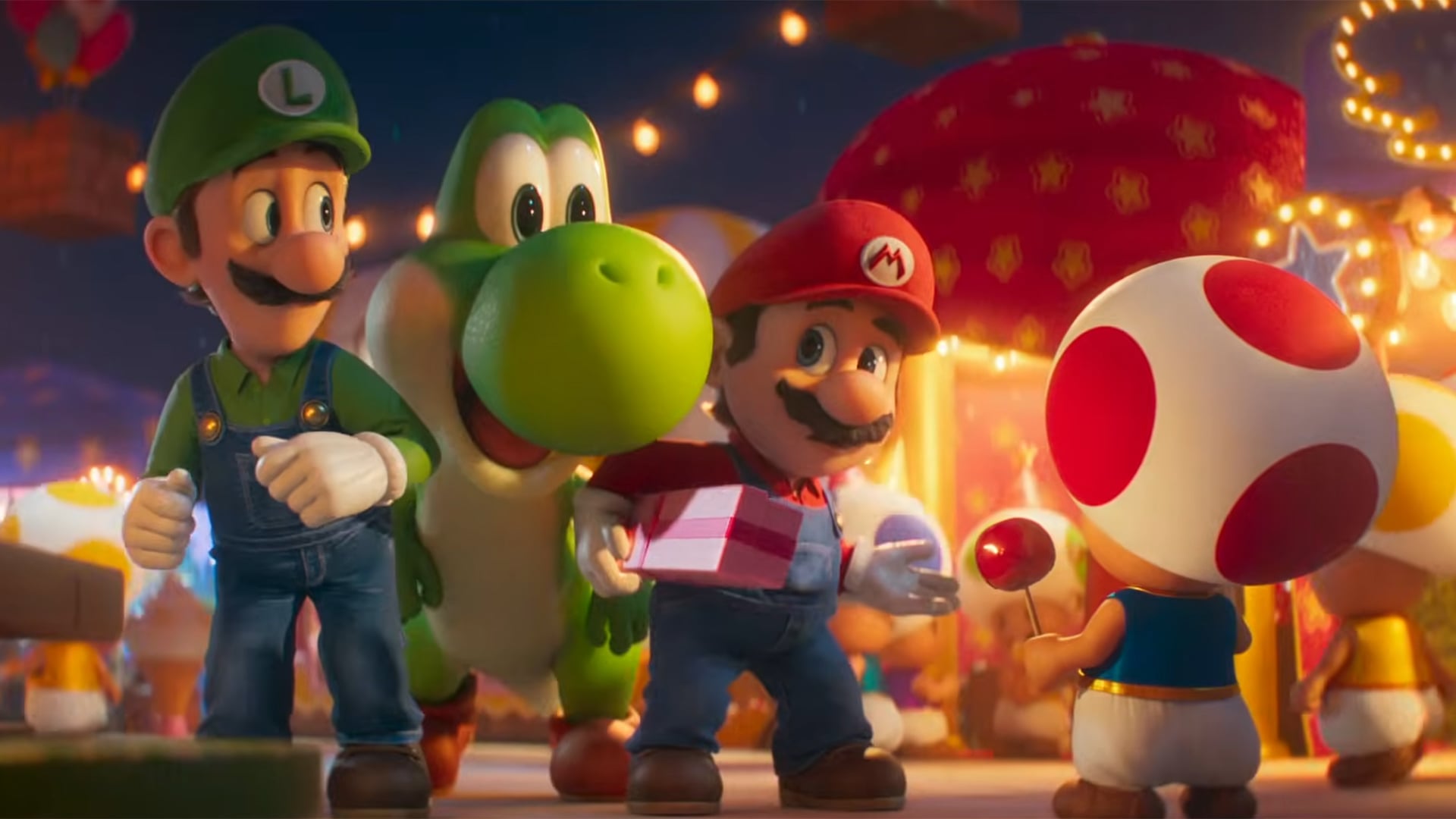
The activity feed confirms Yoshi and the Honey Queen joining the cinematic roster. From a design and narrative systems perspective, these aren’t just fan-service cameos:
- Yoshi introduces kinetic variation – mounts, aerial maneuvering, and tongue-based traversal that echo the original game’s mechanical spikes in mobility.
- Honey Queen hints at verticality and surface-clinging traversal, echoing the Bee Mario mechanics and honeycomb planetoid design from the original super mario galaxy.
For developers watching this from the sidelines, Nintendo is effectively visualizing mechanics as character beats. Expect honeycomb architectures, sticky surfaces, and low-gravity aerial choreography to become visual anchors, not just background dressing.
Watch: Transmitting Gameplay footage from the field: Official Super Mario Galaxy Movie Final Trailer
Orbital Threat Assessment: WART Confirmed
One of the most significant new signals is the confirmation of WART as a high-value antagonist in the latest trailer. Originally best known from Super Mario Bros. 2, Wart’s insertion into the Super Mario Galaxy theatre is a deliberate escalation of threat modeling.
Design Read: Arena Control and Pattern Disruption
The activity feed frames Wart as an “amphibious command presence” with projectile pattern disruptions and arena control hazards across multiple planetoids. Translated into design language:
- Projectile Patterns: Expect bullet-hell adjacent compositions — layered fireballs, bubbles, or dreamlike projectiles that reference his SMB2 lineage while leveraging Galaxy’s 3D wraparound spaces.
- Arena Control: Wart’s likely to reshape terrain mid-encounter, toggling gravity vectors, flooding sectors, or spawning hazard clusters that force players (or viewers, in cinematic terms) to constantly re-evaluate safe zones.
- Multi-Planetoid Encounters: The mention of “gravitational theatre” strongly suggests boss sequences that jump between micro-planets, a direct homage to the original game’s spherical level design.
For #gamedev teams, Wart’s inclusion is a masterclass in recontextualizing a legacy boss: same character DNA, but reauthored to exploit modern camera work, 3D staging, and VFX-heavy spectacle.
Cinematic Systems: Translating Mechanics to Film Language
The “Cinematic Odyssey Protocol” described in the feed underlines what the trailer shows: Super Mario Galaxy is being treated as a systems-driven universe rather than a simple platformer adaptation.
Gravity as a Narrative Device
Galaxy’s original design hinged on gravity as a core verb. The film appears to:
- Use orbit shifts and upside-down traversal as emotional punctuation — moments of disorientation to match narrative stakes.
- Turn planetoid hopping into montage-friendly sequences that compress traversal into visually legible, high-energy beats.
This is the kind of adaptation that #indiegame creators can study: how to externalize invisible rules (gravity vectors, camera locks, collision volumes) into visual storytelling that non-players can instantly parse.
Cross-Media Power-Up: IP Reinforcement
The final trailer locks in a cross-media power-up cycle:
- Games → Film: Iconic mechanics (sling stars, launch stars, spherical worlds) become VFX cornerstones.
- Film → Games: Expect renewed interest in the original super mario galaxy titles, potential remasters, and new players entering the ecosystem after the movie’s release.
For Nintendo, this is IP reinforcement at scale. For developers, it’s a reminder that strong mechanical identity can sustain cross-media adaptation decades later.
Strategic Takeaways for Developers
1. Treat Mechanics as Cinematic Hooks
Nintendo’s marketing beats show how to center mechanics in narrative marketing. Gravity shifts, spherical traversal, and boss arena transformations are front-and-center in every frame of the trailer, not just Easter eggs for fans.
Actionable insight for #gamedev and #indiegame teams:
- Identify one or two core mechanics that define your game’s identity.
- Ensure every major trailer beat telegraphs those mechanics visually and cleanly.
2. Legacy Characters, New Contexts
Wart’s promotion to galactic antagonist demonstrates how to upcycle legacy content:
- Preserve iconic traits (amphibious, dream-like, projectile patterns).
- Re-stage them in new systemic contexts (3D arenas, gravity-bending spaces, multi-phase encounters).
This is a blueprint for reusing your own back-catalogue bosses or factions across sequels and spin-offs.
3. Build Universes, Not One-Offs
The Super Mario Galaxy movie isn’t framed as an isolated adaptation; it’s a node in a larger IP network — games, film, merchandising, and likely renewed digital releases.
Developers, even at indie scale, can emulate this by:
- Designing lore and mechanics that can scale across formats (game, comic, short film, ARG).
- Keeping your visual language and mechanical identity consistent, so any new medium still “reads” as your universe.
Closing Signal: Galaxy Sector on High Alert
With the final trailer deployed, cast matrix locked, Yoshi and Honey Queen confirmed, and Wart officially entering the gravitational theatre, the Super Mario Galaxy sector is on high alert. The next phase will be box office telemetry, community sentiment analysis, and potential follow-up game-side movements from Nintendo.
For now, this week’s intelligence is clear: Super Mario Galaxy remains one of the strongest examples of how tightly coupled mechanics, art direction, and character design can survive — and thrive — in a full cinematic redeployment.
Sources and corrections
This archive entry does not have a verified article-source list. Images and video embeds alone are not evidence for every claim.
Found an error? Request a correction. Include the passage and a supporting source.
Your games, in one place
Keep up with Super Mario Galaxy
Follow this game to collect its posts in your personal feed. Come back to see what you missed.