Automated archive / Styx: Blades of Greed
Styx: Blades of Greed Dials Stealth Back to ‘High-Risk, High-Reward’
Styx: Blades of Greed has hit the field as a hard-stealth, high-risk heist simulator where vertical maps, lethal traps, and unforgiving AI define every run. This week’s intel breaks down how its systems-driven design turns greed into both your greatest asset and your fastest route to failure.
AI-generated summary. This archive article does not have a current recorded source check. Check linked sources before relying on details. Editorial policy
Sector Intelligence Report // Week of Feb 25
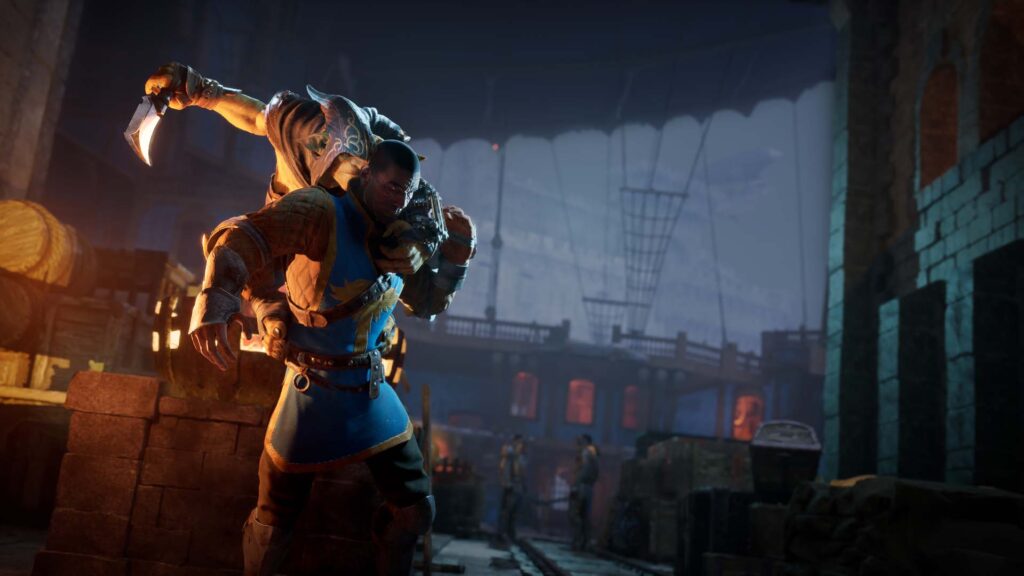
Styx: Blades of Greed is out in the wild, and the past seven days of intel paint a clear picture: this isn’t a nostalgia play, it’s a systems-first stealth ops package built to stress-test how far players will push risk–reward. From vertical infiltration lanes to punishing AI patrol logic, the goblin’s latest contract is tuned for players who want to live on the edge of detection rather than power-fantasy their way through a corridor.
This week’s signals—from launch comms to a full operational debrief—show a team doubling down on classic stealth DNA while modernizing level readability, co-op breach options, and economic pressure through loot-driven progression. For #gamedev and #indiegame teams watching from the shadows, Styx: Blades of Greed is effectively a live case study in how to make a sneaky game feel dangerous again without completely alienating the wider audience.
Field Report: Stealth Routing and Verticality as Core Design Pillars
The latest review debrief drills into what’s quickly becoming Blades of Greed’s signature: vertical multi-path maps that treat height as both opportunity and liability. Rooftop catwalks, stacked interiors, and overlapping patrol grids allow for:
- Layered infiltration vectors – Every objective seems to support at least three conceptual routes: high (rooflines and rafters), mid (balconies, ledges, and window breaches), and low (sewers, crawlspaces, and shadow pockets).
- Dynamic extraction planning – The same verticality that gets you in also shapes your getaway. Players who pre-plan escape lines—zip points, chandeliers, trap door loops—are rewarded when a run goes loud.
From a #gamedev perspective, this is a textbook example of vertical readability: sightlines are carefully staged so players can parse where they can go and what it will cost them. The review notes that when the gears grind, it’s usually because that readability slips—overly busy geometry or unclear climbable surfaces occasionally break the stealth flow. But when it clicks, Styx: Blades of Greed hits that rare Thief–Dishonored middle ground where the map feels like a multi-layered puzzle instead of a linear corridor.
Patrol Logic, Traps, and the Economics of Greed
The activity feed highlights a core tension in Styx’s latest outing: AI patrol logic and loot economics are tightly intertwined.
- AI Patrols – The debrief flags patrols as more than simple pattern walkers. Guards respond to sound, light, and dead body discovery with escalating states that can hard-lock certain routes. This makes every kill a tactical decision rather than a default solution.
- Environmental Traps – Trap-laced corridors and lethal environmental setups are tuned for creative assassinations and chain reactions. The game encourages players to think in terms of space control instead of just timing.
- Risk–Reward Loot Loop – The “economic risk–reward loop” called out in the review is key. The best loot is often staged in high-visibility, high-patrol-density zones. Going for those extra purses or rare artifacts doesn’t just pad your wallet; it can unlock new tools and upgrades that meaningfully shift your future infiltration builds.
From a design standpoint, this is a strong implementation of greed as a mechanical lever: the more you chase, the more you expose yourself to detection, and the more the AI—and level layout—push back. For developers, it’s a reminder that progression systems hit harder when they’re spatially and systemically integrated, not just tucked into menus.
Combat Fallbacks: When Stealth Collapses Under Fire
The operational debrief stresses one thing repeatedly: Styx is not a power fighter. Combat is framed as a fallback protocol, not a primary playstyle.
- Limited but Sharp Toolkit – Parry windows, quick finishers, and consumables give you a fighting chance, but the math is skewed toward escape, not domination.
- Map-Driven Escapes – Vertical routes double as emergency exits. Smart players memorize ladders, vents, and drop points as part of their stealth planning, not afterthoughts.
This is a deliberate stance in an era where many stealth titles quietly drift toward hybrid action. Styx: Blades of Greed leans into the fantasy of being fragile but lethal under the right conditions. For #gamedev teams, it’s a bold call: you trade mass market appeal for a clearer identity, but you gain a fiercely engaged niche that understands the contract upfront.
Co-op Breach Options: Shared Stealth, Shared Liability
Watch: Transmitting Gameplay footage from the field: Styx: Blades of Greed | Launch Trailer
The intel stream name-drops co-op breach options, and that’s one of the most interesting design beats this week. Co-op stealth is notoriously fragile—two players double the potential for chaos—but also double the potential for emergent storytelling.
Key takeaways from the available footage and commentary:
- Role-Split Infiltration – One player can run distraction while the other threads a high-risk route to the objective. This supports asymmetric skill expression in a genre that’s often solitary.
- Coordinated Traps – Environmental hazards become co-authored set pieces: one player baits, the other pulls the trigger.
For other #indiegame teams, Styx: Blades of Greed is worth watching as a reference on how to keep co-op stealth readable: clear silhouettes, sharp audio cues, and shared awareness tools are critical when two assassins are trying to run the same playbook without stepping on each other’s toes.
Launch Trajectory and Ongoing Development Watch
Across the last seven days, the messaging cadence has been tight:
- Feb 18 – A feature-focused transmission (“Why You’ll Love to Hate Styx”) framed the goblin as a deliberately abrasive, morally flexible asset. This sets expectations: you’re not a hero, you’re a problem.
- Feb 19 – The Styx: Blades of Greed | Launch Trailer doubled down on vertical maps, trap-driven kills, and high-mobility infiltration.
- Feb 25 – The in-depth review/operational debrief landed, providing a granular breakdown of where stealth, AI, and level readability excel—and where friction points emerge.
From a development update standpoint, this first-week telemetry suggests a few likely focus areas for post-launch tuning:
- Readability Passes – Cleaning up edge-case geometry and clarifying climbable paths to keep stealth routing intuitive.
- AI Edge-Case Behavior – Smoothing over patrol states that feel inconsistent or overly punitive when players experiment.
- Economy Fine-Tuning – Adjusting the loot curve so that high-risk runs feel proportionally rewarding without trivializing upgrades.
For studios tracking market signals, Styx: Blades of Greed is quietly staking out the hard stealth niche at a time when many competitors are drifting toward action hybrids. If the team can iterate quickly on readability and AI nuance, this could become a go-to reference for how to modernize classic stealth without sanding off its teeth.
Strategic Takeaways for Developers and Players
- For players: Expect a stealth-first experience where planning, patience, and map knowledge matter more than reaction speed. The game rewards greed—but only if you’re willing to live with the consequences.
- For developers: Styx: Blades of Greed is a live case study in integrating economic systems, AI behavior, and level design into a single, cohesive stealth fantasy. Watch how the team patches and balances over the next month; those moves will reveal which systems are core pillars and which are still in flux.
As of this week’s Sector Intelligence Report, the verdict is clear: Styx is back, meaner, smarter, and more mechanically focused. The shadows are open for business—enter at your own risk.
Sources and corrections
This archive entry does not have a verified article-source list. Images and video embeds alone are not evidence for every claim.
Found an error? Request a correction. Include the passage and a supporting source.
Your games, in one place
Keep up with Styx: Blades of Greed
Follow this game to collect its posts in your personal feed. Come back to see what you missed.