Automated archive / Sonic the Hedgehog
Sonic the Hedgehog’s Cross-Media Gambit and Hardware Push This Week
Sonic the Hedgehog spent the week flexing its cross-media muscles: game-side voice talent endorsed a bold film casting, Sonic Weekly tightened the fan–dev feedback loop, and a new home arcade cabinet pushed the brand deeper into living rooms. For developers, the signals point to a future built on modular canon,...
AI-generated summary. This archive article does not have a current recorded source check. Check linked sources before relying on details. Editorial policy

Sector Overview
The Sonic the Hedgehog ecosystem spent the week stress-testing its cross‑media strategy and nostalgia hardware pipeline. While the core games front remains quiet on explicit development update beats, the perimeter signals—voice talent commentary, community broadcast infrastructure, and premium cabinet hardware—are painting a clear picture of how Sega is positioning the brand for its next phase. For #gamedev and #indiegame teams watching Sonic as a case study, this week is all about casting logic, canon elasticity, and IP‑driven hardware monetization.
Franchise Voice Protocol: Roger Craig Smith Endorses Kristen Bell’s Amy
The most charged datapoint this week is a rare public alignment between game-side talent and film-side casting. Roger Craig Smith, long‑time tactical vocal asset for Sonic in the games, weighed in on Kristen Bell’s casting as Amy Rose in the cinematic branch.
From a franchise operations perspective, this is bigger than a feel‑good soundbite:
Cross-Media Casting Logic
Smith’s verdict—framed around Bell’s energy, presence, and audience pull—signals a strategic tolerance for divergence between game canon and film canon. For a character as emotionally loud as Amy, the casting calculus leans toward:
- Broad-spectrum appeal over one‑to‑one vocal continuity.
- Mainstream recognizability to widen the film funnel beyond entrenched Sonic the Hedgehog fans.
- Emotional readability for non‑initiated audiences who only know Sonic from trailers and memes.
Canon purists may twitch, but for IP managers and #gamedev leads, this is a live example of how you trade strict continuity for market reach. The key is public endorsement from core talent: Smith’s approval functions as a stability field, dampening fan backlash while legitimizing the film team’s risk profile.
Lessons for Game Teams
For studios—especially #indiegame outfits—tracking this move:
- Voice direction is brand direction. When your long‑term VO lead publicly backs a controversial casting, you’re effectively updating the perceived canon of how that character can be interpreted.
- Leave room for multi-verse casting. Building characters with flexible tone, range, and personality arcs gives you more options when crossing into animation, live action, or localized dubs.
- Align messaging across channels. Smith’s commentary works because it’s clean, positive, and framed around fit rather than corporate talking points.
Sonic Weekly: Community Ops as Ongoing Intelligence Layer
Watch: Transmitting Gameplay footage from the field: Sonic Weekly broadcast segment
The Sonic Weekly broadcast spun up a fresh transmission focused on Kristen Bell as Amy Rose and a new episode of Chaotix Casefiles with long‑time community operative Brandon Hain. This isn’t just fan content; it’s functioning as a real‑time telemetry loop between the brand and its most engaged sectors.
Why Sonic Weekly Matters
- Rapid Interpretation Layer – The show immediately decrypts the Amy Rose casting news, turning a raw announcement into community‑digestible narrative. That reduces rumor drag and keeps discourse anchored.
- Lore and Deep-Cut Retention – With segments like Rings of Saturn and Chaotix Casefiles, Sonic Weekly keeps deep lore and archival audio in rotation. That’s essential for a franchise that needs to feel both current and historically dense.
- Fan–Dev Feedback Channel – Even when not officially sanctioned as a devlog, this kind of broadcast becomes a proxy development update. It surfaces what the community is obsessing over, which can quietly inform future design, casting, and narrative priorities.
Takeaways for Devs
- Build your own “weekly ops” format. Even small #indiegame teams can run a lightweight weekly or bi‑weekly stream that contextualizes patches, narrative choices, or art direction shifts.
- Use broadcasts to test tone. Sonic Weekly’s handling of Kristen Bell as Amy effectively A/B tests how far fans will allow tonal pivots in Sonic the Hedgehog media.
- Archive as a living wiki. Over time, these episodes become a searchable record of how the IP evolves—useful for onboarding new devs, writers, and community managers.
Hardware Front: New Sonic the Hedgehog Home Arcade Cabinet
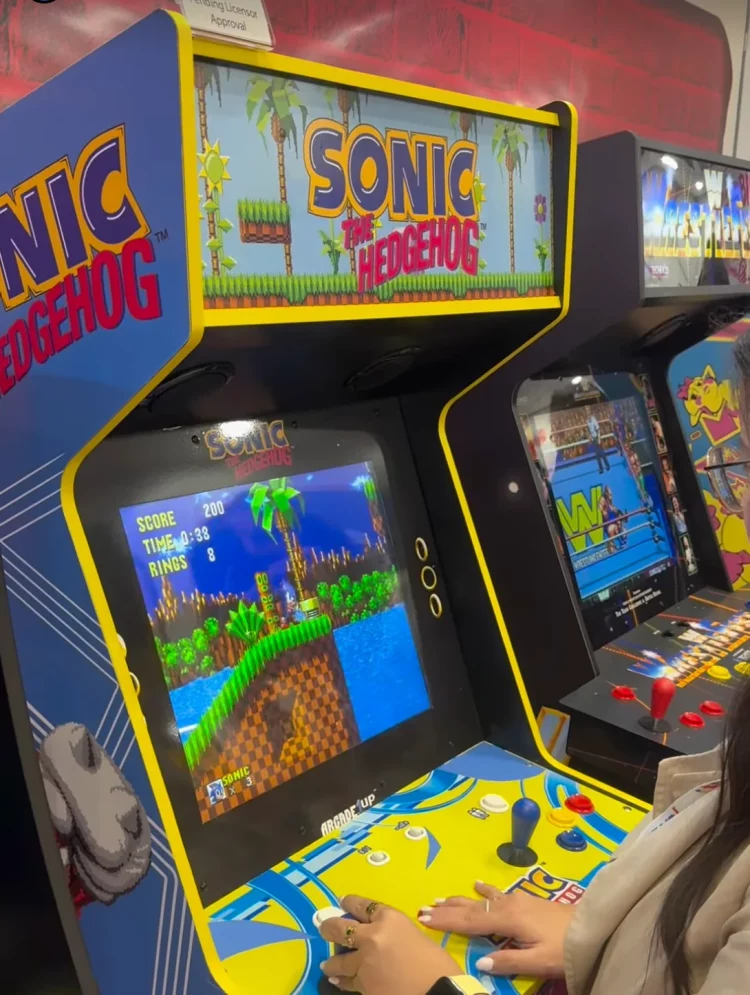
Toy Fair 2026 delivered a tangible artifact of Sonic’s retro‑forward strategy: Basic Fun! and Arcade1Up unveiled a new Sonic the Hedgehog home arcade cabinet, targeting collectors and nostalgia engineers.
Strategic Role of the Cabinet
- Living-Room Presence as Marketing – A cabinet is permanent, physical brand real estate. It keeps Sonic the Hedgehog visually active in households long after a game’s marketing window closes.
- Monetizing Legacy Content – Repurposing existing ROMs and classic circuits in a premium shell is a high‑margin way to re‑monetize back catalog content without full remaster overhead.
- Collector Signaling – The design and size (positioned as a premium, almost “XL” form factor) signal that Sonic is not just kid‑core; it’s targeting 30–40‑something fans who now have disposable income and nostalgia to burn.
Implications for Game and IP Strategy
For developers watching from the sidelines:
- Think in ecosystems, not SKUs. A game can later become a cabinet, a board game, a streaming marathon, or a museum piece. Design with long‑tail adaptability in mind.
- Retro is a design language. Sonic’s 2D speed‑run circuits, crisp color palettes, and iconic audio cues translate perfectly to hardware. For #indiegame devs, building with strong silhouette and sound identity increases your chances of later hardware or merch adaptations.
- Physical editions as community anchors. Limited hardware drops can rally fragmented fanbases, especially between major development update cycles.
Sector Forecast: Canon Flex, Community Gravity, and Hardware Anchors
This week’s Sonic activity doesn’t reveal a new mainline title, but it does reveal Sega’s operational posture:
- Canon is becoming modular. Kristen Bell as Amy, backed by Roger Craig Smith’s commentary, suggests a future where game, film, and broadcast interpretations coexist rather than strictly align.
- Community media is a force multiplier. Sonic Weekly is functioning as a semi‑official intelligence relay, translating corporate moves into fan‑friendly language while quietly steering sentiment.
- Hardware is the physical backbone of the brand. The new home arcade cabinet underscores how legacy gameplay loops can be re‑deployed as prestige objects, keeping Sonic visible even in quiet dev cycles.
For studios studying Sonic the Hedgehog as a live case study in IP management, the takeaway is clear: invest in your voice ecosystem, your community-facing broadcast layer, and your long‑tail hardware or merch strategy. Even without a headline development update, the sector stays loud—and that, in franchise terms, is its own kind of speedrun.
Sources and corrections
This archive entry does not have a verified article-source list. Images and video embeds alone are not evidence for every claim.
Found an error? Request a correction. Include the passage and a supporting source.
Your games, in one place
Keep up with Sonic the Hedgehog
Follow this game to collect its posts in your personal feed. Come back to see what you missed.