Automated archive
Sonic’s Cross-Media Gambit, IDW Decompilation, and the Amy Rose Casting Shockwave
Sonic’s last seven days weren’t about a new game drop—they were about recalibrating the entire transmedia machine. From Kristen Bell’s Amy Rose casting to IDW comic deconstructions and community intel broadcasts, the blue blur is quietly tightening its cross-media playbook.
AI-generated summary. This archive article does not have a current recorded source check. Check linked sources before relying on details. Editorial policy


Sector Overview: Sonic’s Multi-Front Offensive
Over the last week, sonic the hedgehog has operated on three key fronts: Hollywood casting disruption, community-driven lore analysis, and long-form comic deconstruction. For developers watching the franchise as a living case study in cross-media #gamedev strategy, this seven-day window reads like a playbook on how to maintain momentum between major releases and keep IP oxygen levels high.
The signal traffic centers on three nodes:
- Kristen Bell’s surprise deployment as Amy Rose in the film universe.
- Ongoing community broadcast Sonic Weekly, leaning hard into meta, lore, and fan–dev feedback loops.
- A deep-dive SEGA Talk episode unpacking IDW’s first 32 issues and what that means for narrative continuity and future adaptations.
Casting Front: Kristen Bell as Amy Rose and Franchise Voice Protocols
The most volatile packet this week is the confirmation that Kristen Bell is voicing Amy Rose in the cinematic branch. The critical follow-up isn’t just the casting itself, but how Roger Craig Smith—Sonic’s tactical vocal asset in the games—publicly framed it.
Smith’s stance: Bell’s energy, presence, and audience pull are strategically aligned with what the film operation needs. That framing matters. It’s a subtle but important signal from the game-side talent that the franchise is prioritizing broad-spectrum appeal over strict voice continuity across media.
For #gamedev teams, this is a textbook example of multi-canon voice strategy:
- Game canon maintains its own stable of VAs to preserve tonal consistency for long-term players.
- Film canon optimizes for mainstream recognition and marketing gravity.
- Public commentary from game VAs is carefully calibrated to reduce fan friction while supporting the brand’s bigger-picture goals.
Canon purists will feel the dissonance, but SEGA’s posture suggests that the cinematic funnel is now a primary acquisition vector: use star power to pull in new audiences, then route them toward games, comics, and streaming content where the legacy voices still define the character.
Sonic Weekly: Community Intel as Live Ops

The Sonic Weekly broadcast continues to operate like an unofficial live-ops dev diary, even though it’s community-facing media rather than a direct development update. This week’s episode focuses on:
- Decrypting Kristen Bell’s Amy Rose casting and mapping it to broader franchise strategy.
- Digging into the latest Chaotix Casefiles with long-time community operative Brandon Hain.
- Surfacing deep-cut lore via the Rings of Saturn segment, giving oxygen to older material and niche corners of the canon.
From a #gamedev and #indiegame perspective, Sonic Weekly showcases how ecosystem media can:
- Keep narrative continuity front-of-mind between major releases.
- Provide rapid feedback loops on controversial decisions (like casting shifts) without SEGA needing to issue formal statements.
- Function as a temperature check on how far the IP can stretch canon before fan trust erodes.
Indie teams studying AAA transmedia moves should pay attention here: you may not have a Hollywood film, but you can cultivate a trusted, semi-official community broadcast that helps you explain design pivots, lore retcons, and roadmap changes in real time.
Lore and Canon Analysis: IDW Sonic #1–32 Decompilation
Watch: Transmitting Gameplay footage from the field: SEGA Talk #180 analyzes IDW Sonic #1–32
SEGA Talk #180 targets a critical narrative pillar: the first 32 issues of IDW Sonic the Hedgehog (2018–2020). This run effectively rebooted Sonic’s comic presence after the Archie era, redefining how the IP handles long-form storytelling.
Key structural moves in the IDW era that matter for devs:
1. Clean On-Ramp After Continuity Overload
IDW’s early issues function as a soft reset: familiar characters, but a streamlined conflict structure and a more modern tonal balance. For game writers, this is a model for:
- Building a “Season 1” feel after years of lore sprawl.
- Reintroducing core relationships without requiring encyclopedic knowledge.
- Creating an accessible entry point that new players from the films or social media can follow.
2. Modular Story Arcs for Transmedia Adaptation
The first 32 issues are structured in modular arcs—tight story clusters that can be lifted into:
- Future animated projects.
- In-game seasonal events or limited-time campaigns.
- Companion content for mobile or live-service experiments.
This modularity is exactly what modern #gamedev pipelines need: narrative chunks that can be repurposed as content drops, rather than monolithic sagas that are too big to adapt.
3. Tone Calibration for a New Generation
IDW Sonic walks a tightrope: higher emotional stakes than classic cartoon-era Sonic, but still accessible to younger readers. That tonal band is likely informing SEGA’s cross-media tone bible—the invisible ruleset governing how dark, silly, or self-aware Sonic content can go in games, comics, and film.
For #indiegame creators, this is a reminder to codify tone just as rigorously as mechanics. Sonic’s current success comes from knowing exactly how far it can push drama without breaking character identity.
Cabinet-Sized IP: Sonic’s Physical Presence
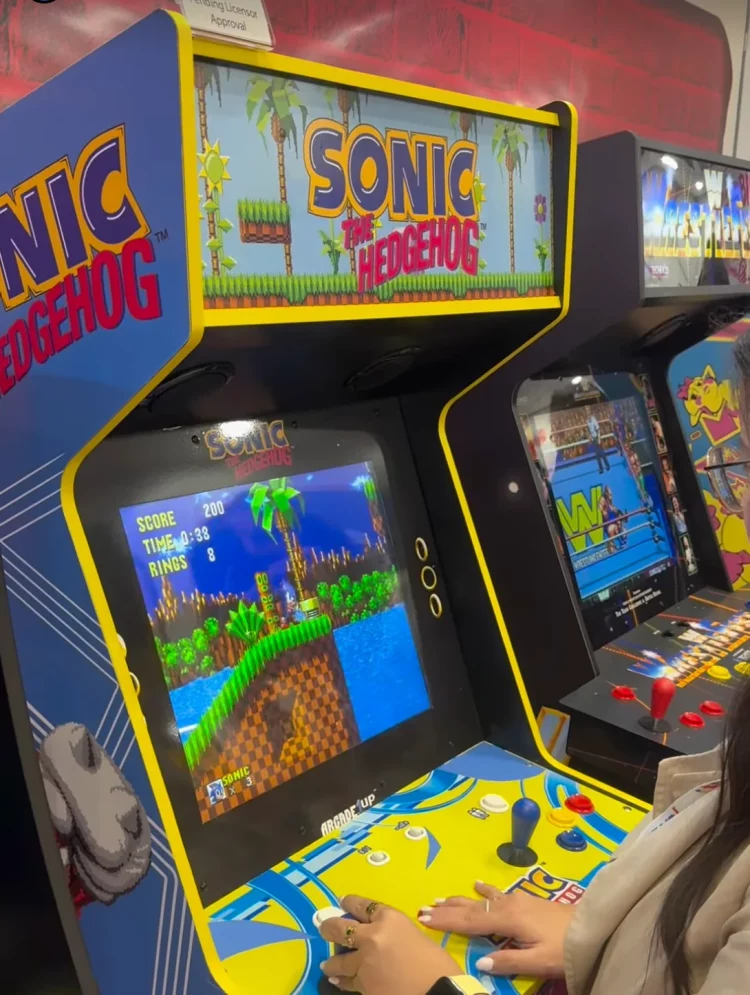
While not the week’s main narrative, the resurfacing of the Supreme XL Sonic cabinet imagery underlines a crucial strategy: Sonic is engineered to exist in every format—from console and mobile to arcades, comics, film, and streaming.
For developers, this is the blueprint of a platform-agnostic character:
- Visual design that reads instantly at any scale.
- Mechanics and personality simple enough to translate into multiple genres.
- Brand consistency that makes even a cabinet silhouette instantly recognizable.
Strategic Takeaways for Developers
-
Voice and Casting Strategy is a System, Not a One-Off Decision
SEGA’s handling of Kristen Bell vs. Roger Craig Smith shows how to separate game canon voices from cinematic star power while keeping both under a unified brand umbrella. -
Community Media Can Function as Shadow Patch Notes
Sonic Weekly and SEGA Talk don’t ship code, but they patch perception—clarifying lore, contextualizing changes, and pre-empting backlash. -
Comics as R&D for Future Games
IDW’s arcs are effectively narrative prototypes. Expect future games to mine these stories for bosses, zones, and emotional beats.
This week, sonic the hedgehog doesn’t ship a new build, but from an IP and development update standpoint, the franchise is very much in motion—recalibrating voices, consolidating lore, and stress-testing how far its universe can expand without snapping canon in half.
Sources and corrections
This archive entry does not have a verified article-source list. Images and video embeds alone are not evidence for every claim.
Found an error? Request a correction. Include the passage and a supporting source.