Automated archive
Sonic the Hedgehog Cross-Media Shakeups, IDW Decompilation, and Cabinet-Grade Nostalgia
Sonic the Hedgehog spent the week flexing its transmedia muscles—recasting Amy Rose for film, decompiling IDW-era lore, and dropping a new home arcade cabinet. For developers, Sonic’s latest maneuvers are a live blueprint for how to evolve a legacy IP across film, print, and hardware without losing its core signal.
AI-generated summary. This archive article does not have a current recorded source check. Check linked sources before relying on details. Editorial policy


Sector Overview: Sonic the Hedgehog’s Multi-Front Offensive
Over the last week, Sonic the Hedgehog has fired on three major fronts: Hollywood casting, comics canon, and hardware nostalgia. For #gamedev and #indiegame teams tracking how legacy IPs evolve, Sonic’s latest moves show a franchise aggressively tuning its signal across film, print, and living-room hardware while keeping one eye on canon and another on mainstream reach.
Film Front: Kristen Bell as Amy Rose and the Voice Canon Question
Roger Craig Smith Endorses the Cross-Media Pivot
The most volatile data point this cycle is the Kristen Bell casting as Amy Rose in the Sonic film universe. On paper, it’s a sharp departure from traditional Sonic voice casting, but veteran game VA Roger Craig Smith (Sonic’s tactical vocal asset in the games) has publicly tagged the move as strategically sound.
From a production and casting logic perspective, his approval matters. Smith’s take frames Bell as an alignment of:
- Energy – Bell’s performance profile matches Amy’s hyper-charged, emotionally forward characterization.
- Presence – A recognizable voice that can carry scenes with or without Sonic on screen.
- Audience Pull – A name that widens the funnel beyond core Sonic fans into general family-audience territory.
For game developers, this is a live case study in cross-media brand management. Canon purists may bristle, but the decision reflects a familiar trade-off: protect the core tone while leveraging a broader, more bankable persona for film. The lesson for #indiegame studios chasing adaptations is clear—voice casting in transmedia projects is a marketing decision as much as a narrative one.
Sonic Weekly: Community Intel as a Feedback Loop

The Sonic Weekly broadcast spun up a fresh transmission drilling into this casting news, bringing in long-time community operative Brandon Hain and pairing the Bell/Amy discussion with Chaotix Casefiles deep dives.
Functionally, Sonic Weekly operates like a living postmortem and sentiment radar:
- It surfaces lore-conscious critiques from long-term fans.
- It tracks fan–dev signal feedback loops, where community reaction can subtly inform future creative and marketing beats.
- It keeps the meta-discussion around Sonic alive between major releases.
For #gamedev teams, this is a reminder that structured, recurring community broadcasts can be more effective than sporadic social posts. Sonic Weekly doesn’t just report news; it shapes the narrative around Sonic’s evolution, especially when controversial moves—like recasting a beloved character—hit the network.
Lore & Narrative R&D: Decompiling IDW Sonic #1–32
Watch: Transmitting Gameplay footage from the field: SEGA Talk dissects IDW Sonic’s first 32 issues
On the narrative front, SEGA Talk #180 performs a full decompilation of IDW Sonic the Hedgehog #1–32 (2018–2020), effectively treating the comic run as a long-form narrative prototype.
Key intelligence from this breakdown:
- Continuity Reset with Familiar DNA – IDW’s run had to honor Sonic’s core identity while operating under a new publisher and editorial mandate. The early issues show how to rebuild a universe without alienating legacy readers—a blueprint relevant to any team rebooting a long-running IP.
- Arc-Based Structuring – The first 32 issues are structured in digestible arcs that balance standalone readability with a slow-burn meta-plot. For developers, it’s analogous to designing campaign chapters or seasonal content that can both stand alone and interlock.
- Character Re-Tooling – Supporting cast members are tuned to modern sensibilities—more agency, clearer motivations, and tighter emotional arcs—while still reading as “Sonic canon.” This is a practical example of iterating on character design and narrative arcs without discarding fan memory.
From a development update perspective, SEGA’s willingness to let a comic line function as a narrative testbed is instructive. It shows how external media can prototype tone, stakes, and character dynamics that later bleed back into games, animations, and films.
Hardware & Nostalgia: The New Sonic Home Arcade Cabinet
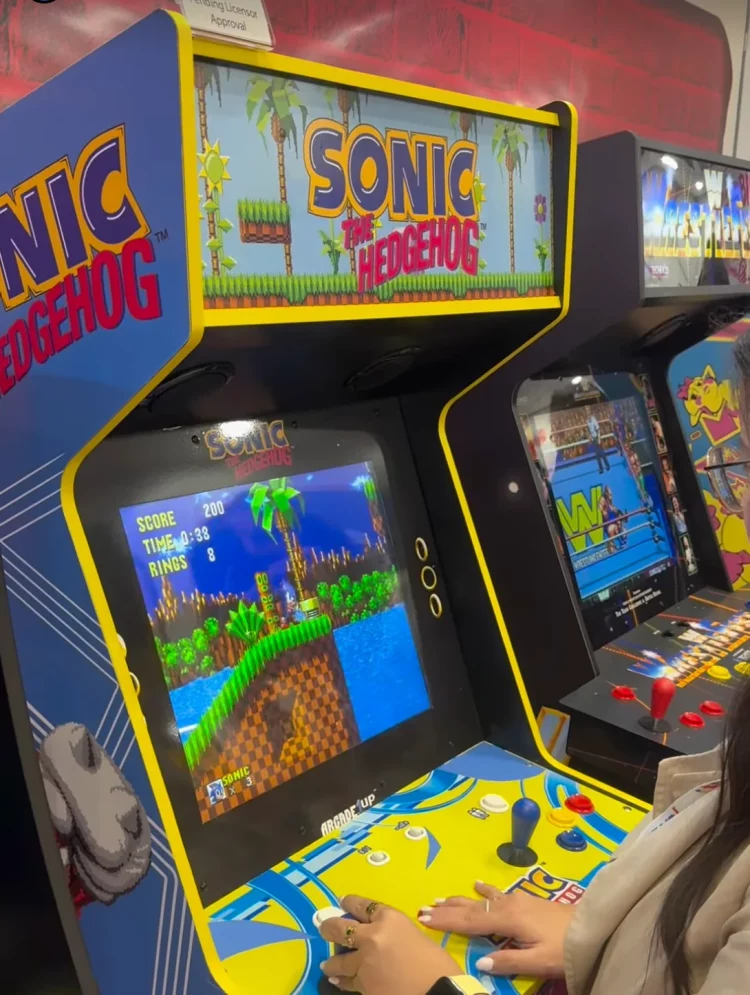
At Toy Fair 2026, Basic Fun! and Arcade1Up revealed a new Sonic the Hedgehog home arcade cabinet, aimed squarely at collectors and nostalgia engineers. This is more than merch; it’s hardware as brand anchor.
Strategic implications:
- Living-Room Presence – A physical cabinet keeps Sonic visible in domestic spaces, reinforcing the brand between game releases.
- Retro-Modern Hybridization – Classic speedrun circuits are being re-contextualized for contemporary players who expect plug-and-play convenience with a premium finish.
- Collector-Grade Design – The cabinet’s form factor and visual language are tuned for display as much as play, which is crucial for long-tail monetization and secondary-market buzz.
For #indiegame and #gamedev teams, Sonic’s arcade push is a reminder that hardware partnerships and bespoke physical editions can extend a game’s lifecycle and deepen brand attachment—especially when timed alongside media beats like film news and lore retrospectives.
Strategic Takeaways for Developers and IP Holders
- Cross-Media Voice Strategy Matters: Kristen Bell as Amy Rose, endorsed by Roger Craig Smith, shows how film casting can diverge from game canon while still serving the larger brand. Treat voice casting as a holistic audience growth tool, not just a continuity checkbox.
- Community Broadcasts as Design Telemetry: Sonic Weekly’s ongoing coverage of casting and Chaotix lore functions as a live telemetry feed on fan sentiment. Regular, structured broadcasts can guide future development updates and narrative pivots.
- Comics as Narrative Prototyping Labs: The SEGA Talk breakdown of IDW Sonic #1–32 highlights how comics can safely explore new arcs, tones, and character dynamics before they’re locked into expensive game productions.
- Physical Hardware as Brand Infrastructure: The new Sonic home arcade cabinet illustrates how well-timed hardware deployments can stabilize franchise visibility and monetize nostalgia in parallel with ongoing digital content.
Across film, print, and hardware, Sonic the Hedgehog continues to operate like a mature transmedia platform rather than a single-game franchise. For studios of any scale, this week’s moves underline a core principle: your IP is an ecosystem, not a SKU.
Sources and corrections
This archive entry does not have a verified article-source list. Images and video embeds alone are not evidence for every claim.
Found an error? Request a correction. Include the passage and a supporting source.