Automated archive / Slay the Spire 2
Slay the Spire 2 Turns Early Access into a Live Design Lab
Slay the Spire 2 has entered Early Access as a live design lab, not a flashy reboot—every run is data feeding back into the system. This week’s sector report breaks down market performance, onboarding friction, and the evolving replay architecture that’s already shaping the meta.
AI-generated summary. This archive article does not have a current recorded source check. Check linked sources before relying on details. Editorial policy

Sector Intelligence Report // Slay the Spire 2 – Early Access Week in Review
Slay the Spire 2 has entered its Early Access phase not as a sequel chasing spectacle, but as a controlled experiment in roguelike systems design. Over the last seven days, telemetry from the field paints a clear picture: this is an iterative escalation of the original formula, tuned for long-term strategic depth rather than a flashy reboot.
From a #gamedev and #indiegame perspective, Slay the Spire 2 is already behaving like a live lab—players are stress‑testing balance, map routing, and replay systems at scale, while the developers quietly collect data to refine the climb.
Market Telemetry: The Spire Breaches the Revenue Grid
The latest Steam revenue stack trace for 10–17 March 2026 confirms Slay the Spire 2 as a top‑tier commercial actor. Sitting alongside heavyweights like Crimson Desert and Monster Hunter Stories 3: Twisted Reflection, the sequel has broken through the noise of big-budget launches.
For competitive designers and publishers, this is a key signal: there is still substantial market appetite for tightly scoped, systems‑driven roguelikes that prioritize depth over cinematic scale. Slay the Spire 2 isn’t competing on cutscenes—it’s competing on decision density per minute.
This performance also buys the team time. Strong early revenue gives the developers runway to iterate on balance variables, add content, and respond to telemetry without resorting to panic patches or feature bloat.
Design Briefing: Iterative Roguelike Systems, Not a Reckless Reboot
The Early Access build showcases multiple classes, new map routing logic, and expanded relic/card synergies. The design read here is deliberate escalation:
Controlled Escalation of Complexity
- Multiple Classes – Each class is less about reskinning the original archetypes and more about re‑wiring how players think about tempo, economy, and risk. This supports hundreds of runs without devolving into solved patterns.
- New Map Routing Logic – Node‑based navigation has been upgraded from simple pathing to a more expressive planning problem. Route calculation is now a core strategic layer, not just a wrapper around combat.
- Relic & Card Synergies – Synergy density has increased. The system encourages building engines rather than random piles, pushing players to draft towards coherent loops and resource cycles.
Balance is still volatile—as expected in Early Access—but the volatility is bounded. The underlying architecture is stable; what’s shifting are the numerical levers and edge‑case interactions that only emerge under mass player pressure.
Watch: Transmitting Gameplay footage from the field: Official Slay the Spire 2 gameplay trailer
Fieldcraft for New Recruits: Surviving the First Floors
Player behavior data from the last week highlights a familiar pattern: new recruits are getting mulched on the early floors. The Beginner’s Guide intel frames the problem clearly—this is not a game you can face‑tank through.
Operational Priorities for Early Runs
- Card Economy Over Raw Damage – Draft for draw, energy, and consistency. A lean, focused deck that hits its core loop every turn outperforms a bloated pile of “good stuff.”
- Route Calculation as a Win Condition – Every node is a resource decision: relics, events, elites, rest sites, and shops form a macro‑puzzle. The new routing logic amplifies this; bad paths are now more punishing, good paths more rewarding.
- Relic Synergy as Strategic Backbone – Treat relics as the backbone around which you sculpt your deck. Once key relics drop, your card choices should pivot hard to support that engine.
- HP as a Resource, Not a Health Bar – The report’s key takeaway: spend HP to secure better relics, card upgrades, and events—especially early. Over‑defending is often just slow dying.
This onboarding friction is not a flaw; it’s intentional gating. The game is training players to think in systems, not in isolated combats.
Replay Architecture: Controlled Mutation, Not Random Chaos
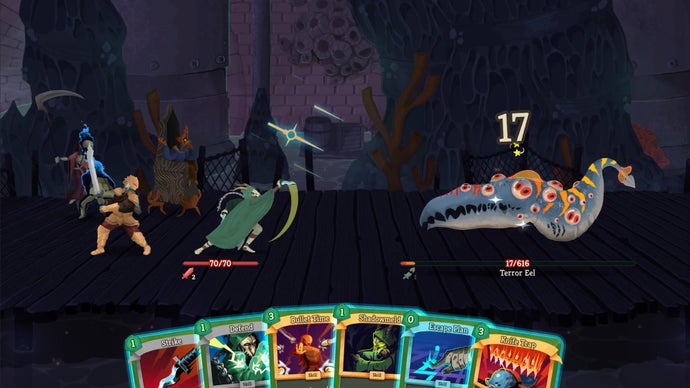
The replay systems in Slay the Spire 2 are tuned for longevity. The design philosophy is “controlled mutation” rather than pure randomness:
- Iterative Runs – Each ascent is a data point. The game encourages micro‑experiments: testing new lines, new engines, and new route patterns with every climb.
- Divergent Paths – Map variations and event pools ensure that even similar decks can face radically different macro‑decisions. This shifts mastery from memorization to adaptation.
- Evolving Card Ecosystems – Card pools and interactions feel designed for long‑term meta evolution. As players discover broken loops, balance passes can nudge the ecosystem without rewriting the whole game.
From a #gamedev standpoint, this is a textbook example of a live, data‑driven design loop: ship a robust ruleset, let the community pressure‑test it, then iterate on the outliers.
Strategic Outlook: What to Monitor Next
For players, creators, and developers tracking Slay the Spire 2 as a case study, the next few weeks will be critical:
- Balance Passes – Watch patch notes closely; early adjustments will reveal the dev team’s design priorities (power fantasies they want to preserve vs. degenerate loops they want to prune).
- Meta Stabilization – As high‑level players climb, expect early “best practices” for routing, drafting, and relic valuation to emerge—then be disrupted by subsequent patches.
- Content Cadence – The rhythm of new cards, relics, events, and classes will indicate how aggressively the team plans to expand the design space during Early Access.
Slay the Spire 2 isn’t just another sequel launch—it’s an ongoing experiment in how to run a systems‑heavy #indiegame as a live, iterated platform. For anyone interested in slay the spire 2 as both a game and a design laboratory, this is the moment to pay attention.
Sources and corrections
This archive entry does not have a verified article-source list. Images and video embeds alone are not evidence for every claim.
Found an error? Request a correction. Include the passage and a supporting source.