Automated archive / Slay the Spire 2
Slay the Spire 2’s Co-op Breakthrough and Replayability Arms Race
Slay the Spire 2 just pushed past 574,000 concurrent players with a 94% approval rating, turning its tower into a live-fire lab for systemic roguelike design. From co-op deck warfare to evolving card ecosystems, this week’s telemetry shows exactly why the sequel is setting the new benchmark for strategy-driven...
AI-generated summary. This archive article does not have a current recorded source check. Check linked sources before relying on details. Editorial policy
Sector Overview: The Spire Becomes a Live-Fire Lab
Slay the Spire 2 has transitioned from anticipated sequel to full-blown live experiment in systemic design. Over the last week, the game has surged to a 574,638 concurrent player peak on Steam while holding a 94.3% approval rating, placing it within striking distance of Hollow Knight: Silksong’s 2025 benchmark. For #gamedev and #indiegame teams watching from the sidelines, this isn’t just a commercial win—it’s a case study in how to weaponize replayability, co-op design, and visual identity into a long-term engagement machine.
Market Telemetry: Concurrency and Chart Positioning
Slay the Spire 2 is currently embedded in Steam’s top-seller grid for 3–10 March 2026, flanked by Marathon, Resident Evil Requiem, and a surging Crimson Desert, while Steam Deck hardware continues to dominate platform-side traffic.
From a market-intel perspective, this cluster signals three things:
1. The Roguelike Deck-Builder Still Prints Time-on-Device
The near-record concurrency confirms that the roguelike deck-builder loop remains a high-yield design pattern. Players are opting into hundreds of runs, not dozens. For developers, that’s a green light for:
- Deep meta-progression systems that survive months of iteration.
- Aggressive post-launch balance passes that keep the card meta in motion.
- Long-tail content drops (characters, relic sets, alternate routes) instead of one-and-done expansions.
2. Difficulty Tuning as a Retention Lever
The data points in the feed explicitly call out fine-tuned difficulty and high replayability as “optimum engagement protocols.” Translation: Slay the Spire 2 is winning not because it’s easier, but because it’s fairly brutal. The ascent feels calibrated, not punitive, and that’s a retention driver—especially at high ascension tiers where expert players are stress-testing the system daily.
3. Strong Visual Identity Still Matters
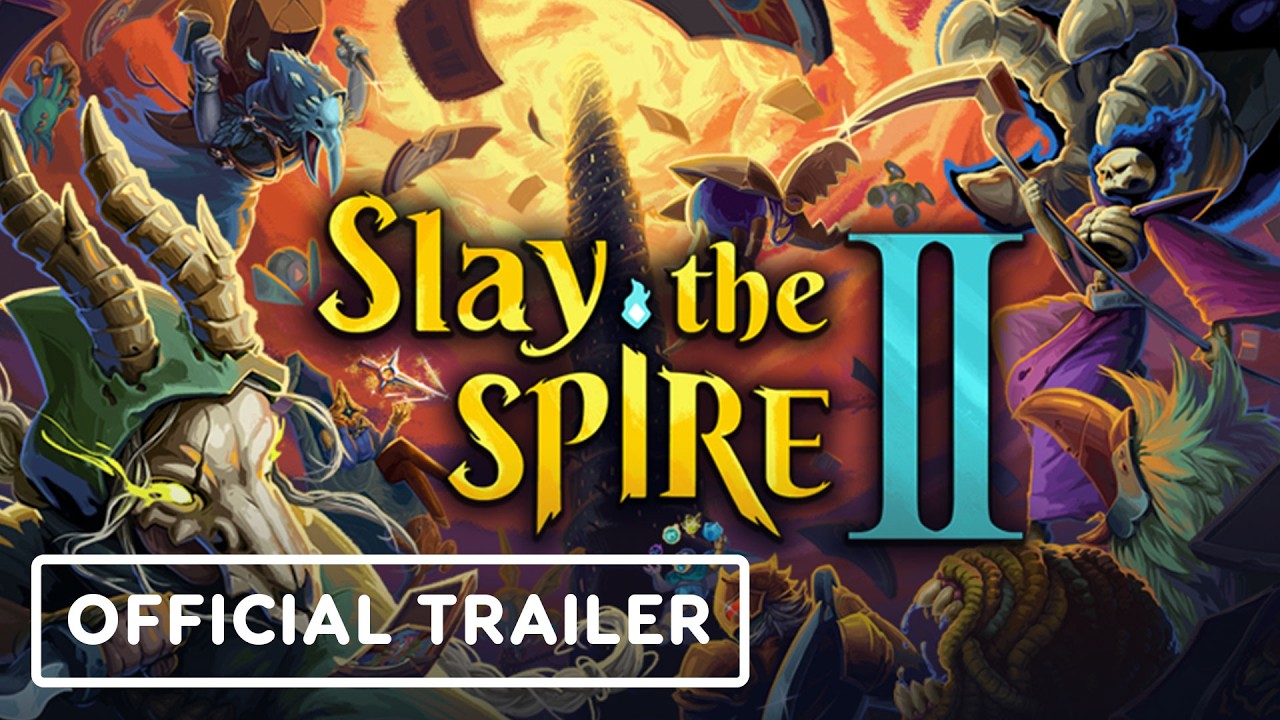
In a week where it’s competing with visually louder titles, Slay the Spire 2’s stylized art direction still cuts through the noise. The message for #gamedev teams: you don’t need photorealism—you need readability, cohesion, and instant recognizability on a crowded store grid.
Watch: Transmitting Gameplay footage from the field: Official combat systems broadcast
Systems Intel: Replayability as Controlled Mutation
The activity feed frames Slay the Spire 2’s replay design as “procedural deck ops” and a “rogue-deck architecture with deeper replay circuitry.” That’s not just flavor text; it describes a clear design philosophy.
Iterative Runs as Strategy Stress Tests
The sequel leans hard into iterative runs and divergent paths. Each ascent is less about discovering the rules and more about stress-testing your own heuristics:
- Encounter pools shuffle and recombine, forcing players to adapt familiar decks to unfamiliar threat patterns.
- Card ecosystems evolve over time, meaning that a build that dominated last week may feel subtly off-meta today.
- Route decisions—elites, events, shops—are tuned to push players into risk-reward brinkmanship, not safe autopilot lines.
For designers, the key takeaway is that replayability isn’t just more content; it’s intelligently recombined content that continuously interrogates player assumptions.
Evolving Card Ecosystems and Long-Term Engagement
The mention of “evolving card ecosystems tuned for long-term engagement loops” suggests that Slay the Spire 2 is architected for live balance and systemic drift, not static completeness. Expect:
- Regular balance passes that intentionally shift the meta.
- New relic and card synergies that re-open “solved” archetypes.
- Potential seasonal or event-based modifiers that temporarily warp the tower’s logic.
For #indiegame teams, this is the blueprint: build your card and relic systems as living infrastructure, not a finished puzzle.
Co-op Uprising: From Solitary Ascents to Two-Operator Ops
Watch: Transmitting Gameplay footage from the field: Official multiplayer/co-op operations feed
The biggest structural escalation is co-op. Slay the Spire 2’s two-operator mode isn’t a bolt-on; it rewires the fundamental pacing and decision economy of every run.
Shared Lanes, Shared Mistakes
The feed describes “shared lanes, synchronized card timing, and route decisions” as joint tactical equations. In practice, this means:
- Turn economy becomes a co-authored resource. Your partner’s draw, discard, and energy usage are now part of your decision space.
- Route planning is a negotiation, not a personal preference. Skipping an elite might protect one fragile build but starve the team of relics.
- Misplays are amplified. A mistimed block or misaligned debuff isn’t just personal; it can cascade into a failed run for both.
From a design standpoint, this pushes the genre into coordinated puzzle-solving rather than parallel solo runs.
Communication as a Core Mechanic
What’s notable is that co-op doesn’t just add another health bar—it adds a communication layer as a mechanical requirement:
- Players must externalize their plans: “I need two turns to set up scaling,” “I can’t tank this elite without your debuff,” etc.
- Card synergies become social contracts: one player commits to setup, the other to payoff.
For #gamedev teams, this is the lesson: if you’re going to add co-op to a traditionally solo strategy game, it has to create new decisions, not just duplicate existing ones.
Strategic Takeaways for Developers
Slay the Spire 2’s performance this week delivers a clear set of signals to studios working on systemic strategy titles:
1. Build for Hundreds of Hours, Not Twenty
Design your systems so that the 100th run is still interrogating the player. Controlled mutation of encounters, evolving card ecosystems, and ascension-style difficulty ladders are all proven ingredients.
2. Treat Difficulty as a Dial, Not a Wall
High concurrency plus high approval suggests that players will tolerate—and even seek out—punishing loops if they feel legible and fair. Telegraph enemy intent, keep randomness bounded, and give players tools to mitigate bad draws.
3. Co-op Must Justify Its Existence Systemically
Slay the Spire 2’s co-op works because it redefines pacing, communication, and risk. If you’re adding multiplayer, ask: what decisions exist only because another human is here? If the answer is “none,” you don’t have a mode—you have a marketing bullet.
4. Visual Identity Is a Design System, Not Just Art
The Spire’s look supports readability, theme, and brand recall across thousands of screenshots and clips. In a Steam grid full of high-fidelity noise, a coherent, stylized identity is still a competitive advantage.
Outlook: The Spire as a Living Benchmark
As Slay the Spire 2 hovers just below Silksong’s concurrency record, it’s already become a live benchmark for systemic roguelike design. Expect ongoing meta-shifts, balance patches, and co-op refinements to keep the tower’s algorithms hungry.
For developers, the message is clear: the bar for card-based roguelikes has moved. If you’re shipping into this space in 2026 and beyond, you’re not just competing with Slay the Spire 2’s launch—you’re competing with its evolving, live-tuned version of itself.
Sources and corrections
This archive entry does not have a verified article-source list. Images and video embeds alone are not evidence for every claim.
Found an error? Request a correction. Include the passage and a supporting source.