Automated archive / Slay the Spire 2
Slay the Spire 2 Turns a Hit Roguelike into a Live-Fire Systems Lab
Slay the Spire 2 isn’t just a bigger tower—it’s a full systems retrofit that’s turning a single-player roguelike into a live-fire design lab. With near-record Steam concurrency and a brutal 94% approval rating, this sequel is rewriting the playbook for systemic indiegame sequels.
AI-generated summary. This archive article does not have a current recorded source check. Check linked sources before relying on details. Editorial policy
Sector Intelligence Report // Slay the Spire 2
Slay the Spire 2 has shifted from anticipated sequel to full-scale market event. Over the last week, the game has hammered Steam’s concurrency charts with a peak of 574,638 concurrent players while maintaining a lethal 94% approval rating. For #gamedev teams tracking systemic design and market appetite, this isn’t just a commercial win—it’s a live case study in how to evolve a genre-defining #indiegame without collapsing its core loop.
Market Telemetry: Roguelike Deck-Builders Are Still a Primary Vector
The Steam top-seller grid for 3–10 March 2026 shows Slay the Spire 2 embedded at the top of the stack, flanked by Marathon, Resident Evil Requiem, and a surging Crimson Desert. That’s a crucial signal: a turn-based, UI-heavy roguelike deck-builder is not just competing with, but coexisting alongside, big-budget, spectacle-driven titles.
The concurrency arc is particularly revealing:
- 282,314 concurrent early in the week at ~93% approval.
- A climb to 574,638 concurrent with approval rising to ~94.3%.
That trajectory suggests positive word-of-mouth outpacing initial marketing reach. For developers, this reinforces a key lesson: if your systemic depth is strong enough to generate social proof (clips, theorycraft threads, meta breakdowns), you can punch far above your production budget.
Systems Retrofit: This Is Not Slay the Spire 1.5
The latest field intel frames Slay the Spire 2 as a full systems retrofit, not a content pack.
1. New Classes and Rebuilt Decision Trees
New character classes and overhauled relic/card synergies are forcing players to unlearn Slay the Spire 1 muscle memory. Instead of incremental tuning, the sequel pushes for:
- New build archetypes that don’t map cleanly onto Ironclad/Silent/Defect/WATCHER paradigms.
- Recalibrated difficulty curves that punish legacy heuristics like over-valuing early scaling at the expense of encounter-specific answers.
For #gamedev designers, this is a textbook example of sequel risk management: preserve core verbs (draw, play, block, scale) while invalidating rote, solved patterns.
2. Overhauled Map Routing and Meta-Progression
Routing is no longer a passive optimization problem. The new map structure and meta-progression layer reshape every climb:
- Routes feel less deterministic, with more meaningful forks and risk-reward spikes.
- Meta unlocks and evolving card pools create a sense of longitudinal growth across hundreds of runs.
This is the “roguelike as long-term service” model, executed without a traditional live-service wrapper.
Procedural Deck Ops: Controlled Mutation, Not Repetition
Recent analysis of Slay the Spire 2’s replay systems highlights a crucial design pivot: iterative runs are engineered as controlled mutations, not pure randomness.
- Encounter pools evolve to stress-test emerging player strategies over time.
- Card ecosystems subtly rebalance the incentives behind scaling, mitigation, and tempo.
- Divergent paths and rare events are tuned for long-term engagement loops, not just early novelty.
For developers, the takeaway is clear: replayability isn’t about more content; it’s about smarter recombination. Slay the Spire 2 is aggressively prototyping how to keep a single-player roguelike feeling like a live, shifting meta without formal seasons or battle passes.
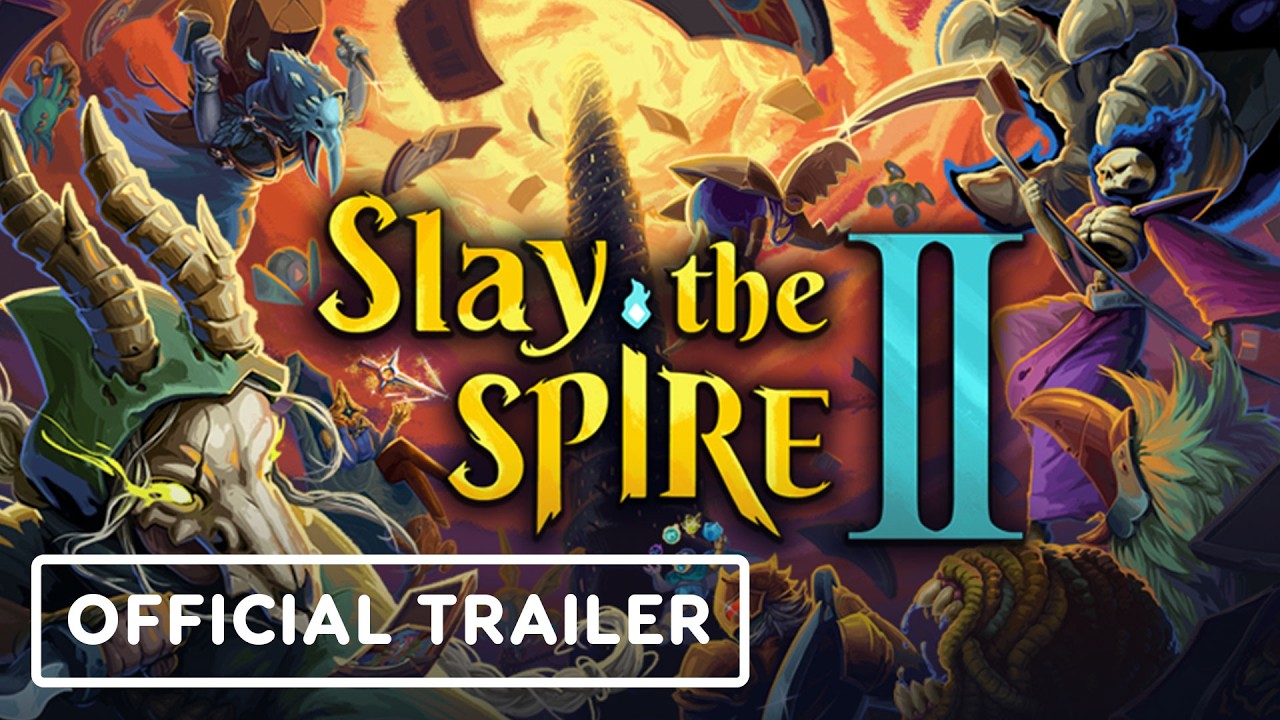
Watch: Transmitting Gameplay footage from the field: Official systems briefing trailer
Co-op Deck Warfare: From Solitary Climb to Synchronized Ops
One of the most significant structural upgrades is the move from solitary climbs to two-operator co-op incursions.
Early gameplay intel shows:
- Shared lanes where enemy intent and positioning must be negotiated between players.
- Synchronized card timing, turning what used to be a single-player puzzle into a real-time communication test.
- Joint decisions on route, relics, and economy, forcing teams to define roles (tank, scaler, control, support) even in a card-driven system.
This is a high-risk, high-upside shift. Co-op in a turn-based roguelike deck-builder introduces:
- New failure states (coordination breakdown, misaligned builds).
- New storytelling vectors (shared clutch saves, double-death collapses).
From a #gamedev standpoint, it’s a bold answer to the sequel problem: don’t just add more cards—add more brains to the loop.
Watch: Transmitting Gameplay footage from the field: Official co-op and combat showcase
Design Intel for Developers: What Slay the Spire 2 Proves
For teams building systemic #indiegame projects, Slay the Spire 2’s first-week data crystallizes several hard truths:
1. Depth and Clarity Beat Visual Spectacle
Despite fierce competition from effects-heavy AAA releases, a largely static, card-based UI is commanding top-tier concurrency. The win condition is legible complexity—systems that are deep, but parseable at a glance.
2. Replays Need an Agenda
The sequel’s replay systems don’t just re-roll dice; they push back against the player:
- Runs feel like iterative training exercises where the tower is learning you as much as you’re learning it.
- Encounter and card pool variations appear tuned to counter emerging community builds.
That keeps strategy discourse alive and makes every patch a fresh round of meta reconnaissance.
3. Sequel Design = Respect the Old, Break the Old
Slay the Spire 2 respects the original’s core loop but systematically invalidates complacency:
- New characters and relics disrupt solved patterns.
- Map and progression changes force route re-evaluation.
- Co-op reframes the entire decision-making stack.
This is the blueprint for systemic sequels: don’t reskin; re-weaponize.
Strategic Outlook
With concurrency brushing up against Hollow Knight: Silksong’s 2025 benchmark and a satisfaction rating north of 94%, Slay the Spire 2 has established itself as a reference build for modern roguelike deck-builders. Expect:
- Ongoing balance passes as high-level archetypes stabilize.
- A long tail of content creators driving theorycraft and meta shifts.
- Other studios racing to incorporate co-op roguelike design and controlled-mutator replay systems into their own projects.
For players, this is the new standard for card-based roguelikes. For developers, it’s a live-fire lab in how to evolve a beloved system without dulling its edge.
Sources and corrections
This archive entry does not have a verified article-source list. Images and video embeds alone are not evidence for every claim.
Found an error? Request a correction. Include the passage and a supporting source.
Your games, in one place
Keep up with Slay the Spire 2
Follow this game to collect its posts in your personal feed. Come back to see what you missed.