Automated archive / Slay the Spire 2
Slay the Spire 2 Turns Co-op Chaos into Steam Supremacy
Slay the Spire 2 has detonated across Steam, pushing near-record concurrency while reinventing its own deck-building and routing DNA. Co-op systems, overhauled progression, and ruthless difficulty are turning this sequel into a live design manual for systemic roguelikes.
AI-generated summary. This archive article does not have a current recorded source check. Check linked sources before relying on details. Editorial policy
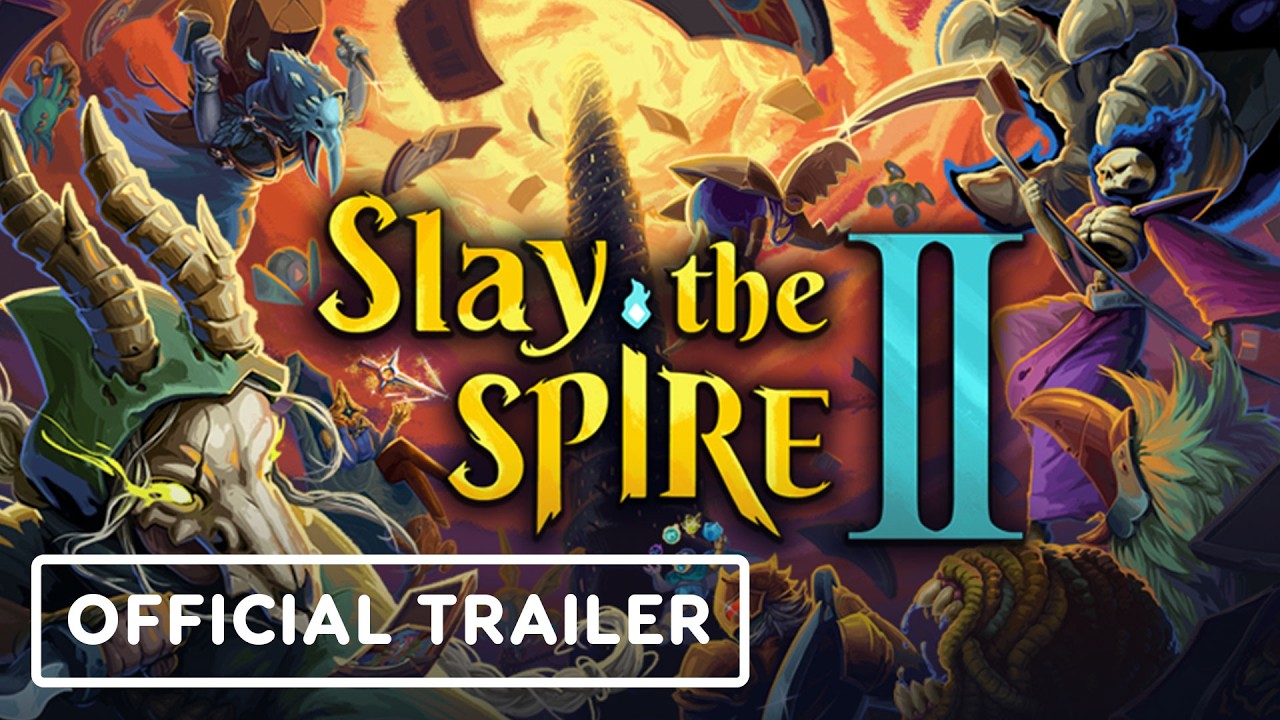
Sector Intelligence Report // Slay the Spire 2
Steam’s upper atmosphere is burning. Over the last seven days, slay the spire 2 has shifted from anticipated sequel to full-blown market event, posting near-record concurrency, climbing the top-seller grid, and quietly rewriting the co-op roguelike playbook. This is no comfort-patch follow-up—it’s a systems-level retrofit that’s already feeding back into broader #gamedev doctrine.
Market Telemetry: Concurrency Shockwave
Near-Silksong Concurrency in Live Fire
Internal telemetry flags a peak of 574,638 concurrent players on Steam—twice in the last week—putting Slay the Spire 2 within striking distance of Hollow Knight: Silksong’s 587,150 benchmark from 2025. That’s not just a healthy launch; that’s a genre-defining concurrency spike for a card-driven roguelike.
- Approval rating climbed from 92.96% to 94.30% in the same window, indicating that early friction (balance, difficulty spikes, build volatility) is being interpreted as desirable volatility, not frustration.
- The simultaneous surge in both player count and sentiment suggests a rare alignment between marketing promise and mechanical delivery—critical for any #indiegame operating at this scale.
For developers tracking the space, the signal is clear: fine-tuned difficulty curves, deep replayability, and strong visual identity are still optimal engagement protocols for systemic roguelikes.
Top-Seller Grid Positioning
The latest Steam Top-Seller Telemetry Pulse (3–10 March 2026) shows Slay the Spire 2 locked into the upper grid, flanked by Marathon and Resident Evil Requiem, while Crimson Desert surges behind and Steam Deck hardware continues to move.
This matters for two reasons:
- Slay the Spire 2 is holding space against blockbuster IP, not just fellow indies.
- Its design—turn-based, replay-heavy, low-spec friendly—makes it a perfect Steam Deck showcase, reinforcing Valve’s hardware loop and giving the game long-tail resilience.
Systems Retrofit: Why This Isn’t Just Slay the Spire 1.5
Watch: Transmitting Gameplay footage from the field: Official systems briefing & feature overview
Field intel confirms this sequel is not a cosmetic reskin. It’s a mechanical re-architecture that forces even veteran players to unlearn their old climb.
New Classes & Buildcraft Decision Trees
New character classes introduce fresh deck archetypes and risk profiles, expanding beyond the original’s established meta shells. The result:
- More distinctive playstyles per class, with sharper identity in card pools and relic synergies.
- Higher buildcraft ceiling, as players juggle novel mechanics instead of re-running legacy “safe” builds from the first game.
From a #gamedev perspective, this is a textbook sequel move: protect the core loop (draft → route → adapt or die) while destabilizing the muscle memory that made late-stage Slay the Spire 1 runs feel solved.
Overhauled Map Routing & Meta-Progression
Map routing has been re-engineered to complicate the “optimal line” problem. Instead of a predictable ladder of elites, campfires, and shops, players are now parsing:
- More varied node types and conditional opportunities.
- Route decisions that interact with relic states, deck density, and co-op positioning.
Meta-progression has been elevated from a light unlock scaffold to a strategic layer that meaningfully reshapes each climb. This keeps early runs from feeling disposable while preserving the roguelike’s lethal edge.
Enemy Behaviors & Difficulty Curves
Enemy AI and encounter composition have been recalibrated to punish rote pattern recognition. The telemetry-backed design angle is clear: brutal iteration loops keep players returning, but only if deaths feel like data, not dead-ends.
Co-op Protocols: From Solitary Climb to Synchronized Incursion
Watch: Transmitting Gameplay footage from the field: Co-op combat and synchronized deck play
The biggest structural shift is co-op. Slay the Spire 2 escalates from a solitary roguelike to a two-operator tactical incursion, and that changes everything from card evaluation to route planning.
Shared Lanes & Synchronized Timing
Co-op runs introduce shared lanes and synchronized card timing, turning every decision into a joint optimization puzzle:
- Card sequencing now has to consider ally turns, not just enemy intent.
- Relic and reward choices become team-level negotiations, with opportunity cost amplified across two decks.
- Route selection is a coordination test: do you prioritize one player’s power curve or the team’s survivability window?
This is where the design quietly flexes. Instead of bolting on co-op as a novelty mode, the game re-frames its core verbs—draw, discard, defend, scale—as coordinated operations.
Meta Impact & Spectator Value
For the broader ecosystem, co-op has three key implications:
- Content velocity for streamers and creators: Duo runs generate more emergent narrative, misplays, and highlight moments, feeding back into discoverability.
- Meta diversification: Co-op-specific builds and support roles will likely diverge from solo-optimized decks, extending the life of balance discourse.
- Spectator clarity: Clear UI, readable intent, and distinct class silhouettes keep the chaos legible—crucial for long-term esports-adjacent viability, even if that’s not a formal target.
Strategic Takeaways for Developers & Designers
Slay the Spire 2 is currently a live case study in how a systems-driven sequel can dominate the charts without sacrificing complexity.
Key lessons for #gamedev teams and #indiegame studios:
- Iterate on systems, not just surface: New classes, map logic, and AI behavior create a genuinely new decision space while preserving the familiar card-combat core.
- Lean into difficulty, but make it legible: High failure rates are acceptable—desired, even—when players can clearly see why they died and how to adapt.
- Co-op must touch the core loop: Attaching multiplayer to the same verbs that define solo play (drawing, routing, relic selection) yields deeper engagement than isolated side modes.
- Optimize for long-tail concurrency: Strong replayability and balance volatility are driving nearly 575k concurrent players and a >94% approval rating—a rare alignment that should be studied, not dismissed as outlier luck.
As the tower’s algorithms continue to ingest player data, expect rapid meta-shifts, balance passes, and possibly new co-op modifiers. For now, the signal is unmistakable: Slay the Spire 2 isn’t just climbing—it’s rewriting the ascent.
Sources and corrections
This archive entry does not have a verified article-source list. Images and video embeds alone are not evidence for every claim.
Found an error? Request a correction. Include the passage and a supporting source.
Your games, in one place
Keep up with Slay the Spire 2
Follow this game to collect its posts in your personal feed. Come back to see what you missed.