Automated archive / Screamer
Screamer Weaponizes ’90s Drift Physics and Anime Velocity
Screamer is coming in hot as a neon-soaked fusion of ’90s arcade racing and anime-grade combat, built for players who live in the drift lane. This week’s telemetry points to a high-skill, high-speed killbox where milliseconds—and visual clarity—decide who survives the circuit.
AI-generated summary. This archive article does not have a current recorded source check. Check linked sources before relying on details. Editorial policy
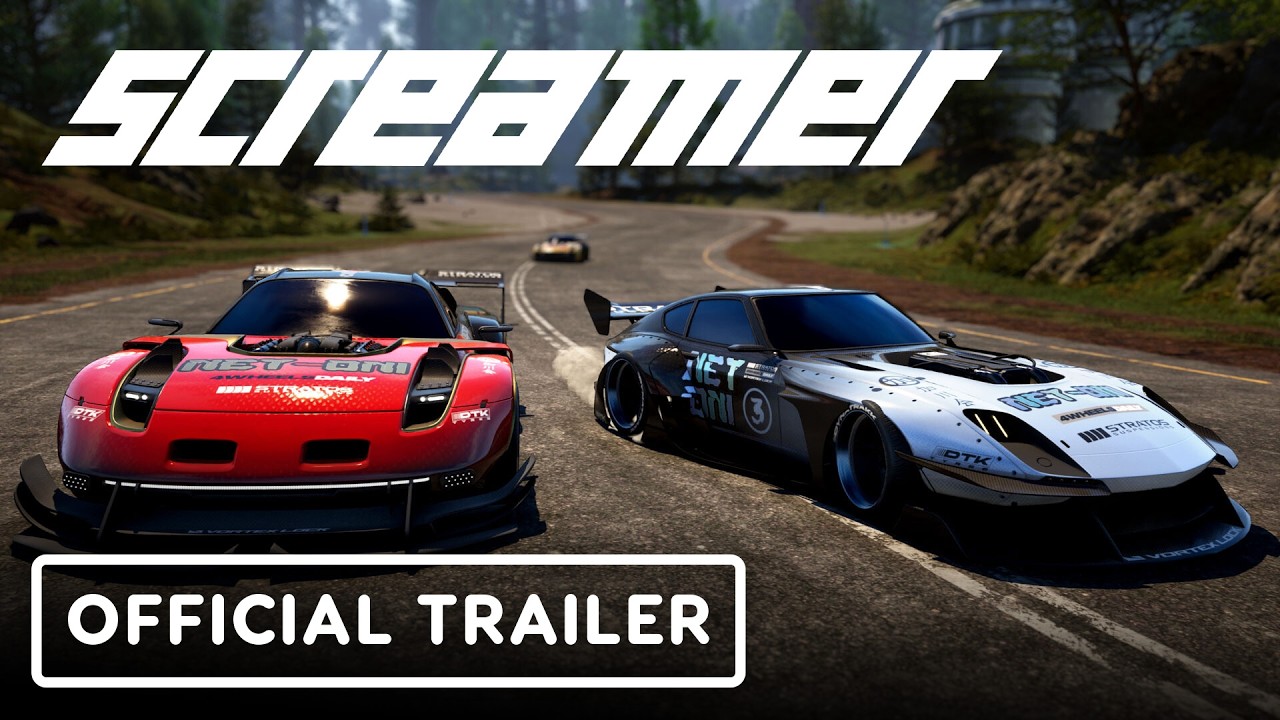
Sector Overview: Screamer Breaches the Grid
Screamer has officially punched through the noise layer this week, coming online as a high-velocity fusion of ’90s arcade racing and high-impact anime combat. Across multiple transmissions, the project is positioning itself as a precision-built #indiegame that weaponizes nostalgia without sacrificing modern responsiveness. For #gamedev observers, Screamer is a live case study in how to resurrect CRT-era design ethos while still playing inside today’s latency expectations.
The activity feed over the last seven days sketches a clear intent profile: tight circuits, aggressive boosts, and a combat layer that treats the racetrack as a moving killbox. This is not a chill cruise; it’s a pressure cooker where milliseconds matter and visual clarity must hold under constant velocity.
Telemetry Snapshot: Drift, Density, and Danger
The most recent field report flags “vector-grade drift telemetry” and “sub-millisecond reaction times” as core expectations. In practical terms, that implies:
- Track Design: Tight, looping circuits tuned for drift-heavy lines rather than wide, forgiving arcs. Expect apexes that punish overcorrection and reward memorization.
- Boost Economy: “Aggressive boosts” suggest a risk-reward loop where optimal runs are built on chaining speed states rather than simply driving clean.
- Collision Envelopes: The mention of “collision envelopes” and “no-safe-room traversal” implies hitboxes tuned closer to shmup precision than typical arcade racers.
For players, that translates into a high-skill ceiling drift meta. For developers watching Screamer’s trajectory, it raises interesting #gamedev questions around input buffering, camera shake discipline, and how much visual chaos a UI can sustain at top speed without sacrificing readability.
Aesthetic Payload: Synthwave Asphalt Meets Anime Impact
The mid-week briefing frames Screamer as “weaponized nostalgia”: CRT-era racers, VHS mecha, and thick synthwave color palettes. That’s reinforced by the sustained focus on “dense color saturation” and “neon-soaked corridors.”
This isn’t minimalism; it’s maximalist UI and FX layered over crunchy pixel art. The challenge—and apparent design thesis—is maintaining legibility under that saturation. If Screamer succeeds, it will be by:
- Using color coding to differentiate threats, boosts, and navigational cues.
- Anchoring the player’s eye with strong contrast on the car and track edges.
- Reserving the loudest effects for critical feedback (collisions, specials, perfect drifts).
The launch trailer transmission backs this up: weaponized nightmares, no safe rooms, and a “killbox built to break your nerves.” This is racing as combat theater—where line choice, item timing, and spatial awareness all sit on the same decision stack.
Systems Intelligence: Where Racing Meets Combat Design
From a systems perspective, Screamer is building a hybrid loop:
- ’90s Racing Physics: Expect snappy steering, predictable drift arcs, and friction models that favor learnable exaggeration over pure simulation.
- Anime Special Attacks: Over-the-top abilities layered on top of racing fundamentals. Think ultimates that re-route the flow of a lap, deny optimal lines, or create temporary “kill zones.”
- Time-Attack Structure: The feed calls out “tight time-attack circuits,” suggesting a meta built around leaderboard chasing and route optimization rather than long-form championships.
For #gamedev teams, Screamer’s approach is a reminder that hybrid genres live or die on input feel. The combat layer can’t be allowed to muddy the steering model; instead, it has to amplify player expression—turning a good drift into an opportunity for a stylish, anime-grade finisher.
Market Positioning: Weaponized Nostalgia as a Strategy
From a market intelligence standpoint, Screamer is leaning hard into a very specific fantasy: “anime-speed circuits” that feel like a lost Dreamcast or PS1 cult classic, rebuilt with modern responsiveness. That’s a smart lane in the current #indiegame ecosystem, where:
- Retro visuals are common, but true retro handling—especially in racers—is less explored.
- Anime-forward racing experiences are underrepresented compared to shooters and character action.
If Screamer can deliver on its promise of “sustained velocity states” without sacrificing control, it has a shot at owning a niche: competitive, anime-infused drift racing that feels both familiar and feral.
Watch: Transmitting Gameplay footage from the field: Screamer blazing-fast anime racing gameplay
Sector Outlook: What to Watch Next
Over the coming weeks, the key indicators to monitor for Screamer will be:
- Handling Tuning: Community feedback on drift feel, hitbox fairness, and camera behavior at max speed.
- Readability Under Load: Whether the neon-heavy presentation remains navigable in high-intensity multiplayer or late-game circuits.
- Mode Mix: How time-attack, combat-focused events, and potential ranked ladders are balanced.
Screamer’s current transmissions frame it as a high-risk, high-reward entry in the racing-combat space—one that could become a reference point for future hybrid racers if the execution holds. For players, it’s a chance to step into a neon killbox and test their reflexes. For developers, it’s a live experiment in how far you can push speed, style, and spectacle before the track disappears under the glow.
Sources and corrections
This archive entry does not have a verified article-source list. Images and video embeds alone are not evidence for every claim.
Found an error? Request a correction. Include the passage and a supporting source.
Your games, in one place
Keep up with Screamer
Follow this game to collect its posts in your personal feed. Come back to see what you missed.