Automated archive / Resident Evil Requiem
Resident Evil Requiem Locks In Its Legacy-Sequel Identity and Post-Launch War Plan
Resident Evil Requiem is shifting from launch operation to long-term platform, with Capcom locking in DLC plans, a CP‑driven meta, and a clear Leon‑centric legacy‑sequel identity. This week’s intel breaks down how those moves are reshaping both player behavior and the series’ future command structure.
AI-generated summary. This archive article does not have a current recorded source check. Check linked sources before relying on details. Editorial policy
Sector Overview: Requiem’s Legacy-Sequel Mandate
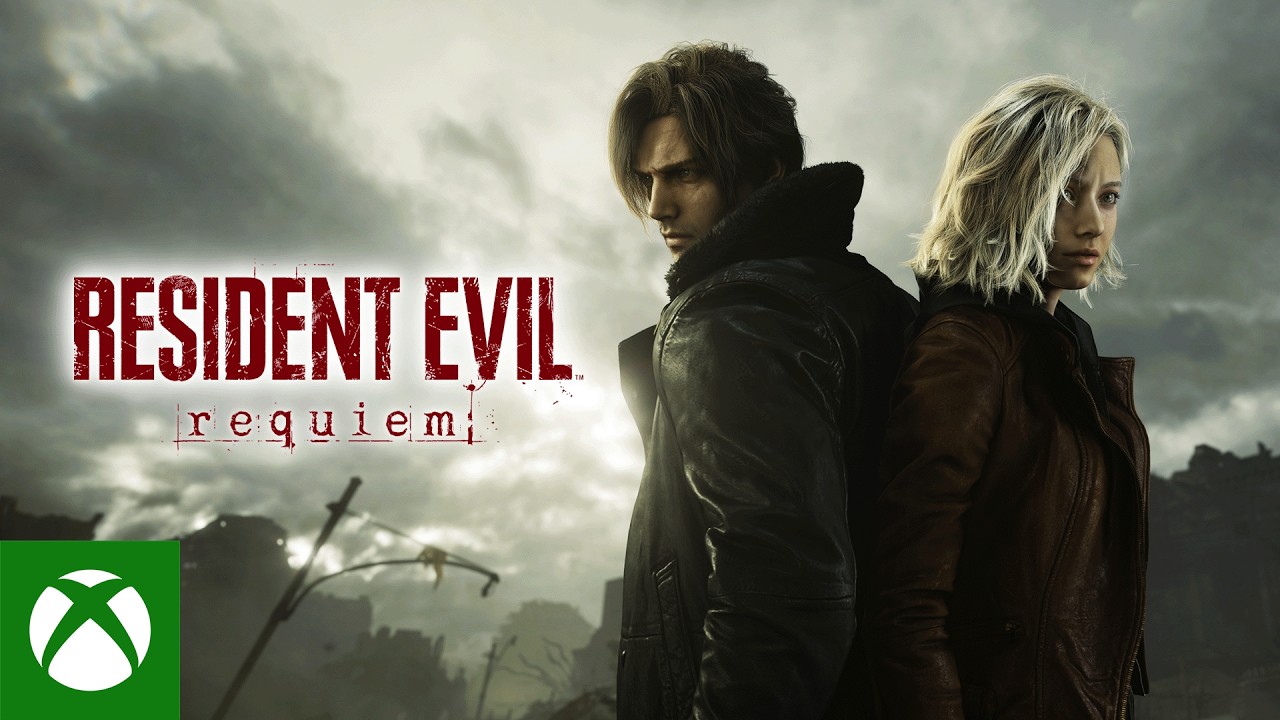
Resident Evil Requiem has exited its launch window and is now operating like a fully armed legacy sequel, with Capcom clearly positioning it as a structural pillar for Leon S. Kennedy’s ongoing canon rather than a side-story detour. Over the last week, the information flow has crystallized around three fronts: a confirmed DLC strategy, a sharper understanding of Requiem’s design identity as a Leon-centric legacy sequel, and a meta-layer of optimization emerging from the community’s reward‑farming experiments.
For players and #gamedev observers alike, resident evil requiem is quickly becoming a case study in how to weaponize nostalgia without freezing a franchise in amber. The activity feed from the last seven days paints a picture of a project that’s built to scale—mechanically, narratively, and commercially.
DLC Intel: Story Expansion and Combat Mini‑Game
Capcom has greenlit a Resident Evil Requiem story expansion alongside a combat‑focused mini‑game DLC, signaling that the current campaign is only phase one of a longer operational arc. The language around the DLC—“new narrative sectors, enemy encounter matrices, and replay‑oriented challenge loops”—suggests more than a simple epilogue chapter. Expect:
- Narrative sectors: Likely new zones or revisited locations with altered enemy routing and event scripting, giving Requiem a second pass at environmental storytelling.
- Encounter matrices: A design focus on remixing enemy compositions and spawn logic, potentially stress‑testing late‑game builds and encouraging mastery of the combat sandbox.
- Replay challenge loops: Systems tuned for repeatability—time attacks, score chains, or roguelite-adjacent runs that extend the game’s half‑life.
From a #gamedev perspective, this DLC structure mirrors Capcom’s evolving live-ops philosophy for single‑player titles: ship a complete campaign, then fortify it with targeted content that leans hard into replayability metrics rather than bloated story padding. For #indiegame teams watching from the sidelines, Requiem’s approach is a reminder that tightly scoped, high‑replay side modes can meaningfully extend engagement without requiring full-scale new campaigns.
Leon’s Legacy-Sequel Positioning
The tactical deconstruction of Resident Evil Requiem as a “high‑impact legacy sequel” clarifies Capcom’s narrative intent: this is a Leon S. Kennedy consolidation project. The game is engineered to:
- Fuse RE2 and RE4-era DNA—urban panic and rural siege horror—with modern cinematic pacing.
- Reinforce Leon’s command hierarchy in the broader franchise canon, framing him as a recurring axis rather than a rotating protagonist.
- Deliver biohazard-scale set pieces that escalate beyond prior operations without losing the series’ grounded, claustrophobic tension.
This is less nostalgia bait and more a structural re‑anchoring of the brand. By threading callbacks through level design, enemy archetypes, and camera language rather than just dialogue nods, Requiem becomes a working template for how to build a legacy sequel that respects player memory while still justifying its existence mechanically.

Systems Meta: Reward Farming, CP Economy, and Infinite Ammo
The emerging meta around CP currency and challenge rewards is already reshaping how high‑skill operators engage with Requiem. Field intel highlights a clear optimization route:
- Prioritize high‑score challenge nodes over standard progression once core routes are known.
- Target S‑rank clear times to maximize CP throughput.
- Chain weapon‑specific trials and combo sequences to hit unlock thresholds for infinite ammo and premium challenge rewards at speed.
Design-wise, this is a deliberate loop: Capcom is incentivizing system literacy and mechanical mastery by tying some of the most desirable unlocks—like infinite ammo—to performance in optional content rather than raw grind. It’s an elegant way to stretch the life of handcrafted encounters while also giving the community a sandbox for experimentation.
For designers, the takeaway is clear: a well‑tuned meta‑currency plus layered challenge design can create a self‑sustaining ecosystem of replay, content creation, and guide‑writing without leaning on RNG or treadmill progression.
Vocal Payload: Leon’s One-Liners as Psychological Warfare
The compilation of Leon’s “highest‑efficiency one‑liners” isn’t just meme fuel; it’s a reminder of how much voice direction and line timing contribute to a character’s perceived competence and charisma. Requiem’s quip‑to‑kill ratio doubles as pacing control—breaking tension after high‑stress beats, punctuating set pieces, and reinforcing Leon’s seasoned‑veteran persona.
From a #gamedev narrative standpoint, these micro‑moments are low-cost, high‑impact tools. They:
- Provide emotional decompression valves between horror spikes.
- Serve as memory anchors players recall long after specific encounter layouts fade.
- Help differentiate Leon’s tone from other franchise leads, sharpening brand identity.
Forward Outlook: A Platform, Not a One‑Off
With DLC confirmed, a robust CP‑driven meta, and a clear legacy‑sequel identity, resident evil requiem is positioning itself less as a one‑and‑done horror campaign and more as a platform for iterative content. The next quarter of intel will hinge on how aggressively Capcom tunes its challenge modes, how experimental the story expansion becomes, and whether live‑ops style updates—balance passes, time‑limited challenges, or community events—enter the rotation.
For players, that means Requiem isn’t done evolving. For developers, it’s a live case study in how to extend a single‑player horror title’s operational lifespan without sacrificing its narrative spine.
Sources and corrections
This archive entry does not have a verified article-source list. Images and video embeds alone are not evidence for every claim.
Found an error? Request a correction. Include the passage and a supporting source.
Your games, in one place
Keep up with Resident Evil Requiem
Follow this game to collect its posts in your personal feed. Come back to see what you missed.