Automated archive / Resident Evil Requiem
Resident Evil Requiem Becomes Capcom’s New Flagship Bio-Weapon
Resident Evil Requiem has surged past 5 million units to become Capcom’s most explosive Resident Evil launch, cementing Leon S. Kennedy as the franchise’s central operative. From its CP-driven meta-economy to puzzle architecture and upcoming DLC, Requiem is now the benchmark playbook for modern survival horror design.
AI-generated summary. This archive article does not have a current recorded source check. Check linked sources before relying on details. Editorial policy

Market Signal: Requiem Is Now the Franchise’s Primary Vector
Resident Evil Requiem has detonated out of the gate, breaching the 5 million units mark in record time and likely securing the biggest launch window in Resident Evil history. In commercial terms, this isn’t just a strong opening—it’s a platform-defining signal that Capcom’s latest bio-weapon has locked in both core survival horror fans and the broader cinematic action audience.
Telemetry from February 2026 PlayStation Store charts across US, EU, and Southeast Asia confirms the same pattern: Requiem is the top download on PS5, while also exerting heavy gravitational pull across PS4 and PS VR2 ecosystems. For competing studios tracking #gamedev trends, this is the textbook case of a legacy franchise converting nostalgia, modern production values, and disciplined live-ops planning into outsized market share.
From a production and portfolio standpoint, this early success all but guarantees:
- A long-tail DLC roadmap beyond what’s already confirmed.
- Extended post-launch balancing and performance passes, especially on PC.
- A renewed internal mandate to keep Leon S. Kennedy at the narrative center of the IP.
Design & Narrative: The Leon Kennedy Legacy Sequel, Weaponized
Requiem is structurally engineered as a Leon S. Kennedy legacy sequel, and the design intent is clear: consolidate Leon’s status as a central pillar in Resident Evil canon, not a rotating lead.
The game leans hard into calibrated callbacks to Resident Evil 2 and Resident Evil 4:
- Environmental layouts and encounter scripting echo Raccoon City and rural Europe while avoiding pure repetition.
- Combat pacing walks a tightrope between RE4 remake’s kinetic gunplay and the slower, dread-focused setups of older entries.
- Leon’s characterization is pushed through a carefully tuned one-liner combat suite, turning his quips into a form of psychological pressure valve for players.
This is a crucial design insight: Capcom is treating Leon’s banter not just as fan service, but as moment-to-moment emotional modulation. In a game that spikes tension through resource scarcity and high-intensity set pieces, the one-liners function as rhythmic release beats, keeping the experience from tipping into fatigue.
Systems & Progression: CP Economy and Infinite Ammo Meta
Under the hood, Requiem’s progression economy is tuned around CP (Challenge Points) as a meta-currency that rewards mastery over mere completion. The optimal path to infinite ammo unlocks and high-tier challenge rewards is not traditional linear play, but targeted farming runs through:
- High-score challenge nodes.
- Weapon-specific trials and combo-centric missions.
- S-rank clear times on repeatable, low-friction scenarios.
This design does two important things for #gamedev observers:
- Separates friction from engagement – The most efficient CP routes are short and repeatable, minimizing reload downtime and maximizing skill expression.
- Extends the life of authored content – Instead of bloating the game with filler, Capcom increases replay density around a smaller set of tightly tuned encounters.
For #indiegame teams looking to emulate this on a smaller scale, the takeaway is clear: a smart meta-economy plus strong encounter design can yield long-tail engagement without requiring AAA asset volume.
Puzzle Architecture: The Final Challenge as Design Thesis
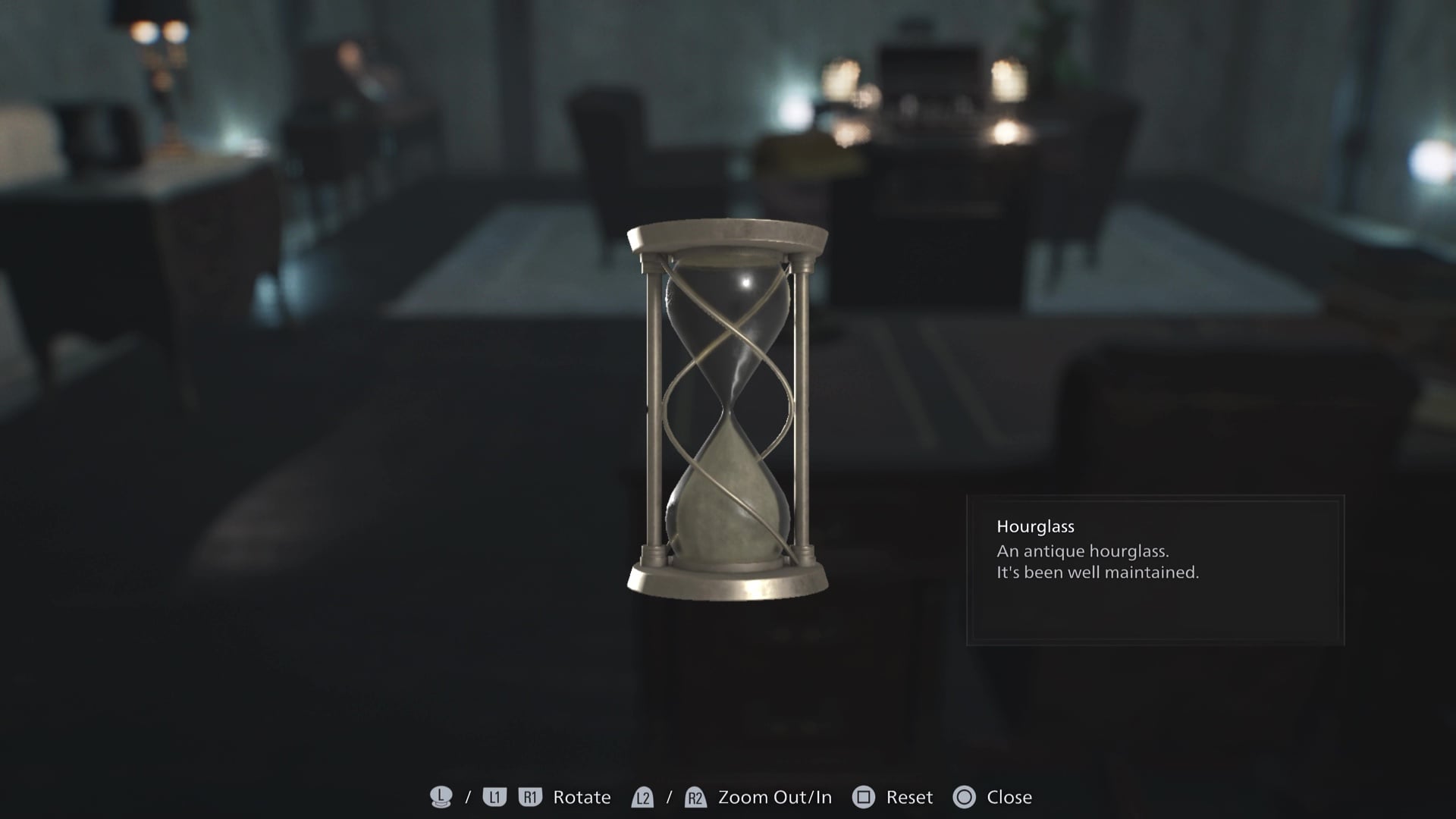
The dissection of Requiem’s final puzzle reveals Capcom’s current philosophy on puzzle design:
- Item placement and code sequencing form a closed, logical loop—no moon logic, but no hand-holding.
- Environmental clues are treated as data nodes, not decoration, pushing players to read spaces as information-dense rather than purely atmospheric.
- The solution path rewards pre-planning and resource pre-stacking, reinforcing survival-horror fundamentals even in late-game content.
This puzzle functions as a microcosm of the entire game’s systems thinking: clear rules, layered hints, and a satisfaction curve that spikes when players realize everything they needed was visible all along. It’s a sharp counterpoint to more cinematic horror titles that deprioritize puzzles in favor of linear spectacle.
The Briefcase Protocol: Storytelling Through Objects
The mysterious Requiem briefcase that’s been circulating in community speculation is more than just a loot container. Visual analysis suggests it’s a narrative-critical object, likely gating either high-tier equipment or key story revelations behind a puzzle-centric interaction.
Capcom’s modern Resident Evil entries have increasingly used diegetic containers—cases, safes, trunks—as storytelling anchors. In Requiem, the briefcase appears to double as:
- A lore delivery mechanism, tying back to prior outbreaks and operations.
- A pacing tool, segmenting progression beats around a single, tangible object.
For designers, it’s a reminder that UI-free storytelling—through objects, spaces, and physical interfaces—still carries enormous impact when executed with restraint.
Platform Performance: PS5 Stability vs PC Scalability
Watch: Transmitting Gameplay footage from the field: Official Resident Evil Requiem PS5/PC showcase
On the technical front, PS5 is clearly positioned as the curated, fixed experience:
- Stable frame pacing at cinematic targets.
- Predictable visual output with minimal user-side tweaking.
- A presentation that aligns tightly with Capcom’s authored intentions.
PC, by contrast, behaves like the overclocked T-Virus strain:
- Significantly higher frame-rate ceilings on high-end GPUs.
- More aggressive texture and ray tracing configurations when CPU threads are available.
- A wider variance in experience quality, depending on how players tune their settings.
This duality underscores a key production reality: Requiem is built as a console-first experience, then expanded outward to leverage PC’s scalability. For teams watching from the #gamedev trenches, it’s another data point in the ongoing trade-off between deterministic console targets and configurable PC ecosystems.
DLC and Live-Ops: The Next Phase of the Outbreak
The latest intel confirms that Capcom has already greenlit a story expansion and a combat-focused mini-game DLC for Resident Evil Requiem. Strategically, this is a classic two-pronged live-ops play:
- Story Expansion – Extends the narrative theater of operations with new sectors, enemy encounter matrices, and lore nodes. This keeps the core campaign audience engaged and deepens Leon’s ongoing arc.
- Combat Mini-Game – Targets high-skill players and speedrunners with replay-oriented challenge loops, score-chasing, and build optimization.
This split content strategy lets Capcom:
- Serve both story-first and systems-first segments of the player base.
- Stress-test new encounter logic and enemy behaviors in a controlled, modular environment.
- Gather telemetry that can quietly inform the structure of the next mainline entry.
For #indiegame developers, Requiem’s DLC blueprint is instructive: you don’t need a battle pass to run effective live-ops. A focused story add-on plus a high-replay challenge mode can deliver strong retention without fragmenting your audience.
Competitive Landscape: Survival Horror as a Dominant Genre Again
The February 2026 PlayStation download charts—especially in SEA—show survival horror reasserting itself as a top-of-funnel genre, not a niche. Requiem’s dominance across PS5, PS4, and PS VR2 suggests:
- Players are increasingly comfortable with hybrid horror-action experiences that blend resource tension with blockbuster spectacle.
- Established IPs with strong mechanical foundations can still outpace newer competitors when paired with modern production pipelines.
For studios charting their next move, Resident Evil Requiem is now the benchmark operation: a case study in how to evolve a 25+ year-old formula without losing its tactical heart.
Key Takeaways for Developers
- Legacy characters are assets, not constraints – Requiem’s Leon-centric design shows how to deepen, not dilute, long-running protagonists.
- Meta-economies can replace grind – CP-based challenge rewards and infinite ammo unlocks demonstrate how to make repetition feel like mastery, not padding.
- Puzzles still matter – The final challenge puzzle and the briefcase protocol prove that tightly designed logic grids can coexist with modern pacing.
- Console-first, PC-scalable remains viable – PS5 stability plus PC headroom is still the dominant AAA pattern.

Resident Evil Requiem isn’t just another numbered entry—it’s a strategic reframing of the franchise’s future. For anyone building the next wave of horror or action experiences, this is the operation to study in detail.
Sources and corrections
This archive entry does not have a verified article-source list. Images and video embeds alone are not evidence for every claim.
Found an error? Request a correction. Include the passage and a supporting source.
Your games, in one place
Keep up with Resident Evil Requiem
Follow this game to collect its posts in your personal feed. Come back to see what you missed.