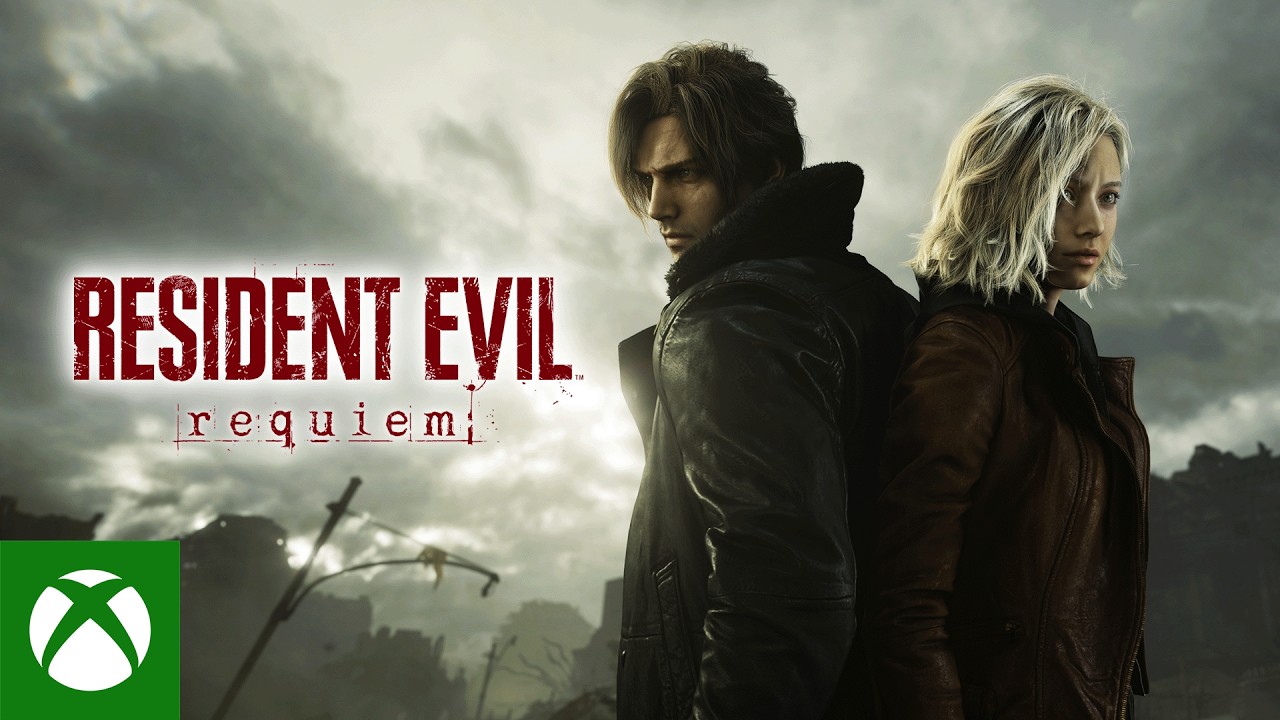
Leon and Grace under fire in Resident Evil Requiem
Market Signal: Requiem Is Now the Franchise’s Primary Bio-Asset
Resident Evil Requiem has detonated beyond expectations, emerging as Capcom’s most aggressive survival horror deployment in years. Launch telemetry confirms over 5 million units sold in record time, outpacing both Village and the Resident Evil 4 remake. On Steam, Requiem is not just a strong performer; it’s the top revenue generator for the 24 Feb – 3 Mar 2026 window, even with Steam Deck, Baldur’s Gate 3, and ARK: Survival Ascended in the same arena.
On console, February’s PlayStation Store charts in both US/EU and Southeast Asia show Resident Evil Requiem as the dominant acquisition vector on PS5, with strong spillover on PS4 and PS VR2. This is the kind of cross-platform saturation that #gamedev teams and every #indiegame studio studying legacy IP strategy should be dissecting.
Concurrency tells the same story: 334,214 concurrent players at launch weekend, the highest spike in series history. This isn’t a slow-burn horror drop; it’s a coordinated global event.
Critical & Community Telemetry: Record Scores, Shaky Trust
Requiem currently holds the highest Metacritic user score of all time, at least in this early window. Player sentiment is clustering around three pillars: lethal atmosphere, refined combat flow, and pacing that respects both modern attention spans and classic Resident Evil tension.
However, trust in the surrounding ecosystem took a hit when Metacritic pulled a review that appeared to be AI-generated and attributed to a non-existent critic. For a series that trades on authenticity and legacy, the optics are messy. The incident underlines a growing problem: platforms are scrambling to harden verification protocols just as AI-assisted content floods the discourse.
For developers, this is a cautionary tale: your game can ship in pristine condition, but the perception layer around it—reviews, influencers, automated writeups—can still contaminate the signal.
Design Intel: A Leon-Centric Legacy Sequel That Actually Justifies Itself
Requiem is built as a high-impact Leon S. Kennedy legacy sequel, structurally closer to a canon reinforcement than a side story. The design mandate is clear:
- Weaponize nostalgia via calibrated callbacks to Resident Evil 2 and 4
- Escalate biohazard-scale set pieces without abandoning grounded horror
- Modernize pacing and combat flow while keeping resource tension intact
The narrative architecture leans heavily on multiple endings, each mapping distinct outcome states for character survival, institutional culpability, and bio-weapon escalation. From a systems design perspective, these aren’t just cosmetic finales—they’re lore continuity switches that future entries can canonize or discard as needed.
For #gamedev teams, Requiem is a live case study in how to extend a protagonist’s lifespan without collapsing into self-parody: keep the quips (Leon’s best one-liners are already being cataloged as a form of psychological warfare), but anchor them in escalating stakes and mechanical clarity.
Systems & Progression: Resource Scarcity as a Solved Problem
On the mechanical front, the community has already cracked Requiem’s progression economy. The CP currency loop is highly optimizable:
- Target high-score challenge nodes
- Grind S-rank clear times on short, repeatable missions
- Exploit weapon-specific trials and combo chains
The reward is accelerated access to infinite ammo and high-tier challenge unlocks. From a design angle, Capcom has effectively built a dual-track economy:
- Baseline survival loop for first-time players
- Power-user optimization loop for repeat runs and mastery
This keeps the horror intact on initial playthroughs while giving high-skill players a way to express dominance without resorting to external cheats. It’s a smart tension valve that #indiegame designers working in horror or roguelite spaces should study closely.
Puzzle & Lore Architecture: The Final Challenge and 1998 Echoes
Requiem’s late-game Final Challenge puzzle is being praised for its tightly interlocked logic grid: item placement, environmental triggers, and symbol logic all mesh into an elegant, if unforgiving, structure. Guides emphasize pattern memorization, pre-stacked resources, and clue literacy—treating every environmental detail as a data node rather than set dressing.
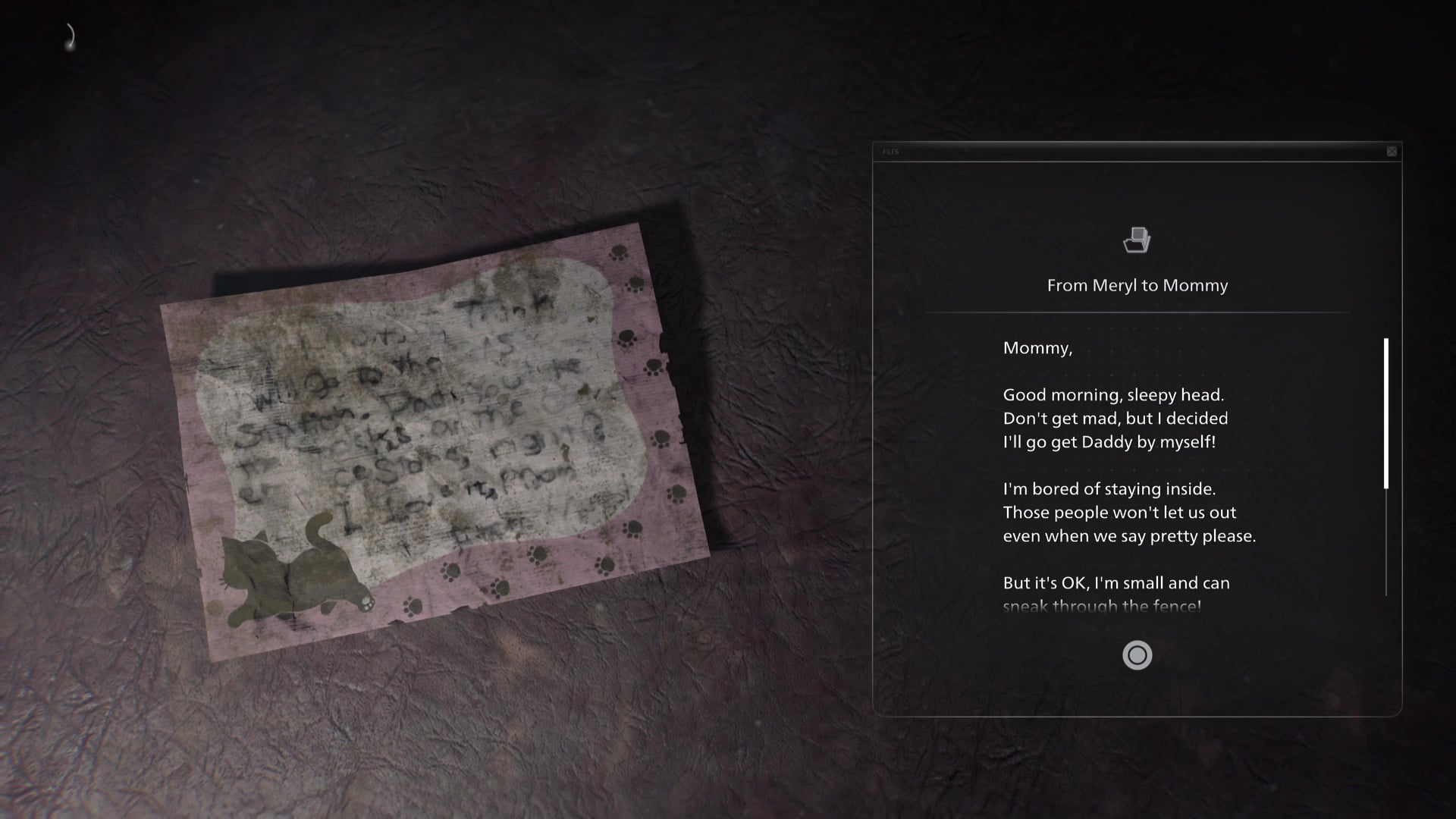
Parallel to that, the “Letters from 1998” scattered across the Deluxe Edition and DLC operate as a lore-rich collectible layer. They reward thorough environmental sweeps and function as an archival backbone for players chasing 100% completion, trophy sets, and narrative decryption.

Grace and Leon navigating a hostile corridor in Resident Evil Requiem
Loadout & Charm Meta: Micro-Buffs, Macro-Expression
The full charm matrix for Leon and Grace is now mapped, turning what could have been a cosmetic afterthought into a genuine micro-meta. Inventory and weapon charms tweak carry capacity, ammo efficiency, and combat nuance, giving players a granular way to customize their survival philosophy.
From a development update perspective, this is where Requiem quietly modernizes Resident Evil’s historically rigid loadout design. Small, stackable buffs let players build toward preferred playstyles—precision shooter, resource hoarder, close-quarters brawler—without breaking the game’s core scarcity fantasy.
Platform Performance: Curated PS5 vs. Volatile PC
Technical analysis shows a clear platform personality split:
- PS5 delivers a curated, stable experience with consistent frame pacing and cinematic framing. It’s the “fixed bioweapon” build: tuned, predictable, and aligned with Capcom’s target presentation.
- PC behaves like the overclocked T‑Virus strain—volatile but capable of monstrous performance when properly contained. Higher frame-rate ceilings, sharper output, and scalable settings (textures, RT, CPU threads) turn PC into a live lab for tech enthusiasts.
For #gamedev teams, Requiem illustrates the ongoing balancing act: console as the controlled showcase, PC as the experimental test chamber.
Regional Friction: Japanese Censorship vs. Global Canon
Not all signals are clean. In Japan, heavy visual censorship—scrubbed gore and edited horror beats—has triggered backlash. Players report that the cuts actively break immersion and undermine the series’ shock identity.
This raises a familiar but intensifying question: how far can regional standards bend a horror title before it becomes a different game? For Capcom, the response strategy here will be closely watched, especially by studios navigating multi-region launches with divergent content regulations.
Forward Look: Live Ops, DLC, and Long-Tail Monetization
Given the record-breaking sales, concurrency, and community heat, it’s almost guaranteed that Capcom is already charting:
- Story-driven DLC drops that exploit Requiem’s multiple-ending scaffolding
- Live ops events tied to challenge modes and CP economy tweaks
- Cosmetic and charm expansions that deepen the loadout meta without destabilizing balance
For developers, Resident Evil Requiem is rapidly becoming a reference point: how to execute a legacy sequel that reinforces canon, modernizes systems, and still leaves room for long-tail monetization without immediately alienating the core.
In this week’s sector sweep, one conclusion is inescapable: Requiem isn’t just another numbered entry—it’s Capcom’s new baseline for what a modern survival horror flagship is supposed to look like.