Automated archive / Resident Evil Requiem
Resident Evil Requiem Dials in Precision Horror for a 30th Anniversary Killzone
Resident Evil Requiem’s latest intel paints a picture of a meticulously tuned anniversary project: conservative in structure, ruthless in systems design. From RPD blackfiles to 4K/60 telemetry, Capcom is betting on precision horror over wild experimentation.
AI-generated summary. This archive article does not have a current recorded source check. Check linked sources before relying on details. Editorial policy

Strategic Overview: Requiem as Capcom’s 30th-Anniversary Control Experiment
Resident Evil Requiem is moving through its launch window like a controlled biohazard test: tightly scoped, ruthlessly polished, and deliberately conservative. This week’s intel shows Capcom positioning the game as a 30th-anniversary showcase that refines, rather than reinvents, the RE Engine survival-horror formula. Reviews frame it as “superb but safe,” a campaign built to celebrate the series’ legacy with calibrated tension, familiar puzzle loops, and spectacle-heavy firefights.
From a #gamedev perspective, Requiem reads like a systems-first project. Everything in the activity feed—from runtime analysis to “11 Things You Need to Know Before You Begin”—emphasizes resource economy, encounter pacing, and route planning. This is not a vibes-only horror game; it’s a math problem wrapped in blood and particle fog.
Systems Intelligence: Ammo Math, Build Crafting, and Route Discipline
Requiem’s mechanical core is being dissected in granular detail:
Survival Economy as Design Pillar
Field briefings stress that ammo management is the central survival lever. Guides on “12 Big Mistakes To Avoid” and the pre-mission systems explainer highlight recurring failure points: over-committing bullets to non-critical threats, ignoring environmental tools, and under-valuing retreat as a tactical option. The design intent is clear: every corridor is a puzzle, not a shooting gallery.
Character Growth via Hidden Systems
The Empty Injector network functions as a stealth RPG layer. Mapping every Injector location isn’t just completionist busywork—it’s how you hard-tune Grace’s late-game viability. Miss too many and your build lags behind enemy scaling. Hip Pouch routes serve a similar role for inventory Tetris, letting players push deeper into hostile zones without constant backtracking.
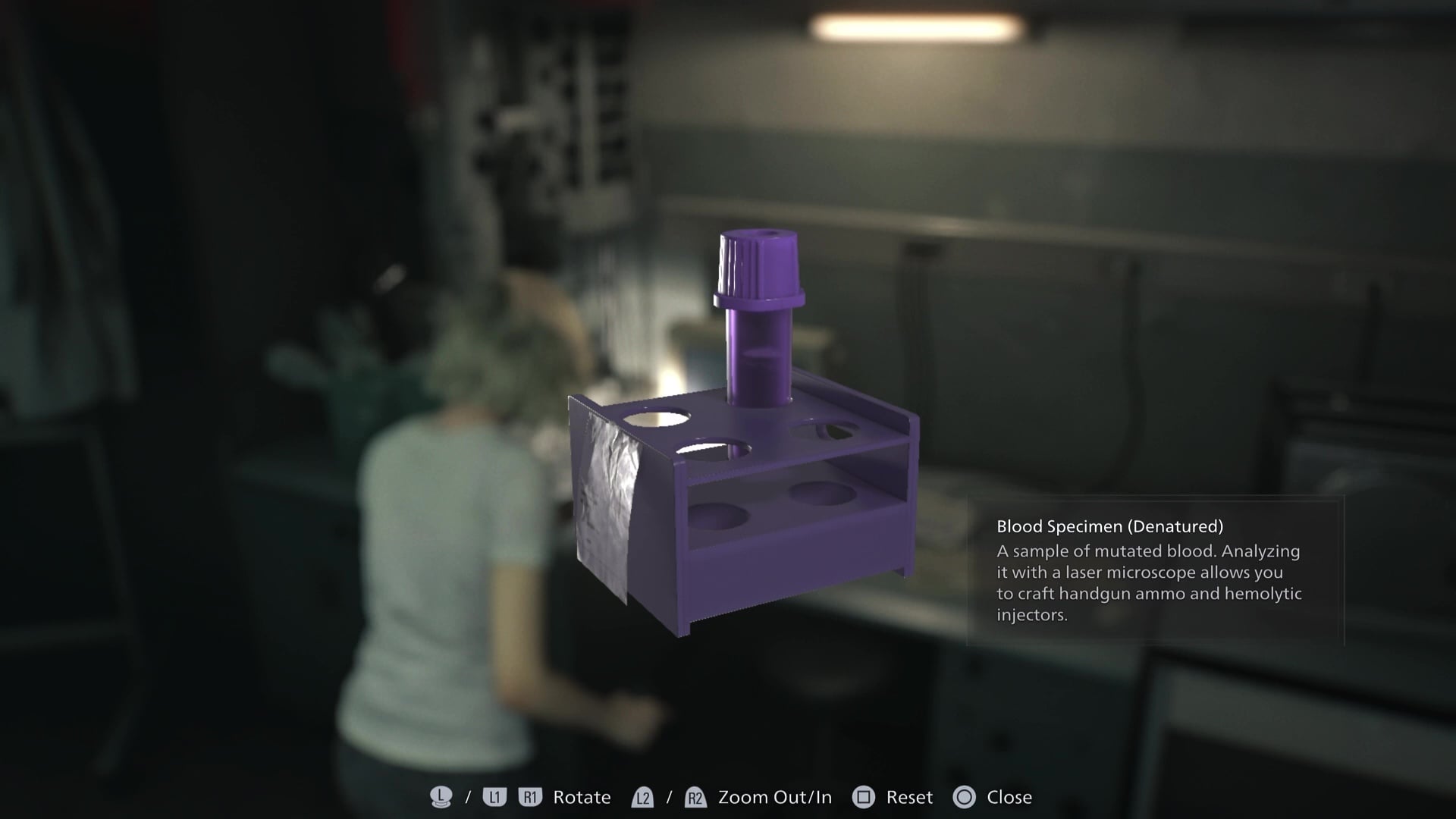
In parallel, Blood Specimen puzzles and Mr. Raccoon Memoriam statues form a meta-layer of progression and mastery. Blood puzzles lean into pattern recognition and lockout pressure, while Mr. Raccoon routes incentivize full-map sweeps and replay-optimized pathing.
RPD Operations: Lore, Lockers, and Legacy
The Raccoon Police Department once again acts as a narrative and systemic hub. This week’s guides spotlight three key RPD vectors:
Barry’s West Office Locker Enigma
Barry’s RPD West Office puzzle is tuned as more than a lore nod. The locker’s numeric patterning pushes players to read the environment like a cipher grid—names, notes, and scattered numbers form a route to bonus gear and narrative fragments. It’s classic Resident Evil design: story and utility braided into a single lock.
Blackfiles and the Rebecca Chambers Signal
Encrypted archives and missing RPD files hide a Rebecca Chambers easter egg, rewarding forensic-level exploration. Every terminal and dossier becomes a potential lore payload, reinforcing Requiem’s commitment to legacy fan service without derailing pacing. For long-time players and #indiegame devs studying environmental storytelling, this is a clean case study in optional narrative density.
Pacing and Tone: Between Survival Horror and Shooter Heresy
Analysis clips describe Resident Evil Requiem as a deliberate midpoint between pure survival horror and full-action spectacle. Enemy density, resource drops, and encounter rhythm are tuned to sustain tension without pushing into fatigue. Instead of endless horde arenas, Requiem favors curated set pieces—short, sharp spikes of chaos embedded in slower, dread-heavy traversal.
The “Chicken’s Guide to Surviving Resident Evil Requiem” leans into this with dark humor, but the underlying message is serious: the optimal playstyle is controlled cowardice. Running is a valid mechanic, not a failure state. That design philosophy keeps fear operational throughout the campaign, even as the arsenal and bioweapons escalate.
Cross-Platform Telemetry: RE Engine at 4K/60 and on Switch 2
Watch: Transmitting Gameplay footage from the field: Resident Evil Requiem 4K/60 PC Combat Telemetry
This week’s performance recon shows the RE Engine still operating like a horror-optimized CAD tool. A 16-minute PC benchmark at max settings, 4K/60, reports stable frame pacing under combat load, with lighting, particle density, and enemy detail holding firm. For PC operators, Requiem looks like a textbook case of iterative engine refinement rather than a risky tech leap.
On the console front, a 22-minute Nintendo Switch 2 field test paints a surprisingly confident picture: dual-operator sequences with Grace and Leon running at a targeted 4K/60, with Capcom clearly prioritizing clarity and performance over ultra-high-end effects. A dedicated Switch 2 vs PC comparison confirms the expected hierarchy—PC as the master build, Switch 2 as a highly efficient derivative with trimmed texture density and softer post-processing.
Narrative Containment and Brand Operations
Capcom’s request to avoid sharing early leaked footage underscores how tightly they’re controlling first-contact perception. In parallel, the Porsche collaboration trailer positions Requiem inside a broader lifestyle and heritage narrative: German engineering and biotech horror as shared language about precision and legacy.
From a brand-ops angle, the message is consistent: Resident Evil Requiem is a prestige anniversary piece, not an experimental spin-off. Even the animation pipeline deep dive—using a simple hanging bar as a reference rig for enemy motion—signals a studio obsessed with believable physics as the foundation for credible horror.
Market Positioning: Steam Charts and Replay Economics
On Steam, Resident Evil Requiem is already locking down top-seller territory, trading bandwidth with Mewgenics and Battlefield 6 while riding the broader horror surge alongside Poppy Playtime – Chapter 5. Runtime analysis suggests a tightly contained campaign whose main path, completionist layer, and S-rank replay loops are all engineered for high retention.
For designers, it’s a clear blueprint: a focused, replayable survival-horror operation can still dominate charts when supported by dense systems, strong optimization, and a clear anniversary narrative. For players, it means Resident Evil Requiem is less about open-ended sprawl and more about mastering a lethal, carefully-delimited playspace.
In this week’s sector snapshot, Resident Evil Requiem isn’t rewriting the series’ DNA—it’s sequencing it with lab-grade precision.
Sources and corrections
This archive entry does not have a verified article-source list. Images and video embeds alone are not evidence for every claim.
Found an error? Request a correction. Include the passage and a supporting source.
Your games, in one place
Keep up with Resident Evil Requiem
Follow this game to collect its posts in your personal feed. Come back to see what you missed.