Automated archive / Relooted
Relooted Turns Heists into Flowcharts and Firewalls
Relooted is reframing the heist fantasy as a cerebral, flowchart-driven puzzle instead of a chaotic shootout. This week’s transmissions lock in its identity as a cyber-realm heist sim where engineering the perfect plan is the real loot.
AI-generated summary. This archive article does not have a current recorded source check. Check linked sources before relying on details. Editorial policy
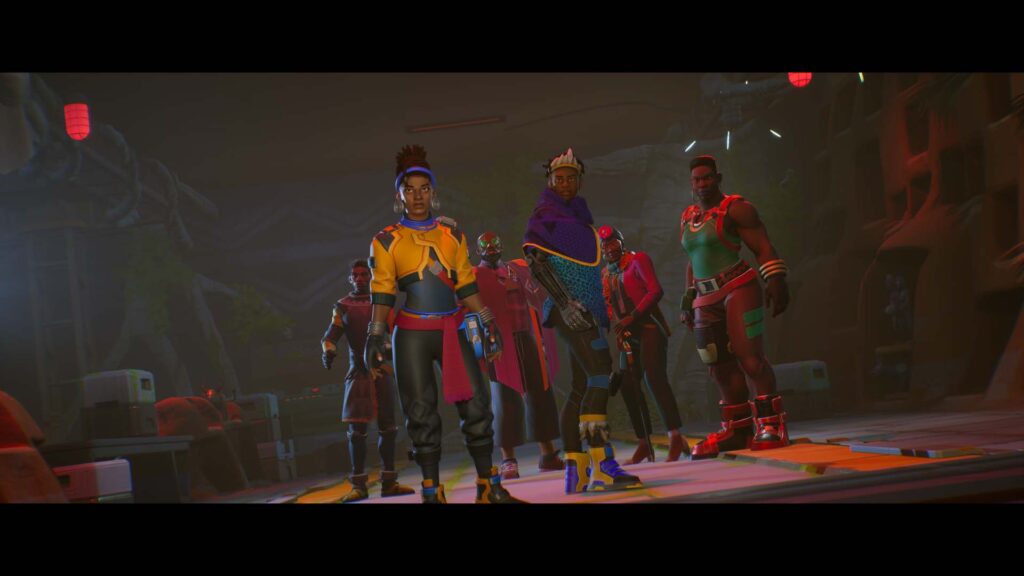
Sector Intelligence Report: Relooted – Week of Feb 4–11
Relooted is stepping out of the shadows and into the neon, positioning itself as a cerebral twist on the classic heist fantasy. Over the last seven days, the project’s official transmissions have pivoted hard into defining its identity: not as a twitchy shooter, but as a logic-driven, montage-style heist simulator where planning is the real power fantasy. For #gamedev watchers and #indiegame tacticians, this week’s signals crystallize Relooted as a loot-and-shoot that’s more about systems mastery than trigger discipline.
Strategic Overview: From Loot-and-Shoot to Logic-and-Route
The latest activity feed frames Relooted as “redefining the loot-and-shoot experience,” but the second transmission is where the design thesis really snaps into focus. Relooted is described as a “brain-melting puzzle montage” where each heist is less a firefight and more a living flowchart.
Instead of improvising under gunfire, players appear to:
- Design routes through hostile spaces like a level designer in miniature.
- Optimize timing of each move, treating seconds as a scarce resource.
- Configure tools and gadgets as nodes in a logic puzzle rather than mere gear slots.
- Assign team roles to create a perfectly tuned crime machine.
The result is a heist fantasy that plays out like a manual montage: you’re not watching a slick movie cut of the perfect robbery—you’re engineering it, iterating until every variable locks into place.
The Heist as a System: Flowcharts Over Firefights
The phrase “a heist sim for players who prefer flowcharts to spray-and-pray” is the clearest signal of Relooted’s target audience. This is a bold design stance in a genre typically dominated by chaos, crosshairs, and co-op banter. Here, the thrill vector shifts from:
- Execution pressure → to pre-meditation mastery.
- Reflex tests → to systems literacy.
- Moment-to-moment aim → to macro-level orchestration.
Rewinding, re-routing, and re-optimizing suggest a time-loop or simulation-reset mechanic, where failure is expected and even encouraged as data gathering. That’s a strong fit with puzzle-forward #indiegame design: the game isn’t punishing you for not being perfect; it’s inviting you to treat each failed run as a new branch in your internal flowchart.
For #gamedev observers, this implies a backend heavily reliant on:
- Deterministic systems (clear, predictable outcomes so players can reason about cause and effect).
- Readable state changes (the player must be able to diagnose where the plan broke).
- Toolkits over scripts (fewer canned set pieces, more combinatorial interactions between routes, tools, and team roles).
Aesthetic and Worldbuilding: The Digital Frontier Framing
The first transmission leans into a “digital frontier” and “cyber realm” framing, suggesting a world where heists are as much about infiltrating systems as they are about cracking vaults. The language of signals, interceptions, and transmissions positions Relooted within a near-future or cyberpunk-adjacent space—more data heist than bank robbery.
That framing does two useful things:
- Justifies abstraction. Complex logic puzzles and route-planning feel natural when the fiction is about data, networks, and digital security layers.
- Supports stylized UX. Flowchart-like planning interfaces, holographic blueprints, and overlay schematics can be fully diegetic, turning the planning phase into a visual spectacle instead of a dry menu.
If the gameplay footage aligns with this messaging, expect a strong emphasis on clean, information-rich UI—the kind of interface that lets you read timing windows, guard paths, and team roles at a glance.
Design Pillars Emerging from This Week’s Signals
From the two transmissions, several core pillars for Relooted’s design emerge:
1. Planning as the Primary Loop
The repeated emphasis on “engineering the perfect crime scene” and “manually orchestrating” the montage suggests that planning isn’t a pre-mission formality—it is the game. The execution phase likely exists to validate or stress-test the blueprint you’ve built.
2. Iteration as Progress
The mention of rewinding and re-routing implies a loop-based structure where the player’s knowledge is the main persistent resource. Instead of pure stat progression, Relooted may rely on:
- Unlockable tools that expand your solution space.
- New heist environments that test previously learned logic patterns.
- Meta-systems that reward clean, efficient plans over brute-force success.
3. Cognitive Challenge Over Mechanical Skill
By explicitly calling out players who “prefer flowcharts,” the team is staking a claim in the strategy-puzzle hybrid space. This positions Relooted closer to titles like tactical planners and automation sims than to traditional shooters, even if guns and gadgets are present.
Market Positioning: Where Relooted Fits in the Heist Ecosystem
Relooted’s messaging deliberately distances itself from button-mashing chaos, carving out a niche between:
- Co-op heist shooters (where the fun is in social improvisation), and
- Pure puzzle games (where fiction is often secondary).
By binding a rich heist fantasy to a logic-first design, Relooted could appeal to:
- Strategy-minded players who love systems but want a stronger fantasy wrapper.
- #gamedev enthusiasts interested in how simulation, planning, and narrative framing intersect.
- #indiegame fans looking for something that feels familiar in theme but fresh in execution.
If the team can keep the planning tools powerful yet approachable—and ensure each failed run teaches something concrete—Relooted stands to become a flagship example of the “cerebral heist sim” subgenre.
Closing Signal
This week’s transmissions don’t just market Relooted; they define its design doctrine. The message is clear: this isn’t about pulling the trigger at the right millisecond, it’s about designing a crime so airtight it feels inevitable. As more development updates surface, the key metrics to watch will be how deeply the game leans into its puzzle DNA and how elegantly it visualizes complex heist logic for players.
Sources and corrections
This archive entry does not have a verified article-source list. Images and video embeds alone are not evidence for every claim.
Found an error? Request a correction. Include the passage and a supporting source.