Automated archive / PUBG: BATTLEGROUNDS
Xeno Point, Prop Hunt, and PGS3 Redraw PUBG’s Combat Meta
Xeno Point, Prop Hunt, and the PGS 3 Circuit Finals turned PUBG: BATTLEGROUNDS into a live-fire design lab this week, stress-testing everything from CQB verticality to deception meta and esports pacing. Here’s how Krafton is using limited-time modes and high-stakes tournaments to quietly shape the game’s next...
AI-generated summary. This archive article does not have a current recorded source check. Check linked sources before relying on details. Editorial policy

Sector Intelligence Report // PUBG: BATTLEGROUNDS – Week of April 1–7, 2026
PUBG: BATTLEGROUNDS just ran one of its densest weeks of systemic experimentation in recent memory: a new containment-style mode (Xeno Point), a deception-heavy Arcade pivot (Prop Hunt), and the PGS 3 Circuit Finals all hit within the same seven-day window. For players, creators, and #gamedev observers, this was less a content drop and more a live-fire test of how far the battle royale ruleset can bend without breaking.
Xeno Point: Vertical Containment as Live Design Lab
Watch: Transmitting Gameplay footage from the field: Official Xeno Point Gameplay Trailer
The headline deployment is Xeno Point Mode, a containment-style operation that drops squads into alien-adjacent architecture with aggressively compressed engagement ranges. Across both the teaser and the extended gameplay field tests, Krafton is clearly treating Xeno Point as a sandbox for iterating on traversal, verticality, and sightline control inside pubg: battlegrounds.
Key design vectors:
1. High-Risk Vertical Arenas
Xeno Point injects stacked combat layers—elevated platforms, gantries, and tight interior corridors that collapse the traditional mid-range pacing of PUBG. This shifts decision-making away from long-range DMR dominance and into CQB probability puzzles where pre-aim, audio tracking, and pre-naded chokes become the core skill checks.
From a #gamedev perspective, this reads like a targeted test of how far PUBG can move toward arena-style density without abandoning its identity. The mode isolates variables—vertical funnels, forced crossfire, and shortened rotations—so designers can observe how squads adapt when classic open-field flanks are off the table.
2. Sightline Discipline and Drop Path Recalibration
Field reports emphasize “alien-tinted sightlines” and “intensified crossfire funnels.” In practice, that means:
- More hard angles, fewer soft edges.
- More forced peeks, fewer wide rotation routes.
- Higher value on micro-positioning and utility usage.
Veteran players are effectively being asked to re-learn drop logic: instead of macro-rotations across an entire map, Xeno Point compresses decisions into a few stacked combat lanes. For esports analysts, this is a clean environment to study how teams restructure comms and entry protocols when the map itself behaves like a multi-story killbox.
Prop Hunt Arcade: Deception Ops as Skill Training
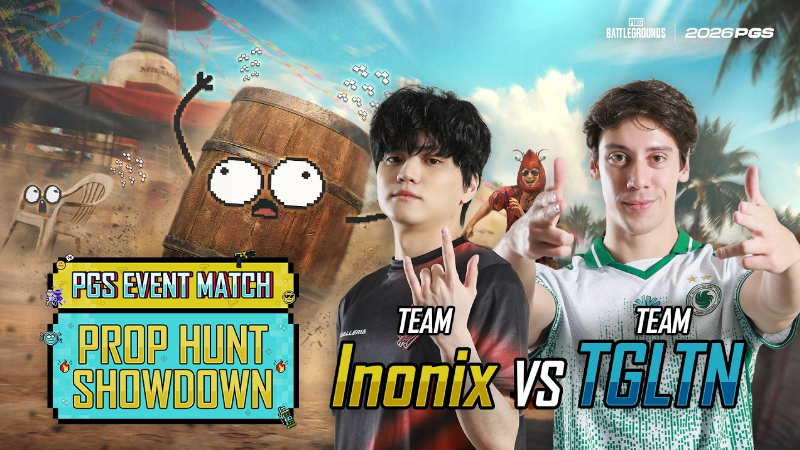
Running parallel to Xeno Point, PUBG’s Arcade: Prop Hunt mode is a quieter but equally important experiment. Six squads rotate between Hunters and Props in Port and Palace sectors, with score tied to elimination efficiency, survival time, and clean escapes.
From a systems design angle, Prop Hunt is doing three things:
- Training Spatial Literacy – Props force players to read environment clutter at a granular level. Over time, that improves map knowledge and “something’s off here” intuition—transferable skills for core battle royale.
- Reinforcing Audio and Pattern Recognition – With minimap and some spectator tools disabled, players lean harder on sound cues, timing, and behavioral tells. This is stealth and tracking training disguised as a party mode.
- Supporting Social & Creator Content – The mode is tuned for humiliation clips and improv strategy, which is ideal for streamers. For #indiegame and #gamedev teams watching from the outside, it’s a case study in how to bolt a low-stakes, high-shareability mode onto a hardcore PvP spine without fragmenting the audience.
Esports-adjacent experiments like the Prop Hunt Showdown—where pro players like TGLTN and Inonix pivot from clutch scenarios to literal cone cosplay—double as marketing and as telemetry collection on how high-skill players approach deception mechanics.
PGS 3 Circuit Finals: Esports Format as Balance Pressure Test
PGS 3’s Survival Stage and Final Stage wrapped this week with $300,000 on the line and doubled PGS points, turning every rotation into a qualification-defining decision. The structure is ruthless:
- Bottom 16 teams drop into a 5-match Survival Stage; only 8 exfil to Grand Finals.
- Final Stage runs 16 squads through 15 matches, with triple prize money and double PGS points.
This format does more than crown a champion—it stress-tests the current competitive meta under maximum pressure. Long series with stacked lobbies expose:
- Weapon balance outliers that only surface in high-level play.
- Circle behavior that repeatedly punishes or rewards certain macro styles.
- Utility trends (C4, nades, smokes) that may need tuning going into the next development update.
The broadcast-linked drops—like the C4-themed PGS 3 Spray and Emblem—also show Krafton tightening the loop between esports viewership and in-game progression. For developers, it’s a reference model for turning tournament watch time into a persistent engagement system rather than a one-off event.
Live Ops, Anti-Cheat, and the 9th Anniversary Feedback Loop
Beyond the headline modes and tournaments, the week also delivered a few quieter but crucial signals about ongoing operations:
- Weekly Ban Wave: Between March 23–29, another targeted anti-cheat purge hit live servers. The language around “continuous adaptation of cheat patterns” underlines that PUBG’s security is being treated as an evolving service, not a static wall.
- 9th Anniversary Mission: Requiring players to drop in between April 2–5 and then file a debrief in Steam comments (with IGN and platform) is more than a giveaway. It’s structured UX research—Krafton is harvesting qualitative data on which rotations, limited-time features, and event hooks actually land.
For #gamedev teams, this is a reminder that live service anniversaries are not just celebrations; they’re high-traffic windows for structured feedback collection and A/B testing.
Strategic Takeaways for Players, Creators, and Developers
- Players: Treat Xeno Point and Prop Hunt as training sims. Xeno Point sharpens CQB, vertical traversal, and fast-commit decisions; Prop Hunt tunes your environmental awareness and tracking instincts.
- Creators & Esports Talent: This week’s content—Xeno Point gameplay, Prop Hunt Showdown, and PGS 3 Finals—offers a full funnel: educational breakdowns, meme-ready deception clips, and high-stakes macro analysis.
- Developers & #indiegame Teams: PUBG’s current sprint is a live blueprint for layered live ops: run a high-intensity experimental mode (Xeno Point), a low-stakes social mode (Prop Hunt), and a format-heavy esports climax (PGS 3) simultaneously, then use all three as telemetry sources for your next balance and development update.
As the dust settles, the throughline is clear: PUBG isn’t just adding modes—it’s running controlled chaos experiments to see how far it can stretch the battle royale formula while still feeling unmistakably like PUBG: BATTLEGROUNDS.
Sources and corrections
This archive entry does not have a verified article-source list. Images and video embeds alone are not evidence for every claim.
Found an error? Request a correction. Include the passage and a supporting source.
Your games, in one place
Keep up with PUBG: BATTLEGROUNDS
Follow this game to collect its posts in your personal feed. Come back to see what you missed.
More to read about PUBG: BATTLEGROUNDS
- Source-checked briefPUBG Double Drops unlock daily rewards after 120 minutes
PUBG: BATTLEGROUNDS is offering twice the usual Twitch and Kick drops during its final regional-play weekend. Watching 120 minutes of a PEC or PAS stream unlocks that day’s rewards. The...
- Source-checked briefPUBG PEC Fall Finals plans double Drops Oct. 2–4
PUBG: BATTLEGROUNDS plans a double-Drops weekend during the second PEC: Fall Finals broadcast on Oct. 2–4. The extra rewards replace Drops that were delayed from the prior Playoffs broadcasts...
- Source-checked briefPAS2 Finals offer broadcast Drops and PGC points
The announcement says PAS2 Finals broadcasts offer daily Drops for eligible viewers. The finals also award points toward qualification for PUBG Global Championship 2026. The champion is determined...