Automated archive / PUBG: BATTLEGROUNDS
Sector Intelligence Report // PUBG: BATTLEGROUNDS – PGS 2 Heats Up, Anti‑Cheat Goes Nuclear, Rondo Turns Into a Test Lab
PGS 2’s final stages, a hard‑line 2026 anti‑cheat roadmap, and Rondo’s anniversary event just turned PUBG: BATTLEGROUNDS into a live‑ops masterclass. This week’s sector intel breaks down how Krafton is fusing esport telemetry, security, and map experiments into a single evolving systems strategy.
AI-generated summary. This archive article does not have a current recorded source check. Check linked sources before relying on details. Editorial policy
Weekly Sector Overview
PUBG: BATTLEGROUNDS just ran one of its most revealing weeks of the 2026 season: the PUBG Global Series 2 shifted into its decisive stages, Krafton published an aggressive 2026 anti‑cheat roadmap, and the 9th anniversary festivities turned Rondo into a live‑ops playground. For #gamedev and #indiegame teams watching from the sidelines, this week is a case study in how to run an interconnected esport, security, and live‑service pipeline without losing tactical clarity.
PGS 2: From Winners Stage to the Final Circle
Classic Rules, Modern Circuit Thinking
PGS 2 resumed on March 26 under classic battlegrounds rules: 18 teams, placement‑first scoring, no modifiers, no gimmick modes. This is PUBG doubling down on foundational design—same drop zones, same core systems—but asking players to master macro rather than memorize limited‑time quirks.
The structure matters from a design perspective:
- Winners Stage (Mar 26) – A stability filter. Stronger rosters stress‑test current balance, rotations, and utility usage while analysts look for cracks in reigning champion Petrichor Road’s armor.
- Survival Stage (Mar 27) – High‑pressure bracket compression. This is where pacing and information control are king; teams that misread circle tempo are effectively soft‑deleted from the tournament.
- Final Stage (Mar 28–29) – The “lobby of death” scenario. With Petrichor Road defending the crown against fully prepped contenders, every rotation acts as reference footage for how the current meta behaves under maximum pressure.
From a systems standpoint, Krafton is using PGS 2 as a live telemetry farm. Every knock, flush, and zone shift broadcast on Twitch and Kick feeds internal balance decisions. For developers, this is a reminder: your esport isn’t just marketing—it’s a high‑fidelity QA lab with prize money.

Rondo as a Live‑Ops Testbed: 9th Anniversary Party Run
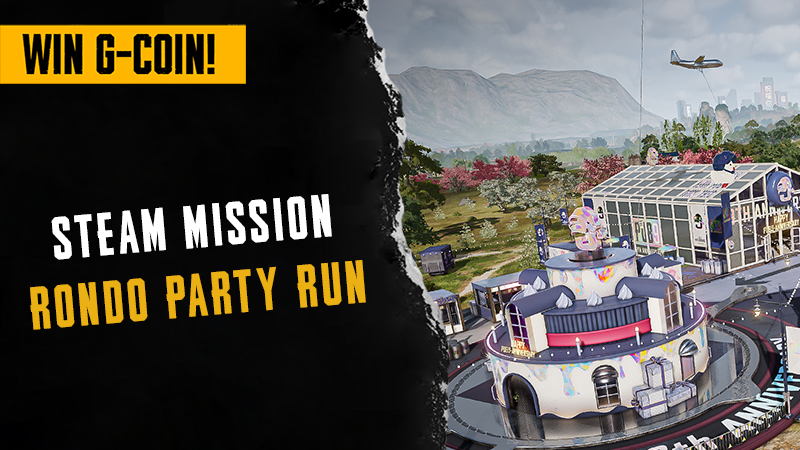
The Rondo “Anniversary Party Run” mission reframes a standard map deployment as a temporary, themed test environment. The brief is simple: drop into the celebration‑tuned Rondo, explore party sectors like Chicken Man, Lucky Egg, and decorated lanes, then submit a single highlight clip plus account credentials for a G‑Coin lottery.
Design takeaways:
- Single‑submission rule – Forces players to self‑curate their best moment, turning the community into an editorial filter. For a live‑service team, that’s free UX research on what players consider highlight‑worthy.
- Themed points of interest – Non‑standard visuals (decor, celebratory props) are layered over core combat loops. Done right, this keeps the sandbox readable while testing how far visual noise can be pushed without damaging clarity.
- Reward structure – G‑Coin lottery instead of guaranteed payouts keeps the economy controlled while still incentivizing participation.
This is how you evolve a mature battle royale: not by brute‑forcing new modes, but by temporarily warping existing maps and then mining the resulting footage and behavior for design signals.
Anti‑Cheat 2026: Treating Security as a Live Service Boss
Roadmap: Security as Product, Not Patch Note
Krafton’s 2026 anti‑cheat roadmap is framed like a year‑long offensive rather than a passive defense layer. The plan spans three horizons:
- Short‑term – Continuous kernel‑level module tuning, upgraded aim/ESP pattern detection, and tighter focus on ranked integrity.
- Mid‑term – Automated anomaly triage at scale, cross‑referencing payment signals, play history, and clustered reports to target commercial cheat pipelines.
- Long‑term – Machine‑learning models tuned on high‑level play so suspicious performance can’t hide behind “I’m just cracked.”
Coupled with the weekly banwave (March 16–22) that hard‑ejected thousands of accounts, the message is blunt: cheaters are no longer background noise—they’re a central live‑ops enemy.
For other studios, this is a blueprint: security gets a roadmap, not a slide; telemetry and behavioral profiling are core infrastructure, not side projects.
2026 Systems & Combat Roadmap: No More Comfort Metas
The broader 2026 PUBG: BATTLEGROUNDS roadmap signals a philosophical shift: comfort metas are being dismantled in favor of decisive, high‑risk, high‑reward play.
Key vectors:
- Gunplay reworks – Expect incremental changes rather than hard resets, aimed at rewarding commitment (peeks, sprays, and pushes) over passive holding.
- Map flow adjustments – Rotations and terrain are being tuned to clarify fight options and remove “free” safe zones that let teams coast into late circles.
- Ranked pipeline refinement – With anti‑cheat pressure rising, ranked can be treated as a serious competitive ladder, not a compromised grind.
From a #gamedev perspective, the throughline is clear: Krafton is aligning esport structure, anti‑cheat tech, and roadmap cadence into a single feedback loop. PGS 2 provides high‑tier combat data, the anti‑cheat grid cleans the signal, and the 2026 roadmap uses that signal to reshape how every drop feels.
Why This Week Matters Beyond PUBG
For competitive multiplayer designers and #indiegame teams aspiring to build long‑tail ecosystems, this week in PUBG: BATTLEGROUNDS is a live case study in:
- Running an esport as a design laboratory.
- Treating anti‑cheat as a first‑class product with its own roadmap.
- Using limited‑time events like Rondo’s anniversary run as controlled experiments, not just celebration dressing.
The meta message: in 2026, you don’t ship a battle royale and maintain it—you orchestrate a continuous, data‑driven campaign where every broadcast, banwave, and party‑themed POI feeds back into the next development update.
Sources and corrections
This archive entry does not have a verified article-source list. Images and video embeds alone are not evidence for every claim.
Found an error? Request a correction. Include the passage and a supporting source.
Your games, in one place
Keep up with PUBG: BATTLEGROUNDS
Follow this game to collect its posts in your personal feed. Come back to see what you missed.
More to read about PUBG: BATTLEGROUNDS
- Source-checked briefPUBG PEC Fall Finals plans double Drops Oct. 2–4
PUBG: BATTLEGROUNDS plans a double-Drops weekend during the second PEC: Fall Finals broadcast on Oct. 2–4. The extra rewards replace Drops that were delayed from the prior Playoffs broadcasts...
- Source-checked briefPAS2 Finals offer broadcast Drops and PGC points
The announcement says PAS2 Finals broadcasts offer daily Drops for eligible viewers. The finals also award points toward qualification for PUBG Global Championship 2026. The champion is determined...
- Source-checked briefPUBG College Royale returns for Fall 2026
PUBG College Royale is planned to return for Fall 2026 as a free competition for college students in the U.S. and Canada. Registration is open ahead of the first qualifier on October 25. The...