Automated archive / PUBG: BATTLEGROUNDS
Sector Intelligence Report – PUBG: BATTLEGROUNDS Locks In 2026 Warplan While PGS Circuit Heats Up
PUBG: BATTLEGROUNDS just locked in a 2026 plan that fuses esports, anti-cheat, and core combat reworks into one long-form campaign. From PGS circuit pressure to an aggressive new security roadmap, comfort metas are dead and every match is about to feel like a live-fire exam.
AI-generated summary. This archive article does not have a current recorded source check. Check linked sources before relying on details. Editorial policy

Weekly Sector Overview
PUBG: BATTLEGROUNDS just outlined a brutally clear 2026 warplan: sharpen the gunplay, harden the security grid, and turn esports into a continuous pressure cooker instead of isolated tournaments. Over the last seven days, Krafton has synced three major fronts—PGS circuit structure, long-term combat and systems design, and an aggressive anti-cheat roadmap—while quietly folding in 9th anniversary rewards and Rondo party ops to keep the broader playerbase in rotation.
This isn’t a content drip; it’s a systemic reset. For players, creators, and #gamedev watchers, the message is simple: the live service is going to feel more like a live exam.
Esports Theater: PGS Circuit Becomes a Long-Form Campaign
PGS 1: Finals as a Live-Fire Systems Test
PGS 1’s Finals Stage (March 20–22) functioned less like a weekend event and more like a controlled lab test for the new circuit format. 24 global teams rotated through Seongsu, Seoul with no live audience, just noise-cancelled focus and a three-series structure that remembers your mistakes across weeks.
Watch-time rewards were tuned as both engagement bait and behavioral telemetry: 30 minutes for the 9th Anniversary Flamin’ Cake spray, 60 for the Cake & Confetti nameplate, 90 for the Holo Cat Ears. On paper, that’s cosmetics. In practice, it’s a data stream—how long players stay, when they drop off, and which regions stick around for full-session viewing.
PGS 2: Winners Stage Online, Classic Rules Only
PGS 2 boots back up March 26 with the Winners Stage, followed by Survival Stage on March 27 and Final Stage March 28–29. The ruleset is aggressively old-school: classic battlegrounds, placement-first scoring, no gimmick modifiers. Same drop zones, sharper execution.
For teams, that means:
- Refined macro: disciplined rotations and utility usage under multi-day pressure.
- Circle literacy: late-circle compressions that punish even minor misreads.
- Consistency over volatility: the circuit format rewards stable decision-making, not one-off miracle games.
From a #gamedev and esports design perspective, this is a clear pivot away from spectacle-first modifiers and back toward readable, replicable systems that competitive teams can study like a live-fire sim exam.

2026 Roadmap: Combat, Systems, and No More Comfort Metas
Krafton’s 2026 roadmap for PUBG: BATTLEGROUNDS is explicit about its target: comfort metas are over.
Combat and Map Flow Reworks
The roadmap calls out progressive reworks to gunplay and map flow aimed at:
- Punishing hesitation: slower, passive playstyles should find fewer safe pockets.
- Rewarding decisive pushes: cleaner risk/reward loops for teams that commit to fights.
- Improved tactical clarity: better combat readability so players can parse third-party threats, line-of-sight, and rotational options under pressure.
For developers and #indiegame designers watching from the sidelines, this is a case study in long-tail live balance: instead of one-off buffs/nerfs, Krafton is framing 2026 as a multi-season systems pass, with limited-time modes acting as testbeds for future core mechanics.
Ranked and Seasonal Cadence
Ranked pipelines are being retooled to align with that philosophy: less freeloading on old muscle memory, more emphasis on positional IQ and execution under repeatable conditions. Seasonal deployments lock in a predictable cadence, making it easier for both players and competitive teams to plan grind windows and scrim blocks.
Anti-Cheat 2026: Treating Cheaters Like a Live-Service Raid Boss
The most aggressive part of the week’s intel is the Anti-Cheat 2026 Roadmap, which reframes security as an ongoing boss fight rather than background maintenance.
Short-Term: Faster Detection, Tighter Windows
From March 16–22, the weekly BANwave logged thousands of instant account purges, with repeat offenders and cheat distributors tagged as high-priority deletions. Short-term ops include:
- Continuous kernel-level module tuning.
- New aim/ESP pattern tracking to catch non-human behavior.
- A specific focus on rank integrity, ensuring high-level lobbies aren’t quietly compromised.
Mid to Long-Term: Machine Learning and Signal Fusion
The mid-term plan leans heavily on automation and signal fusion:
- Automated anomaly triage at scale.
- Cross-referencing payment data, play history, and report clusters.
- ML models tuned on high-level play, closing the classic excuse gap of “I’m just cracked.”
Player-side, the tools are getting refinement passes so reports are faster, cleaner, and more impactful. Leaderboard hygiene is explicitly called out as infrastructure, not a luxury—critical for any competitive ecosystem that wants to be taken seriously in 2026.
Anniversary Ops: Rondo Party Run and Reward Economy
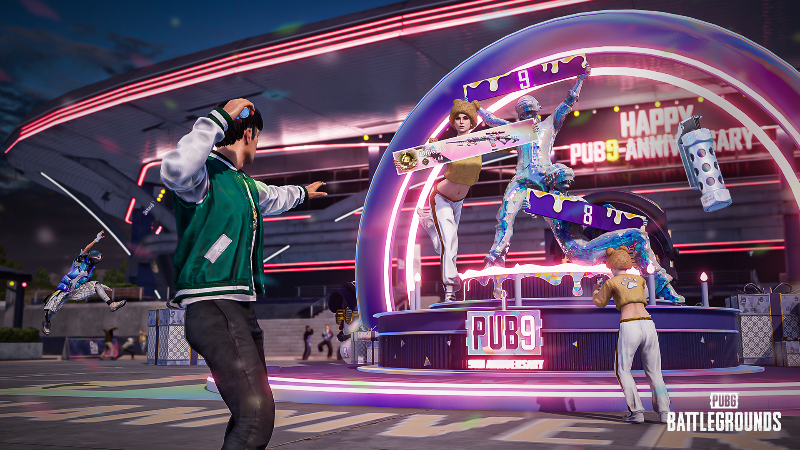
Parallel to the hardcore systems talk, PUBG: BATTLEGROUNDS is running the Rondo Party Run as a 9th anniversary celebration zone. Operators are pushed into Rondo during the event window to:
- Hunt down themed points of interest: Chicken Man, Lucky Egg, the 9th Anniversary Draw, and decorated streets.
- Submit a single highlight clip with callsign and platform for a shot at a G-Coin lottery.
Combined with PGS watch-time drops, this forms a broader reward economy that ties casual play, esports spectating, and social content into a single loop—exactly the kind of ecosystem-level design other live-service and #indiegame teams try to emulate.
Strategic Takeaways for Players and Developers
For players, the message is clear: 2026 PUBG is about discipline.
- Expect more punishing circles and less room for passive survival.
- Ranked will increasingly reward consistent decision-making over lucky flukes.
- Cheaters will have less time to impact matches before detection and purge.
For #gamedev observers, PUBG: BATTLEGROUNDS is entering a phase where security, esports, and systems design are being iterated in sync, not in silos. The PGS circuit provides high-level telemetry, the anti-cheat roadmap protects the competitive substrate, and the 2026 systems plan uses that data to reshape how every firefight feels—from Bronze lobbies to Seoul stage finals.
Sector verdict: the battlegrounds are being rebuilt mid-flight, and everyone—players, teams, and cheat vendors alike—is going to feel the turbulence.
Sources and corrections
This archive entry does not have a verified article-source list. Images and video embeds alone are not evidence for every claim.
Found an error? Request a correction. Include the passage and a supporting source.
Your games, in one place
Keep up with PUBG: BATTLEGROUNDS
Follow this game to collect its posts in your personal feed. Come back to see what you missed.
More to read about PUBG: BATTLEGROUNDS
- Source-checked briefPUBG PEC Fall Finals plans double Drops Oct. 2–4
PUBG: BATTLEGROUNDS plans a double-Drops weekend during the second PEC: Fall Finals broadcast on Oct. 2–4. The extra rewards replace Drops that were delayed from the prior Playoffs broadcasts...
- Source-checked briefPAS2 Finals offer broadcast Drops and PGC points
The announcement says PAS2 Finals broadcasts offer daily Drops for eligible viewers. The finals also award points toward qualification for PUBG Global Championship 2026. The champion is determined...
- Source-checked briefPUBG College Royale returns for Fall 2026
PUBG College Royale is planned to return for Fall 2026 as a free competition for college students in the U.S. and Canada. Registration is open ahead of the first qualifier on October 25. The...