Automated archive / PUBG: BATTLEGROUNDS
PUBG: BATTLEGROUNDS Sector Intel – 9-Year Refit, PGS Circuit Overhaul, and a Cleaner Killfeed
PUBG: BATTLEGROUNDS just turned nine and is acting like a game that plans to survive another decade, not fade into legacy status. From a retooled esports circuit to systemic anti-cheat sweeps and social visibility tools, this week’s intel shows a platform quietly rebuilding its long-term foundations.
AI-generated summary. This archive article does not have a current recorded source check. Check linked sources before relying on details. Editorial policy
Sector Overview: A Live Service Veteran Learns New Tricks
Nine years in, pubg: battlegrounds is behaving less like a legacy BR and more like a live combat platform under continuous refit. This week’s telemetry shows three converging vectors: a refocused core experience on live servers, an aggressively structured 2026 esports circuit, and a persistent anti-cheat sweep tightening the ecosystem. For players, creators, and #gamedev observers, the signal is clear: Krafton is treating PUBG as a long-horizon product, not a nostalgia piece.
From refined gunplay and onboarding tweaks to the new PUBG Global Series (PGS) circuit and community-facing systems like Player of the Day, the game is quietly shifting from “drop-in shooter” to a persistent competitive environment with better data hygiene and more watchable storylines.
Live Game: 9-Year Combat Upgrade and Retention Strategy
The 9-Year Combat Upgrade isn’t a single patch—it’s a positioning statement. The field log frames the current build as:
- Refined gunplay – Tighter weapon handling and clearer feedback loops to reduce “desync myth” complaints and raise the skill ceiling without alienating returnees.
- Streamlined onboarding – Faster ramp for new and returning players, crucial for a title with nearly a decade of accrued systems debt.
- Denser reward loop – Seasonal incentives and a more predictable progression cadence aimed at keeping casuals in the churn instead of bouncing back to lighter #indiegame BR-likes.
For designers watching from the outside, this is a textbook late-stage development update: focus on friction removal, reward density, and “time-to-fun” rather than headline features. The messaging explicitly targets Xbox as a stable pillar of the ecosystem, suggesting ongoing platform parity is a non‑negotiable for Krafton’s long-term roadmap.
The Anniversary Mission: First Party Impressions doubles as UX reconnaissance. By incentivizing players to report their first-contact reactions to the anniversary skybox, statue, and pre-drop disruptions, the team is harvesting qualitative data on what actually lands emotionally in the first 60 seconds of a match. That’s free user research, wrapped in a G‑Coin raffle.
Esports: PGS 1 as a Three-Week Circuit, Not a Weekend Tournament
The biggest structural shift this week is the 2026 PUBG Global Series circuit format:
- Three linked series (PGS 1–3) = one continuous campaign
- 24 global teams deployed to Seongsu, Seoul in a no-audience, high-pressure environment
- Persistent standings across three weeks, turning every bad rotate into long-term leaderboard debt
Group Stage A/B – Circuit Alpha
Day 1 of PGS 1 marks the true beginning of the 2026 esports season. No more disposable brackets; every match now feeds a long-memory scoring grid. From a #gamedev and broadcast design perspective, this solves a chronic BR problem: tournaments that feel like isolated one-offs with no narrative carryover.
The watch-time drops (Flamin’ Cake spray at 30m, Cake & Confetti nameplate at 60m, Holo Cat Ears at 90m) are more than cosmetic bribes—they’re retention levers to normalize longer session times on Twitch and Kick, which in turn stabilize viewership graphs for partners and sponsors.
Winners Stage – Bracket Hardening
Day 2 of the Winners Stage tightens the funnel:
- 16 squads in play
- Top 8: direct injection into Finals
- Bottom 8: rerouted to Survival Stage for a high-stakes second chance
This design creates a natural storytelling split: frontrunners playing for seeding and momentum, stragglers fighting to avoid the psychological and strategic tax of extra matches.
Survival Stage – Final Choke Point
By Day 3, the Survival Stage becomes the last airlock before Finals:
- 24 squads enter
- 8 extract to Finals
- 8 are hard-deleted from the circuit
For analysts and coaches, this is the prime window to study macro-rotations and risk tolerance. With circuit math looming over every decision, you’re watching teams optimize not just for chicken dinners, but for point economy across weeks. That’s a very different meta than isolated LANs.
Viewer incentives remain consistent—cake spray, nameplate, holo cat ears—keeping the reward language stable across days while the stakes escalate.
Integrity Ops: Weekly Banwave as Continuous Network Hygiene
The Automated Integrity Sweep from 03/09–03/15 is framed as “scheduled purge,” not a PR stunt. Key takeaways:
- Thousands of accounts banned via behavior, hardware ID, and anomaly-based detection
- Emphasis on iterative banwaves that force cheat vendors into a constant rework cycle
- Clear messaging to players: manual reports + server diagnostics = higher signal, better balance data
From a systems design standpoint, this is about telemetry quality. Cleaner data means more reliable heatmaps, weapon balance reads, and matchmaking metrics. For a nine-year-old competitive shooter, that’s foundational—balance decisions built on polluted data are how you lose trust with both ranked grinders and esports teams.
Social Systems: Player of the Day as Soft-Power Progression
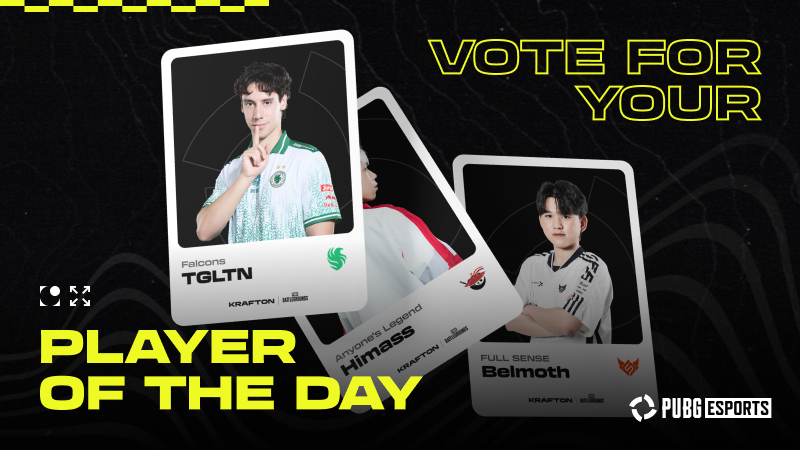
The Player of the Day protocol is a subtle but important social layer:
- Community voting elevates a single player daily
- Rewards are visibility-based: lobby exposure, profile highlight, name in lights
- Encourages highlight-chasing and content-worthy plays without directly buffing in-game power
For #gamedev teams, this is a low-risk, high-upside social feature. It:
- Adds a vanity progression vector that doesn’t touch combat balance
- Incentivizes creators to farm clips and social presence around PUBG instead of competitor titles
- Gives the team a daily content beat for social channels and in-client surfacing
In a world where many #indiegame BRs struggle to maintain a creator ecosystem, PUBG is doubling down on soft-power progression—status, recognition, and exposure—rather than just loot boxes and passes.
Strategic Read: Where PUBG Sits in 2026
The throughline across all this week’s intel is long-term stabilization:
- The 9-year combat upgrade and onboarding work aim to reduce friction for fresh blood and returning veterans.
- The PGS circuit transforms esports from one-off spectacles into a serialized campaign that rewards consistent viewing and deeper narrative.
- Anti-cheat banwaves and Player of the Day combine to make the ecosystem both cleaner and more socially rewarding.
For players, this is the best moment in years to re‑drop. For developers watching from the outside, PUBG is a live case study in how to keep a mature shooter relevant: iterate on core feel, tighten data integrity, and build structures—competitive and social—that make every match feed into a larger story.
Sources and corrections
This archive entry does not have a verified article-source list. Images and video embeds alone are not evidence for every claim.
Found an error? Request a correction. Include the passage and a supporting source.