Automated archive / PUBG: BATTLEGROUNDS
PUBG’s 9th Anniversary, Banwave Pressure, and PGS Circuit Alpha Go Live
PUBG: BATTLEGROUNDS just tightened its anti-cheat net, kicked off a high-pressure PGS circuit in Seoul, and rolled out new community systems that turn visibility into a resource. This week’s Sector Intelligence Report breaks down how Krafton is evolving a nine-year-old battle royale without slowing the firefight.
AI-generated summary. This archive article does not have a current recorded source check. Check linked sources before relying on details. Editorial policy
Strategic Overview
The last seven days in PUBG: BATTLEGROUNDS have been less about flashy patch notes and more about infrastructure and ecosystem control. Krafton quietly pushed three major levers: an aggressive weekly anti-cheat sweep, the launch of the PUBG Global Series (PGS) 1 circuit format, and new community-facing systems like Player of the Day and the 9th Anniversary First-Contact Mission. Together, they form a clear development update: stabilize competitive integrity, deepen watchability, and reward player visibility.
From a #gamedev and live-ops perspective, this week reads like a textbook example of how to maintain a nine-year-old live-service shooter without losing combat tempo.
Anti-Cheat: Weekly Banwave as Ongoing Network Hygiene
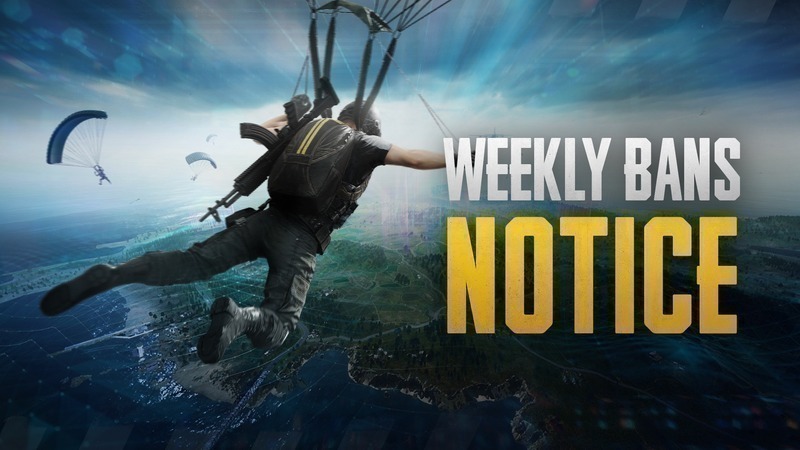
The Automated Integrity Sweep (03/09–03/15) is framed explicitly as a “scheduled purge cycle” rather than a one-off PR blast. Thousands of accounts were flagged and permanently removed using behavior analysis, hardware ID tracking, and anomaly detection.
This matters for both players and developers:
- Continuous pressure on cheat vendors: Each banwave forces cheat providers to retool, raising their development and maintenance costs. Over time, this shifts the risk/reward curve against exploit creators.
- Cleaner telemetry for balance work: With fewer distorted data points from cheaters, designers get more reliable stats on weapon performance, engagement ranges, and survival curves — critical for any meaningful development update in a competitive shooter.
- Player reporting as signal amplifier: The messaging explicitly ties player reports into server-side diagnostics. That’s a classic #gamedev pattern: using community input to improve machine learning models, reduce false positives, and sharpen detection heuristics.
The takeaway: PUBG isn’t pitching a “cheat-free” fantasy. It’s committing to perpetual network hygiene, which is the only realistic posture for a mature, global FPS.
Esports: PGS Circuit Alpha Turns Every Fight Into Long-Term Debt

PUBG Global Series 1 – Day 1 (Group Stage A/B) in Seongsu, Seoul, is more than another LAN. It’s the opening node of a three-tournament PGS circuit that shares a continuous scoring grid. No crowd, all pressure.
Key structural shifts:
- Persistent standings across three weeks: Results are no longer self-contained. A bad rotation in Week 1 becomes a long-term points liability, altering how teams value risk, edge fights, and late-game survival.
- Macro over micro: The format rewards squads that can maintain consistency in rotations, zone reads, and economy management across multiple events, not just spike in a single bracket.
- Viewer incentives as retention design: Twitch (and Kick) drops — from the 9th Anniversary Flamin’ Cake spray to Holo Cat Ears — are classic live-ops hooks, pulling casual players into the esports funnel while celebrating the game’s ninth year.
For competitive PUBG, this circuit format is a design experiment in long-memory scoring: can you make every map feel like it echoes across an entire season? From a #gamedev and esports product viewpoint, this is how you create storylines that last longer than one weekend.
Community Systems: Player of the Day and Visibility Economics
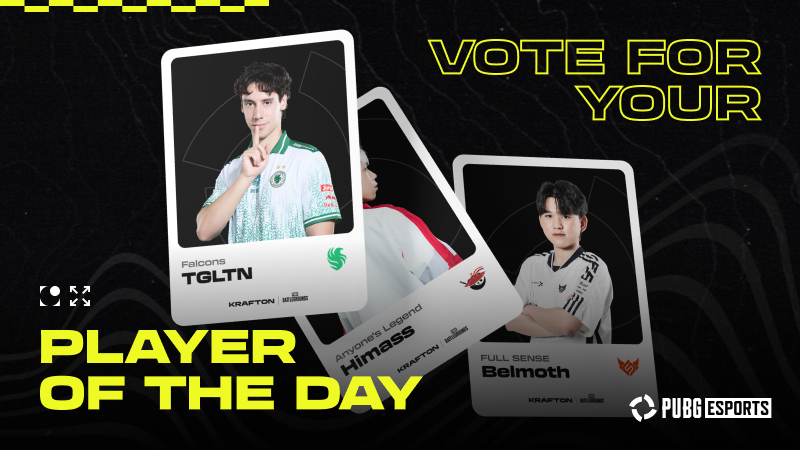
The new Player of the Day protocol introduces a daily, community-voted spotlight where one player gets elevated visibility across the ecosystem. It’s soft power, but it’s deliberate design.
Implications:
- Performance optics as progression: Instead of only grinding MMR or cosmetics, players can now chase social capital — highlight plays, clutch moments, and strong presence can convert into literal in-client visibility.
- Behavioral nudging: Systems like this subtly encourage more shareable, high-risk plays and content creation. Expect more montage-friendly pushes and “hero” moments as players visibility-farm.
- Data for future features: Voting and engagement metrics become a rich dataset for future #indiegame and AAA designers alike: what kinds of plays the audience values, which roles get noticed, and how social systems can be tuned.
This is a low-cost, high-impact feature: no new map, no new weapon, but a new attention economy layer on top of existing gameplay.
9th Anniversary Ops: First-Contact Missions and Worldbuilding
The 9th Anniversary Mission: First Party Impressions (Mar 15–18, 10:00 UTC) turns the pre-drop phase into a temporary reconnaissance event. Players are asked to report their first-contact impressions of:
- The starting island statue
- The drone show in the skybox
- Any other “festive anomalies” disrupting the usual pre-drop dead stare
With 1,000 G-Coin on the line for 45 randomly selected participants, Krafton is doing three things at once:
- Celebration as UX testbed: Anniversary content doubles as a way to see how players navigate visual noise, spectacle, and pre-match downtime.
- Encouraging qualitative feedback: Requiring a single, firsthand combat report (IGN + platform) is a clever way to collect narrative-style feedback rather than just raw telemetry.
- Reinforcing authenticity: Explicit bans on duplicate submissions and secondhand impressions underline a commitment to clean, trustworthy data.
For a nearly decade-old title, this is how you keep the world feeling alive: short, time-boxed events that remix familiar spaces without fragmenting the core ruleset.
Sector Outlook
This week’s PUBG: BATTLEGROUNDS sector intelligence paints a clear picture:
- Anti-cheat is being treated as a living system, not a feature.
- Esports is shifting from isolated tournaments to a circuit economy of points and narrative.
- Community tools like Player of the Day and anniversary recon missions are expanding the meta beyond pure gunplay into visibility, identity, and spectacle.
For developers watching from the sidelines — whether you’re building a AAA shooter or a scrappy #indiegame — PUBG’s current playbook is a useful case study in long-term live-service stewardship: tighten integrity, deepen competitive structure, and keep finding low-friction ways to make players feel seen.
Sources and corrections
This archive entry does not have a verified article-source list. Images and video embeds alone are not evidence for every claim.
Found an error? Request a correction. Include the passage and a supporting source.