Automated archive / PUBG: BATTLEGROUNDS
PUBG’s Anti-Cheat War Room and Krafton’s New AI Command Node
PUBG: BATTLEGROUNDS has quietly escalated its war on cheaters while Krafton installs a Chief AI Officer to harden its AI-first strategy. This week’s sector intel points to a future where anti-cheat, live ops, and simulation design are all wired through the same machine-learning backbone.
AI-generated summary. This archive article does not have a current recorded source check. Check linked sources before relying on details. Editorial policy
Sector Intelligence Report // PUBG: BATTLEGROUNDS
The last week inside PUBG: BATTLEGROUNDS hasn’t been about flashy new skins or map overhauls—it’s been about hardening the simulation. Krafton is quietly tightening two of the most critical pillars for any live-service shooter: integrity (anti-cheat) and intelligence (AI and tooling). For players, that translates into cleaner firefights today and potentially smarter, more reactive battlegrounds tomorrow.
Anti-Cheat Uplink: Mass Extraction of Bad Actors
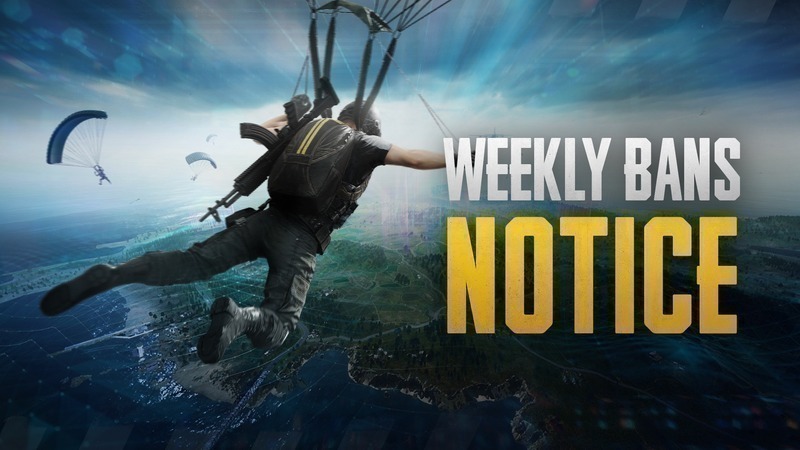
Krafton’s latest Anti-Cheat Uplink: Weekly Enforcement Protocol Report (covering 2025-02-09 to 2025-02-22) reads like a field log from a live war room. Thousands of anomalous accounts were flagged, investigated, and permanently removed for:
- Unauthorized client-side software
- Input manipulation (macro scripts, recoil tools, spoofed controllers)
- Data tampering and memory injection
The language here matters: enforcement units are described as running “systematic sweeps across all live combat zones” with detection matrices being “recalibrated and redeployed.” That strongly suggests PUBG’s anti-cheat isn’t just a static blacklist but a continually trained detection grid—likely a mix of heuristic rule sets, behavioral modeling, and server-side validation.
For real players, the impact is twofold:
- Short-term: Reduced incidence of obviously inhuman tracking, suspicious pre-fires, and impossible recoil patterns—especially in higher MMR brackets and ranked queues.
- Long-term: Every ban wave feeds telemetry back into the system, making the detection models more precise and less prone to false positives.
The report explicitly calls on operators (players) to keep submitting reports. That’s a clear sign PUBG’s anti-cheat stack is human-in-the-loop: player reports act as labeled data that help refine automated detection. In #gamedev terms, Krafton is effectively running a live, supervised learning loop on top of a massive active player dataset.
The closing line of the field log—“cheaters are reminded that this is not a sandbox; it’s a firing range”—isn’t just copywriting; it’s a signal of posture. PUBG is positioning its anti-cheat as an ongoing security operation, not an occasional PR beat.
Krafton’s New Chief AI Officer: Strategic R&D, Not Just Smarter Bots

In parallel with the anti-cheat push, Krafton has rewired its leadership stack by appointing a Chief AI Officer, doubling down on its “AI First” doctrine. Two separate intelligence packets confirm the mandate: “further enhance its game AI R&D framework” and “overclock the publisher’s game AI R&D pipelines.”
From a #gamedev and production standpoint, this role likely touches several layers relevant to PUBG: BATTLEGROUNDS:
1. Smarter NPCs and Simulation Layers
While PUBG is fundamentally PvP, its ecosystem—training modes, tutorial flows, casual matchmaking, and event modes—already leverages bots. A dedicated AI command node opens doors to:
- Adaptive bots that dynamically adjust aggression, positioning, and flanking behavior based on squad skill level.
- Simulation-driven balancing, where virtual agents stress-test weapon tuning and loot distribution across thousands of simulated matches before changes hit live servers.
- More believable PVE-style encounters in limited-time modes or onboarding experiences, where bots don’t just aimbot, but role-play as varied player archetypes.
2. AI-Tuned Live Ops and Content Pipelines
The intel explicitly flags “AI-driven production tools” and “scalable machine learning pipelines.” For PUBG’s live-service model, this could mean:
- Predictive matchmaking & churn modeling to stabilize queue health and reduce player drop-off.
- Automated heatmaps that identify dead zones on maps and inform future terrain passes.
- Dynamic event tuning, where reward curves, drop rates, and mission structures are adjusted in near real time based on engagement metrics.
This is where the #indiegame sector should pay attention: while Krafton operates at a massive scale, the patterns here—AI-assisted balancing, simulation-led design, telemetric anti-cheat—are the same techniques that will increasingly filter down to smaller studios as tooling becomes more accessible.
3. Anti-Cheat Synergy: AI as Security Infrastructure
The weekly bans notice and the new Chief AI Officer aren’t isolated moves. They’re two sides of a single strategy: AI as infrastructure.
The same ML pipelines that can learn to:
- Recognize organic movement patterns,
- Forecast player engagement,
- And simulate emergent combat scenarios,
…can also be weaponized to:
- Detect outlier behavior indicative of cheats,
- Flag improbable input timings and recoil compensation,
- And auto-prioritize suspicious accounts for manual review.
For PUBG: BATTLEGROUNDS, this means the anti-cheat grid can become more surgical, focusing on high-confidence detections while minimizing collateral damage to legit players.
What This Means for Players and Developers

For players on the ground:
- Expect continued ban waves and possibly more transparent reporting on enforcement stats.
- Watch for subtle shifts in match feel—fewer suspicious deaths, more consistent mid-to-late game pacing.
- Keep using in-game reporting tools; in an AI-first security stack, your report is effectively a data label that strengthens the model.
For developers and #gamedev watchers:
- Krafton is signaling that AI is no longer a feature—it’s a core platform layer spanning anti-cheat, live ops, and content production.
- The appointment of a Chief AI Officer sets a precedent: we’re likely to see more publishers formalize similar roles as AI-driven pipelines become essential to scaling live-service ecosystems.
In this week’s sector snapshot, PUBG: BATTLEGROUNDS isn’t shouting about new cosmetics or headline-grabbing crossovers. Instead, it’s doing something far more foundational: fortifying the integrity of the firing range and wiring in smarter systems to run it.
If Krafton executes on its AI-first doctrine, the battlegrounds of 2026 and beyond won’t just be more secure—they’ll be more adaptive, more responsive, and more ruthlessly data-driven than anything the genre has seen so far.
Sources and corrections
This archive entry does not have a verified article-source list. Images and video embeds alone are not evidence for every claim.
Found an error? Request a correction. Include the passage and a supporting source.
Your games, in one place
Keep up with PUBG: BATTLEGROUNDS
Follow this game to collect its posts in your personal feed. Come back to see what you missed.
More to read about PUBG: BATTLEGROUNDS
- Source-checked briefVirtus.pro and Team Falcons win PEC and PAS Finals 2
Virtus.pro won PUBG EMEA Championship: Fall Finals 2, while Team Falcons took PUBG Americas Series 2 Finals 2. The results matter for PUBG Global Championship 2026 qualification through regional...
- Source-checked briefPUBG Double Drops unlock daily rewards after 120 minutes
PUBG: BATTLEGROUNDS is offering twice the usual Twitch and Kick drops during its final regional-play weekend. Watching 120 minutes of a PEC or PAS stream unlocks that day’s rewards. The...
- Source-checked briefPUBG PEC Fall Finals plans double Drops Oct. 2–4
PUBG: BATTLEGROUNDS plans a double-Drops weekend during the second PEC: Fall Finals broadcast on Oct. 2–4. The extra rewards replace Drops that were delayed from the prior Playoffs broadcasts...