Automated archive / PUBG: BATTLEGROUNDS
PUBG’s Anti-Cheat War Machine & Krafton’s New AI Command Node
PUBG: BATTLEGROUNDS is tightening its security perimeter with fresh anti-cheat sweeps while Krafton rewires its executive stack around an AI-first doctrine. The result: a battleground steadily transforming into a live testbed for large-scale game AI and adaptive live ops.
AI-generated summary. This archive article does not have a current recorded source check. Check linked sources before relying on details. Editorial policy
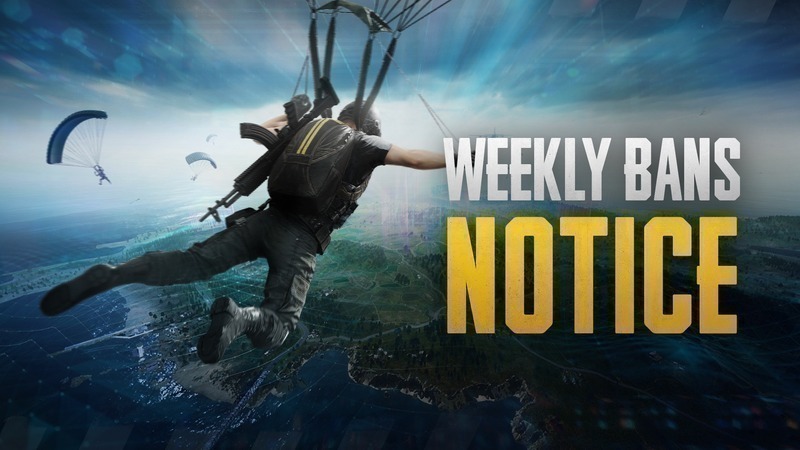
Sector Intelligence Report // PUBG: BATTLEGROUNDS
The last seven days in PUBG: BATTLEGROUNDS read like a systems-level patch to the entire war machine: cheaters purged in bulk, and Krafton quietly rewiring its executive stack around an AI-first doctrine. For players, this isn’t just corporate reshuffling—it’s groundwork for smarter enemies, tighter integrity, and more adaptive live ops.
Anti-Cheat Uplink: Enforcement Protocol in Full Burn
The latest Weekly Bans Notice (02/09–02/22) confirms that PUBG’s anti-cheat division is still operating like a live-fire security lab. Thousands of accounts were flagged, investigated, and permanently extracted from the network for:
- Unauthorized third-party software
- Input manipulation (macro / hardware spoofing)
- Data tampering and packet-level interference
The language coming out of the operation log is telling: “this is not a sandbox; it’s a firing range.” That’s a clear signal that enforcement isn’t just reactive; it’s now part of the game’s design philosophy.
Key takeaways for competitive integrity:
- Detection matrices are being recalibrated and redeployed on a rolling basis, implying a live-ops machine learning loop instead of static rule sets.
- Player reports remain a critical training signal—all telemetry is being funneled back into the automated detection grid to shrink response time and reduce false positives.
- The cadence of public ban reports keeps pressure on exploit developers, raising the cost of maintaining undetected cheats.
From a #gamedev perspective, PUBG is operating an always-on security R&D stack: iterating on detection models in production, at scale, with real combat data.
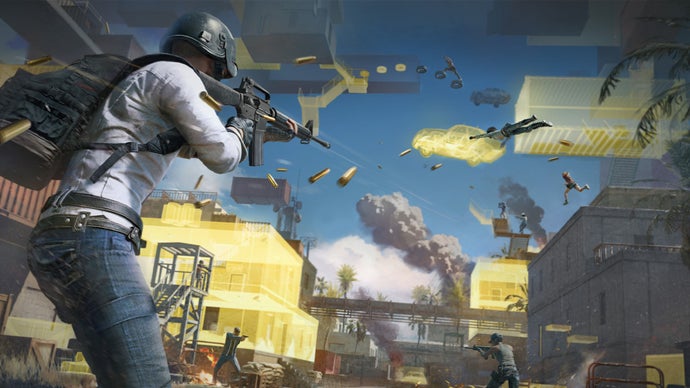
Krafton’s New Chief AI Officer: Strategic Rewire for PUBG’s Future
Parallel to the anti-cheat offensive, PUBG’s publisher Krafton has activated a new executive role: Chief AI Officer. This isn’t a ceremonial title—it’s a structural bet that AI will anchor everything from bots to backend.
According to the latest transmission, the CAIO is tasked with “further enhancing its game AI R&D framework” and tightening Krafton’s “AI First” strategy across its portfolio. For PUBG: BATTLEGROUNDS, that translates into three major impact zones:
1. Smarter NPCs and Simulation Layers
PUBG already leans on bots to stabilize matchmaking and onboarding, but an AI-focused R&D pipeline opens the door to:
- More human-like bot behavior (positioning, peeking, retreat logic)
- Context-aware engagements that mimic high-skill players
- Dynamic difficulty curves for new players without compromising veteran lobbies
For #indiegame and #gamedev teams watching from the outside, Krafton is effectively turning PUBG into a live simulation lab for large-scale combat AI.
2. AI-Tuned Live Ops and Balancing
The data packet flags an elevated focus on scalable machine learning pipelines. In practice, that could mean:
- AI-assisted weapon balance passes based on real-time kill, damage, and engagement-range data
- Predictive models for match pacing, blue-zone tuning, and loot density
- Automated anomaly detection that can spot suspicious behavioral patterns before cheats become widespread
This is where PUBG’s anti-cheat and AI strategies converge: the same infrastructure that powers smarter NPCs can also profile abnormal player behavior at scale.
3. Production Tools and Content Velocity
Krafton’s AI-first doctrine isn’t limited to in-game behavior. Expect AI to seep into:
- Level design pre-visualization and heatmap-driven iteration
- Faster asset production pipelines
- Intelligent QA tooling that stress-tests edge cases in massive, open-ended matches
For players, the end result should be faster iteration cycles and more responsive development updates for PUBG: BATTLEGROUNDS, especially in areas like map refreshes, event modes, and seasonal systems.
Strategic Outlook: What to Watch Next
Going into the next cycle, keep an eye on:
- Ban Wave Telemetry: If the volume and frequency of ban reports spike or stabilize, it’s a signal of how effectively the new detection matrices are locking in.
- Bot and Match Feel: Any subtle shift in bot behavior, pacing, or engagement logic may be the first visible footprint of Krafton’s upgraded AI stack.
- Development Update Cadence: As AI-driven tools mature, expect more granular tuning passes and quicker turnarounds on community feedback.
PUBG: BATTLEGROUNDS is quietly evolving from a battle royale into a living testbed for large-scale AI systems—where anti-cheat, simulation, and live ops all sit on the same neural backbone.
Sources and corrections
This archive entry does not have a verified article-source list. Images and video embeds alone are not evidence for every claim.
Found an error? Request a correction. Include the passage and a supporting source.
Your games, in one place
Keep up with PUBG: BATTLEGROUNDS
Follow this game to collect its posts in your personal feed. Come back to see what you missed.
More to read about PUBG: BATTLEGROUNDS
- Source-checked briefVirtus.pro and Team Falcons win PEC and PAS Finals 2
Virtus.pro won PUBG EMEA Championship: Fall Finals 2, while Team Falcons took PUBG Americas Series 2 Finals 2. The results matter for PUBG Global Championship 2026 qualification through regional...
- Source-checked briefPUBG Double Drops unlock daily rewards after 120 minutes
PUBG: BATTLEGROUNDS is offering twice the usual Twitch and Kick drops during its final regional-play weekend. Watching 120 minutes of a PEC or PAS stream unlocks that day’s rewards. The...
- Source-checked briefPUBG PEC Fall Finals plans double Drops Oct. 2–4
PUBG: BATTLEGROUNDS plans a double-Drops weekend during the second PEC: Fall Finals broadcast on Oct. 2–4. The extra rewards replace Drops that were delayed from the prior Playoffs broadcasts...