Automated archive / Project Hail Mary
Project Hail Mary Converts Hard Sci‑Fi Into Systems-Driven Survival
Project Hail Mary isn’t just another sci‑fi spectacle; it’s a live design lab for how to weld hard science, survival systems, and character‑driven stakes into a cohesive loop. This week’s intel breaks down what gamedev and indiegame teams can steal from its narrative structure, co‑op tension, and systems‑first...
AI-generated summary. This archive article does not have a current recorded source check. Check linked sources before relying on details. Editorial policy
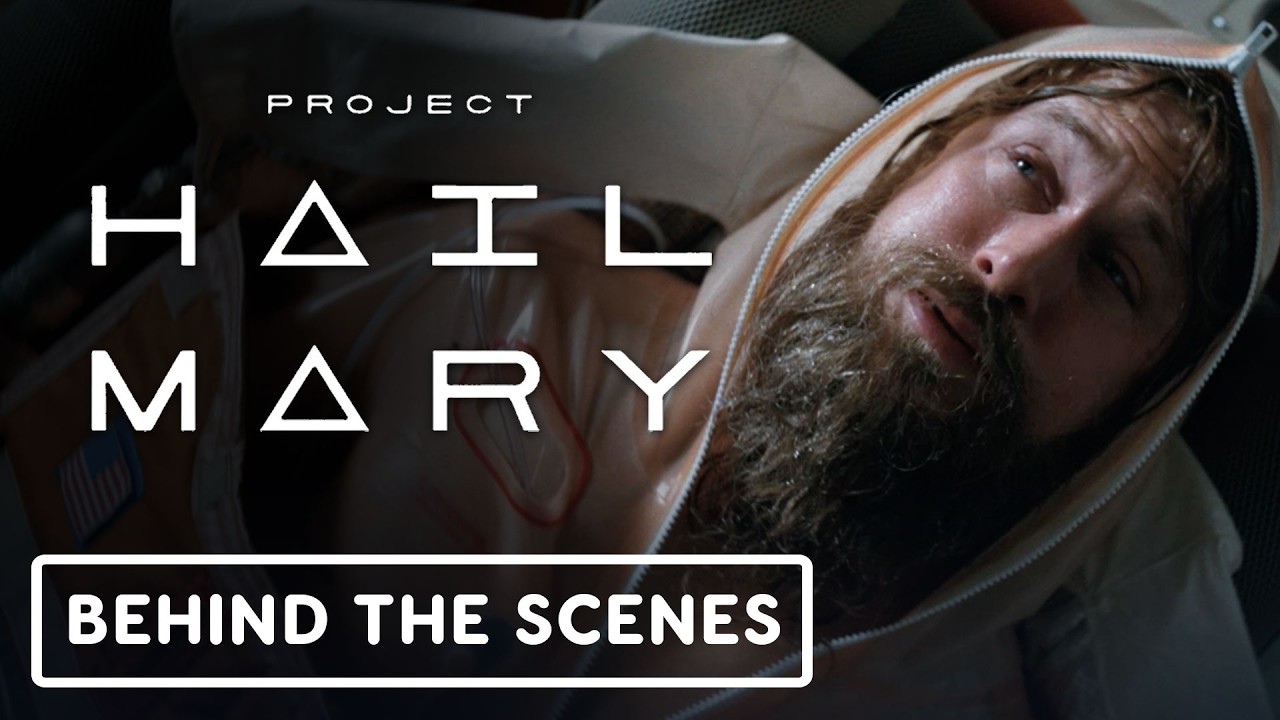
Sector Intelligence Report // Project Hail Mary
Project Hail Mary is quietly shaping up as a systems-first case study in how to translate hard sci‑fi into interactive design. Over the last week, the signal coming out of the Breach.gg feed has shifted from pure cinematic hype into something much more relevant for #gamedev and #indiegame teams: a working blueprint for pacing, problem‑solving loops, and character‑driven pressure in a survival sim framework.
1. Tactical Review: Pacing, Systems, and the Hard‑Sci Loop
The latest full-spectrum review pass on Project Hail Mary frames it less as a movie tie‑in and more as a tactical deconstruction of a sci‑fi survival sim. The core loop is clear: isolate the player, starve them of resources and information, then force iterative problem solving under catastrophic constraints.
Three design pillars stand out from the intel:
1.1 Narrative as System, Not Cutscene
Rather than treating story as something that interrupts play, the report highlights how narrative structure behaves like another system in the stack. Memory loss, mission ambiguity, and slow revelation of the solar dimming crisis are essentially:
- Fog of war for story – information is unlocked in controlled packets, pacing the discovery curve like a tech tree.
- Dynamic difficulty scaling for stakes – as the player learns more, the perceived risk escalates alongside their toolset.
For #gamedev teams, this is a reminder that exposition can be gated and tuned exactly like resource flow or enemy escalation.
1.2 Mechanical Fidelity and "Science as Constraint"
The review calls out mechanical fidelity as a core success metric: propulsion, life support, and astrophysics aren’t just lore dressing; they define the puzzle space. Instead of magic technology, the design leans on plausibility:
- Every solution feels engineered, not scripted.
- Fail states emerge from system interactions, not arbitrary narrative punishment.
This is a key takeaway for #indiegame survival designers: realism can be a design constraint that naturally generates interesting problems, rather than a burden.
1.3 Immersion Throughput and UI Friction
"Immersion throughput" in the analysis effectively describes how little the experience has to pause to explain itself. Interfaces, readouts, and in‑world tools are doing heavy lifting. The more the player learns to read the ship and its systems at a glance, the less the game has to shove tutorials in their face.
2. Character as Design Lever: Why a School Teacher in Space Works
The "Why Is a School Teacher in Space?" brief reframes protagonist Ryland Grace as a deliberate design choice rather than a quirky narrative twist.
Watch: Transmitting Gameplay footage from the field: Ryland Grace deployment and mission framing
From a game design perspective, making the operator a civilian science teacher instead of a hyper‑trained astronaut does three critical things:
2.1 Built‑In Tutorialization Without Hand‑Holding
Grace is smart but not mission‑ready. That creates a believable on‑ramp:
- Systems can be introduced as things he has to relearn, mirroring the player’s onboarding.
- Questioning basic procedures becomes diegetic, not immersion‑breaking.
2.2 Difficulty Curve Anchored in Human Limits
By avoiding a super‑soldier archetype, the narrative justifies:
- Slower mastery of complex systems.
- Higher emotional volatility under isolation and failure.
This opens space for a more granular stress model—perfect for a survival sim where mental resilience is as important as resource optimization.
2.3 Empathy as a Resource
Grace’s background makes him readable and relatable. For a potential game adaptation or companion #indiegame, that’s crucial: players are more willing to endure punishing failure loops when they feel they’re protecting someone human, not piloting a faceless avatar.
3. Co‑Op Under Catastrophic Failure: The "Roommates" Clip as Systems Design
The newly surfaced "Roommates" clip is essentially a vertical slice of co‑op design philosophy disguised as a character moment.
Watch: Transmitting Gameplay footage from the field: Roommates protocol and enforced cooperation
The scene stress‑tests three dynamics that map cleanly onto multiplayer or AI‑companion survival design:
3.1 Forced Cooperation Under Scarcity
Resources are limited. Risk is shared. This is classic survival sim territory, but the clip emphasizes negotiation as much as logistics. For designers, the signal is clear: co‑op friction isn’t a bug; it’s content. Systems should:
- Incentivize collaboration without guaranteeing alignment.
- Allow sub‑optimal, emotional decisions that still make narrative sense.
3.2 Humor as Stress‑Diffusion Mechanic
The tonal balance—gallows humor in a lethal scenario—acts like a pressure‑release valve. In a game context, this can be implemented via:
- Contextual banter systems.
- Fail‑state VO that acknowledges the absurdity of the situation.
It’s a reminder that not every tension spike needs to be followed by combat; sometimes, it should be followed by a joke.
3.3 Non‑Verbal Systems Signaling
Even in a short clip, body language, pacing, and environmental cues communicate risk and intent. For #gamedev teams, this is a call to invest in non‑HUD communication:
- Animation states that telegraph stress or fatigue.
- Environmental lighting and sound that convey system health without text.
4. Andy Weir’s Pipeline: From Blizzard Rejection to Design Playbook
The profile on Andy Weir’s journey from being fired at Blizzard to owning the hard‑SF lane is more than a feel‑good anecdote—it’s a postmortem on how production failure can evolve into a design superpower.
Weir’s background as a code grunt shows in the structure of Project Hail Mary’s problems:
- Challenges are modular, debuggable, and logically chained.
- Solutions feel like refactors rather than deus‑ex‑machina.
For #indiegame studios, there’s a meta‑lesson: deep domain knowledge (in this case, science and engineering) can be leveraged the way a veteran systems designer leverages engine expertise. The fiction is essentially a carefully tuned simulation, even before anyone ports it into an actual game.
5. Strategic Takeaways for Game Developers
The last week of intel around project hail mary converges on a few actionable patterns for #gamedev teams eyeing sci‑fi survival:
- Treat narrative like a system: Gate information, escalate stakes, and structure reveals like a progression tree.
- Use realism as a design constraint: Let plausible science define the boundaries of your puzzle space.
- Anchor difficulty in human vulnerability: A relatable, limited protagonist makes harsh systems feel earned, not arbitrary.
- Design for emotional co‑op friction: Isolation, forced partnership, and resource tension are fertile ground for emergent stories.
Watch: Transmitting Gameplay footage from the field: Mission overview and threat framing
As Project Hail Mary moves through its deployment window, it’s less interesting as a single transmedia product and more compelling as a live case study in how to align story, systems, and stakes. For teams working on the next wave of sci‑fi survival experiences, this is one signal you don’t want to filter out.
Sources and corrections
This archive entry does not have a verified article-source list. Images and video embeds alone are not evidence for every claim.
Found an error? Request a correction. Include the passage and a supporting source.