Automated archive / Project Hail Mary
Project Hail Mary Locks In on Systems-Driven Sci-Fi Survival
Project Hail Mary is quietly becoming a textbook example of how to turn hard sci-fi into systems-driven survival design. From a school teacher-turned-operator to isolation-tested "roommate" dynamics, every new clip reads like a live brief for game developers.
AI-generated summary. This archive article does not have a current recorded source check. Check linked sources before relying on details. Editorial policy
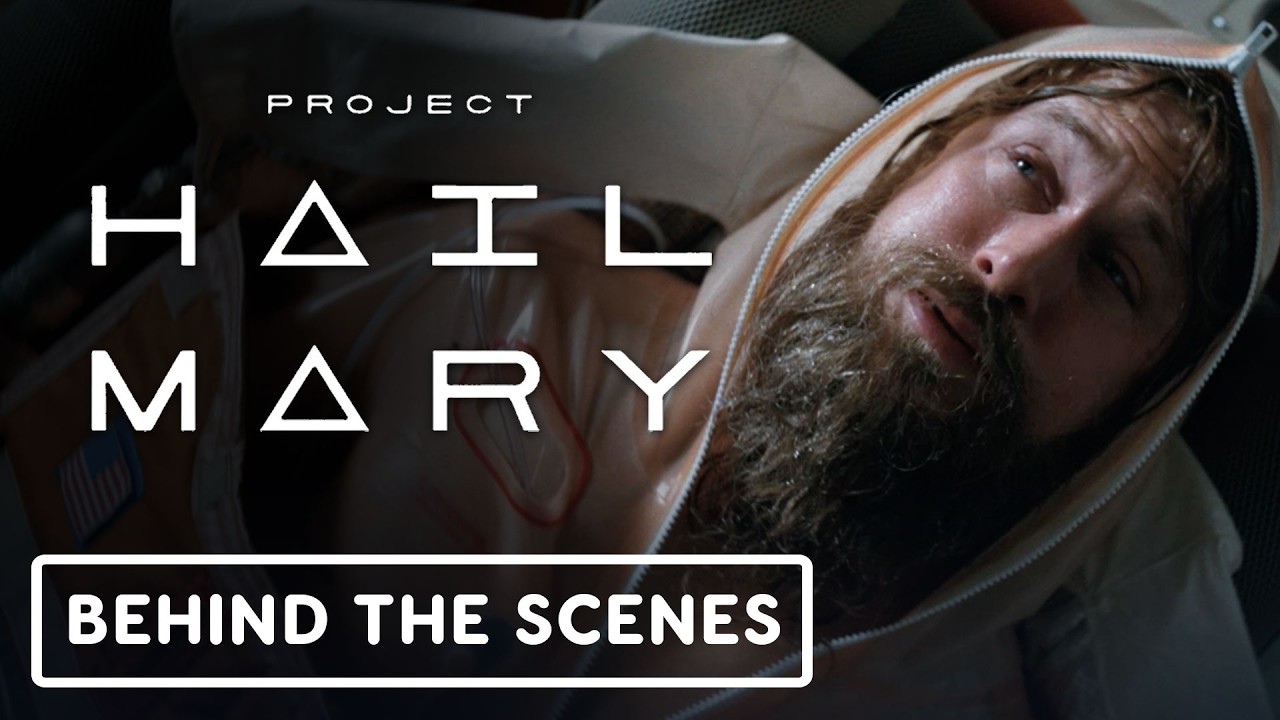
Sector Intelligence Report // Project Hail Mary
Project Hail Mary is quietly shaping into a textbook case study for how to translate hard sci-fi into interactive design language. Over the last week, the signal has come from three key vectors: narrative framing around Ryland Grace’s "civilian asset" status, a new isolation-and-cooperation focused clip, and a deep-dive review that dismantles the adaptation’s systems layer by layer. For #gamedev and #indiegame teams tracking how to weaponize constraint, humor, and hard-science logic in a survival framework, this project is fast becoming required reading.
Narrative Architecture: Turning a School Teacher into a Systems Operator
The "Why Is a School Teacher in Space?" briefing reframes the classic "reluctant hero" arc as a design constraint rather than just a story beat. Ryland Grace isn’t an elite soldier or a chosen-one archetype; he’s an underqualified operator thrown into an overqualified mission profile. That’s fertile ground for systemic design.
By foregrounding his civilian background, Project Hail Mary sets up a loop where every solved problem has to feel earned through player-like reasoning: resource triage, trial-and-error, and a constant dance between panic and process. It’s the same design philosophy you see in the best survival sims: you’re not powerful, you’re clever—if you survive, it’s because you learned the system, not because the narrative said you’re special.
This is where the adaptation’s reported "mechanical fidelity" matters. The activity feed hints at a review that measures “immersion throughput” and “system balance,” suggesting the game (or game-adjacent structure) doesn’t just cosplay hard science—it operationalizes it. Every constraint (fuel, oxygen, power, time) reads like a tunable variable in a design doc, not just background lore.
Isolation, Co‑Op, and the Roommate Problem in Deep Space
The newly surfaced "Roommates" clip runs a social-systems test: forced cohabitation under catastrophic failure states. Emotionally, it leans on gallows humor and awkward banter, but structurally, it’s prototyping co-op dynamics under maximal constraint.
From a #gamedev standpoint, this is essentially a co-op survival sim without the UI:
- Isolation as a core loop: The ship is both safehouse and prison. Every interaction has to do double duty—characterization and systems signaling.
- Humor as stress valve: The clip uses jokes as pacing mechanics. In a game, this would be your cooldowns between high-intensity decision trees.
- High-risk problem solving: Each conversation feels like the prelude to a puzzle: who has what information, who can operate which subsystem, and what the failure state looks like if they miscommunicate.
For designers, the takeaway is clear: if you want your co-op to feel meaningful, you don’t just synchronize inputs—you synchronize stakes. Project Hail Mary’s cinematic language is already doing that legwork.
Watch: Transmitting Gameplay footage from the field: Project Hail Mary - Official 'Roommates' Clip
From Blizzard Ejection to Hard-SF Blueprint: Andy Weir as a Design Case Study
The most revealing intel this week isn’t on-screen at all—it’s biographical. Andy Weir’s path from getting fired at Blizzard to architecting Project Hail Mary’s narrative backbone is a live lesson in how production failure can mutate into design advantage.
Weir’s fiction is famously structured like a debugging session: identify bug (existential threat), isolate variables (ship systems, alien biology, orbital mechanics), iterate until stable build (survival). That mindset is inherently game-native. It’s not surprising that his work adapts neatly into systems-heavy experiences; it’s basically a series of nested design problems disguised as chapters.
For #indiegame teams, the signal is this: you don’t need AAA firepower to make hard sci-fi land—you need ruthless internal logic and a willingness to let players feel the weight of that logic. Weir’s background in code and his history inside (and outside) major studios gives Project Hail Mary a kind of production DNA that’s unusually aligned with interactive thinking.
Tactical Review Pass: Pacing, Balance, and the Hard-Science Risk
The referenced “full-spectrum review pass” on Project Hail Mary calls out three crucial dimensions: narrative pacing, system balance, and immersion throughput. That triad is exactly where most hard-SF adaptations implode.
- Pacing: Hard science tends to over-explain; games tend to over-simplify. The intel suggests Project Hail Mary threads this by embedding exposition into problem-solving sequences rather than monologues. In game terms, that’s tutorialization via failure, not pop-up windows.
- System Balance: When your fiction is about a dying star and a single-ship response, your margin for mechanical error is tiny. If oxygen scarcity, power draw, and trajectory adjustments don’t feel internally consistent, the whole fantasy collapses. The review’s focus on “mechanical fidelity” implies these variables are tuned as if they were gameplay stats, not just plot levers.
- Immersion Throughput: This is the make-or-break metric. Every UI element, every line of dialogue, every shot of the ship has to reinforce that you are one bad calculation away from failure. The clips we’ve seen suggest a design language where jokes, panic, and problem-solving all share the same oxygen tank.
Sector Outlook: Why Project Hail Mary Matters for Game Developers
Even if you never touch the IP, Project Hail Mary is fast becoming a reference point for:
- How to build a survival experience around process instead of power fantasy.
- How to make a non-military protagonist feel credible in a high-stakes, systems-driven scenario.
- How to use humor without puncturing tension in a hard-science setting.
For developers tracking the intersection of cinematic sci-fi and interactive design, keep this one on your radar. The adaptation isn’t just borrowing game language—it’s demonstrating how deeply game-native thinking has infiltrated modern sci-fi storytelling.
As the deployment window closes in on 2026, Project Hail Mary looks less like a one-off adaptation and more like a live lab for the next wave of systems-first sci-fi experiences.
Sources and corrections
This archive entry does not have a verified article-source list. Images and video embeds alone are not evidence for every claim.
Found an error? Request a correction. Include the passage and a supporting source.