Automated archive / Project Hail Mary
How Project Hail Mary Turned a Blizzard Firing into a Deep-Space Design Doc
Project Hail Mary is quietly evolving into a systems-driven masterclass in how to turn hard science, isolation, and unlikely heroes into adaptation-ready design. From Andy Weir’s Blizzard firing to the latest deep-space clips, this week’s intel reads like a stealth game design document in orbit.
AI-generated summary. This archive article does not have a current recorded source check. Check linked sources before relying on details. Editorial policy
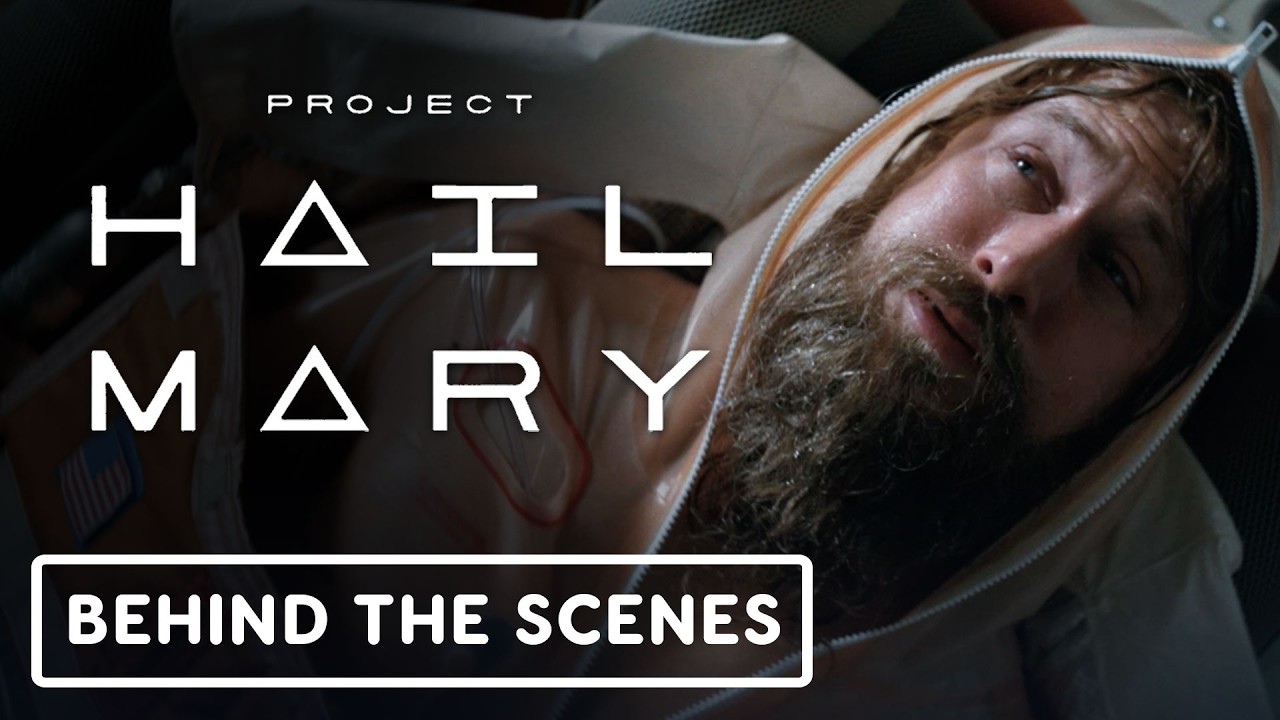
Sector Intelligence Report // Project Hail Mary
Project Codename: Project Hail Mary
Reporting Period: Last 7 Days
Tags: #gamedev, #indiegame, project hail mary, development update
Over the last week, Project Hail Mary’s signal has spiked across both narrative and cinematic channels. What started as a hard-SF novel is now behaving like a fully scoped cross-media product: tightly tuned character arcs, systemic problem-solving, and an almost simulationist approach to crisis management in space. For game developers tracking adaptation-ready IP, this project is quietly becoming a design manual for high-stakes co-op and single-operator survival.
1. Origin Story as Production Postmortem: Andy Weir’s Blizzard Ejection
The most telling intel drop this week is the operational debrief on Andy Weir’s past at Blizzard. Weir’s trajectory—from being fired out of a AAA pipeline to architecting Project Hail Mary’s precision-engineered space crisis—reads like a production postmortem in human form.
Key takeaways for #gamedev teams:
1.1 From Code Grunt to Systems Architect
Weir’s time as a “code grunt” at Blizzard maps directly onto how Project Hail Mary operates:
- Deterministic problem spaces: Every crisis in the story behaves like a well-specified system. Inputs, outputs, constraints—this is how you’d spec a complex gameplay loop, not just a plot beat.
- Failure as a feature: Weir’s firing isn’t framed as a narrative sob story; it’s a pivot. In production terms, it’s a failed prototype that informed the shipped version of his career.
For #indiegame studios, this is a powerful template: your scrapped projects and layoffs are not dead weight; they’re R&D. Project Hail Mary’s success shows how technical literacy plus narrative clarity can become a formidable design language.
1.2 Hard-SF as a Design Ethos
Project Hail Mary treats physics, biology, and engineering like interlocking game systems. The result feels less like a passive story and more like a single-player systemic survival sim:
- Resource constraints are explicit and quantifiable.
- Risks are modeled like mechanics, not just dramatic beats.
- Solutions require multi-step, tool-driven reasoning.
For anyone planning a space survival title, this is effectively a design bible in disguise.
2. The “Roommates” Clip: Co-op Design Under Catastrophic Pressure
Watch: Transmitting Gameplay footage from the field: Project Hail Mary - Official 'Roommates' Clip
The newly surfaced “Roommates” clip functions like a vertical slice of co-op design under extreme constraints. Two entities in a confined space, incompatible backgrounds, forced collaboration—this is textbook multiplayer narrative design.
2.1 Isolation as a Core Mechanic
The clip stress-tests isolation and enforced intimacy:
- Limited physical space = constrained movement and interaction verbs.
- High-stakes context = every line of dialogue feels like a branching choice.
- Humor is deployed as a stress-diffusion mechanic, similar to how games use light banter to keep tension from flatlining into fatigue.
For #gamedev teams, it’s a reminder: your “room” (ship, base, bunker) is not just a backdrop. It’s a mechanical pressure cooker.
2.2 Co-op Without the UI
What stands out is how the interaction feels like a co-op session with invisible UI:
- Negotiation replaces explicit dialogue wheels.
- Micro-conflicts stand in for aggro systems and threat management.
- Trust-building plays out like an evolving party-buff system.
In a game adaptation, these beats could map cleanly onto reputation meters, shared resource pools, and synchronized tasks—the narrative is already structured like a design doc.
3. “Why Is a School Teacher in Space?”: Class Design and Player Fantasy
The “Why Is a School Teacher in Space?” clip is the clearest articulation of Project Hail Mary’s core player fantasy. Ryland Grace isn’t a space marine or a hardened commander—he’s a repurposed civilian asset, a school teacher drafted into a last-chance mission.
3.1 The Unlikely Operator Archetype
From a design perspective, Grace is a non-traditional class:
- Low combat stats, high science and problem-solving.
- Emotional vulnerability as a feature, not a bug.
- Relatability over power fantasy.
This is a strong signal for #indiegame designers: you can anchor your loop around competence and curiosity instead of violence. The tension comes from being out of depth but not out of tools.
3.2 Mission Profile as Campaign Structure
The mission—intercepting a catastrophic solar dimming event—reads like a campaign arc:
- Act I: Discovery of the anomaly and mobilization of the Hail Mary mission.
- Act II: Deep-space isolation, system failures, and emergent alliances.
- Act III: High-risk remediation attempts with irreversible choices.
If translated into a game, this structure naturally supports:
- A modular mission system (each problem as a discrete scenario).
- Upgradeable ship systems that mirror narrative growth.
- Permadeath or irreversible consequences for major decisions.
4. Why Project Hail Mary Matters to Game Developers Right Now
Project Hail Mary is more than a film adaptation; it’s a systems-first narrative template that’s unusually compatible with interactive design. Across this week’s activity feed, three clear signals emerge for the #gamedev community:
- Career volatility can be design fuel. Andy Weir’s Blizzard exit is a reminder that failed AAA trajectories can still produce era-defining IP when paired with technical rigor.
- Co-op and isolation can coexist. The “Roommates” clip shows how you can simulate multiplayer emotional dynamics even in a physically constrained, almost single-room setting.
- Non-combat protagonists are viable. Ryland Grace’s school-teacher background underlines a growing appetite for competence-driven, science-forward fantasy.
For studios scouting adaptation targets or simply mining narrative structures, Project Hail Mary is a live case study in how hard science, human-scale stakes, and systemic thinking can cohere into a robust design foundation.
5. Monitoring Orders: What to Watch Next
As the deployment window for Project Hail Mary approaches, Breach.gg will be tracking:
- Any confirmations of interactive tie-ins or licensed adaptations.
- Further clips that expose more of the ship’s layout and systems, useful for environment and UX reference.
- Interviews or breakdowns that detail Weir’s research process, which could inform simulation-heavy #indiegame projects.
For now, log this week’s intel as a clear development update in the ongoing convergence of hard-SF storytelling and systems-driven game design.
Sources and corrections
This archive entry does not have a verified article-source list. Images and video embeds alone are not evidence for every claim.
Found an error? Request a correction. Include the passage and a supporting source.