Automated archive / Pragmata
Pragmata’s Lunar War Game Locks In Its Combat Identity
Capcom’s Pragmata just pivoted from enigmatic teaser to fully profiled war game, with a week of trailers, interviews, and hands‑on reports finally exposing its combat spine. Binary roles, strict resource economies, and proudly visible systems are defining a sci‑fi action game that wants you to see every gear turning.
AI-generated summary. This archive article does not have a current recorded source check. Check linked sources before relying on details. Editorial policy
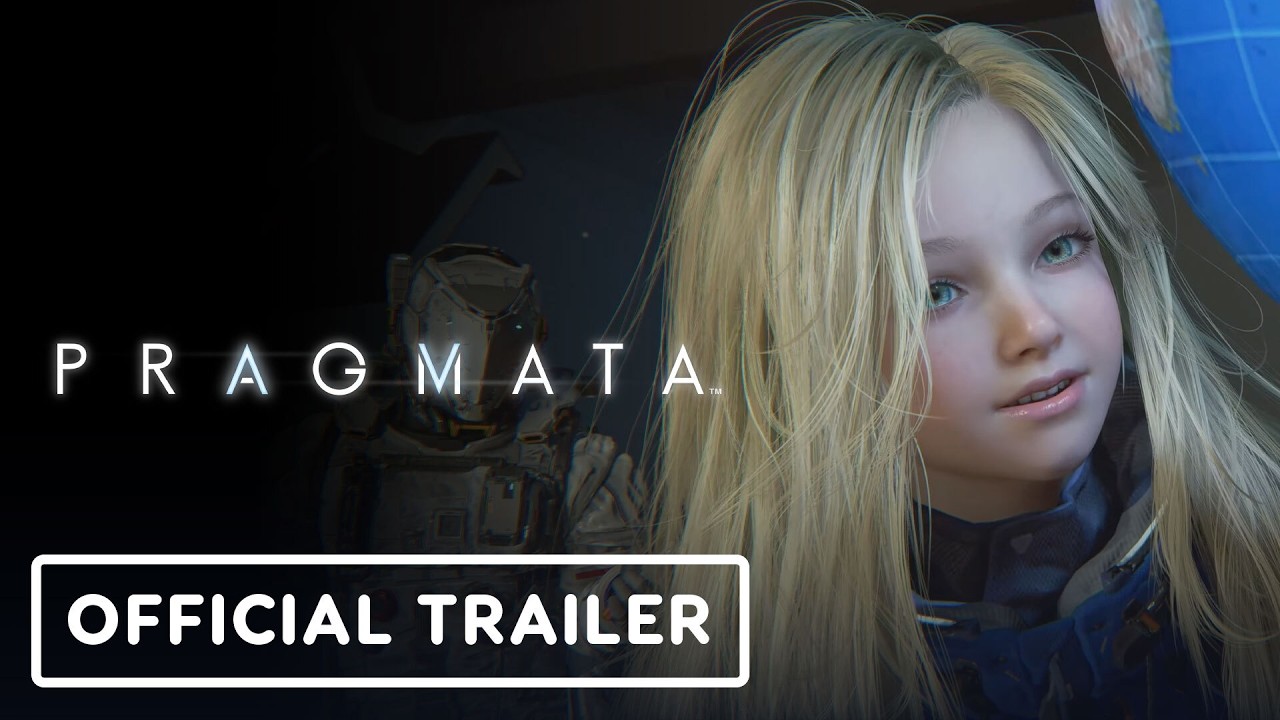
Sector Intelligence: Pragmata’s Combat Doctrine Comes Into Focus
Capcom’s long-quiet sci‑fi project Pragmata just pushed a week’s worth of high‑signal intel, and the picture that’s forming is clear: this isn’t a moody walking sim in a space suit, it’s a deliberately constructed action war game that leans hard into visible systems, kinetic spectacle, and a surprisingly methodical combat loop. For #gamedev watchers and designers, this is the first time Pragmata’s mechanical spine has really come into focus.
Across new trailers, interviews, and hands‑on reports, three pillars keep repeating: binary co‑op combat roles, rigid resource economies, and a throwback Capcom action structure that proudly shows the seams of its design. This week’s transmissions effectively function as a full development update on how Pragmata wants you to think, move, and spend every bullet in its shattered orbital playground.
Watch: Transmitting Gameplay footage from the field: Pragmata 90-second overview trailer
Binary War Machine: Hugh & Diana as Interlocking Systems
The latest hands‑on reports frame Pragmata as a two‑person tactical instrument: Hugh as kinetic spearpoint, Diana as cybernetic scalpel. In the New York‑style future city slice, Diana executes precision hacks—dropping barriers, overloading drones, opening new angles—while Hugh anchors the frontline with exosuit‑boosted gunplay and melee.
This isn’t passive “press button to hack” dressing. Coverage emphasizes timed hack windows, cooldown juggling, and the need to constantly recalculate lines of fire as Diana rewrites the battlefield. For designers, this reads like a deliberate attempt to fuse character‑action clarity with systemic, almost RTS‑like battlefield manipulation.
The lunar segments teased in the new 90‑second overview push that further. EVA maneuvers, gravity‑warped arenas, and a mysterious girl at the center of an anomaly suggest that movement and positioning are not just traversal problems—they’re combat verbs wired into the core loop.
Methodical Combat in a Game That Loves Being a Game
Multiple outlets describe Pragmata as a game that “loves being a video game”—and that’s not a throwaway line. Encounters are reportedly bold, readable, and openly systemic. Rather than chasing cinematic invisibility, Capcom is broadcasting its mechanics: telegraphed attack patterns, visible weak points, clear resource tells.
Crucially, this isn’t mindless spectacle. Interviews with director Yonghee Cho and producer Naoto Oyama underline a design philosophy that punishes sloppy inputs. Ammo and energy are tightly rationed, turning every shot, gadget, and hack into a budget decision. The result sounds closer to tactical firefights than to spray‑and‑pray gunplay.
Hands‑on impressions back this up: layered melee options, tactical gadgets, and precision shooting all interlock in spaces that demand forethought—vertical arenas, shifting data walls, and AI behaviors that respond to your chosen angles and timings. For #indiegame and #gamedev teams studying encounter design, Pragmata is shaping up as a case study in how to make system‑heavy combat legible without dumbing it down.
Watch: Transmitting Gameplay footage from the field: Pragmata urban combat and exosuit engagement
From Sterile Corridors to Shattered Cities
Earlier showings painted Pragmata as a cold, almost abstract space station crawl. This week’s intel reframes it as a multi‑biome action gauntlet. New reports highlight:
- Neo‑metropolis density: New York‑style streets, debris‑choked plazas, and industrial sectors that feel ripped from classic Capcom action playbooks.
- Orbital fragmentation: Broken lunar environments and warped gravity fields that turn cover, elevation, and line‑of‑sight into mutable variables.
- Capcom DNA resurfacing: Comparisons to older, more authored action titles—where level geometry is clearly constructed to serve specific combat beats, not just to look pretty in screenshots.
“Throwback” here doesn’t mean dated; it means unapologetically authored. Pragmata appears less interested in emergent sandbox chaos and more in carefully tuned combat puzzles where each arena is a question and your build, aim, and hack timing are the answer.
Design Takeaways: What Pragmata Signals to Developers
For developers tracking Pragmata as a live case study, this week’s activity points to several notable design trends:
- Visible systems over cinematic opacity – Mechanics are meant to be read at a glance, not hidden under filmic gloss.
- Resource‑driven tension – Ammo and energy as primary levers of difficulty and pacing, rather than pure enemy HP sponges.
- Dual‑role combat loops – Hugh and Diana’s interplay suggests fertile ground for co‑op design, AI partner scripting, or multi‑role single‑player control schemes.
- Environment as ruleset – Gravity shifts, verticality, and data barriers function as rule changes, not just visual flair.
As Pragmata heads toward launch, this week’s intel finally anchors the project in a clear identity: a high‑impact, system‑forward sci‑fi action game that treats every room like a problem to be solved at 60 rounds per minute. For players, it looks like a demanding, tightly authored ride. For designers, it’s shaping up to be one of 2026’s more instructive combat blueprints.
Sources and corrections
This archive entry does not have a verified article-source list. Images and video embeds alone are not evidence for every claim.
Found an error? Request a correction. Include the passage and a supporting source.