Automated archive / Pragmata
Pragmata’s Neo-Orbit War Room Opens for Business
Capcom’s Pragmata is shedding its mystery and emerging as a system-heavy, proudly “videogame-y” action title built on hack-and-blast combat and authored arenas. This week’s intel reveals dense melee, tactical gadgets, and a binary Diana/Hugh loop that turns every urban encounter into a calculated war game.
AI-generated summary. This archive article does not have a current recorded source check. Check linked sources before relying on details. Editorial policy

Sector Intelligence Report: Pragmata
Capcom’s Pragmata has moved from enigmatic teaser to fully armed combat sim, and this week’s signals paint a clear picture: this is a high-impact action game that wants you to see the wires, the systems, and the spectacle. Where some modern blockbusters chase invisible UI and cinematic subtlety, Pragmata is loudly, proudly a videogame—and that’s emerging as its sharpest weapon.
1. “Pragmata Loves Being a Video Game” – Design That Shows Its Gridlines
The latest field intel describes Pragmata as a combat simulator that “fully, almost exuberantly, embraces its own videogame-ness.” In #gamedev terms, that translates to visible, legible systems over invisible, “cinematic” friction.
Instead of hiding its mechanics, Pragmata appears to:
- Broadcast encounter design – clearly telegraphed arenas, bold enemy silhouettes, and set-pieces that feel engineered rather than incidental.
- Lean into spectacle as a mechanic – exaggerated feedback, readable hit reactions, and big, authored moments that openly declare: this is a designed combat puzzle, not a movie.
- Prioritize clarity over naturalism – a holodeck that wants you to notice the gridlines, making it easier for players to parse states, cooldowns, and positional advantages.
For designers following this development update, the takeaway is that Pragmata is positioning itself as a counterpoint to the “cinematic realism” trend—more Devil May Cry lab than prestige TV.
2. Chrome-Strewn Skies – Capcom’s Classic Action DNA Resurfaces
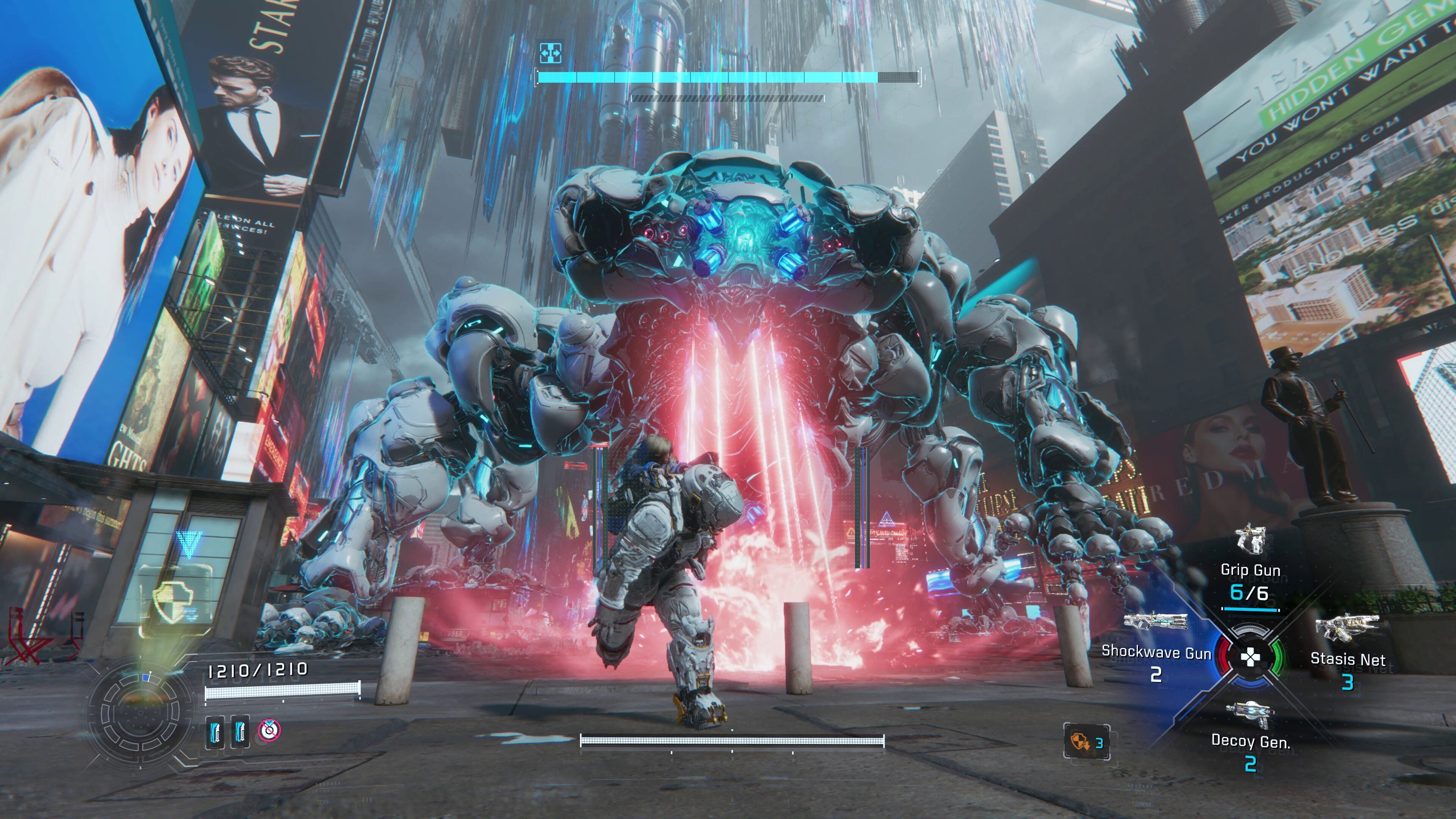
Hands-on impressions from the orbital front line reveal a denser combat core than early trailers suggested. Under the chrome-smeared skybox and broken satellite husks, Pragmata is reportedly running a three-layer action stack:
- Layered melee – close-quarters options that feel deliberate rather than mashy, hinting at stance choices, priority targets, and animation-driven risk/reward.
- Tactical gadgets – deployables and tools that shape space: controlling lanes, forcing repositioning, or setting up combo states.
- Precision gunplay – ranged attacks that matter tactically, not just as filler between melee strings.
The environments back this up. Expanded arenas move beyond sterile space corridors into:
- Warped streets and debris-choked plazas – chokepoints, flanking routes, and vertical perches for overwatch.
- Industrial sectors – clearer lines of fire and multi-level layouts that evoke Capcom’s action lineage from Resident Evil’s tighter combat pockets to Dragon’s Dogma’s layered battlefields.
For #indiegame teams studying pacing, Pragmata’s approach is instructive: build combat spaces that telegraph intent and then let layered systems intersect inside them. The game isn’t chasing sandbox chaos; it’s chasing authored density.
3. Urban Systems Breach – The Hack-and-Blast Combat Loop
A separate PS5 field report dives into the New York-style future city slice, where the tactical fantasy snaps into focus: Diana handles precision cyber-intrusions while Hugh delivers kinetic overwatch. It’s a binary combat loop of code and caliber:
-
Diana (hacking role)
- Initiates cyber-intrusions on data barriers, turrets, and enemy systems.
- Creates temporary windows of vulnerability—stuns, shutdowns, or forced repositioning.
- Turns level geometry into dynamic cover and traversal options via hackable infrastructure.
-
Hugh (shooter role)
- Capitalizes on those hack windows with focused fire.
- Controls crowd flow, suppresses priority targets, and protects Diana during intrusion sequences.
The arenas themselves support this design:
- Vertical combat bowls – rooftops, skybridges, and scaffolded interiors that demand constant recalculation of angles.
- Shifting data barriers – cover and sightlines that reconfigure on timers or in response to hacks.
- Layered enemy AI – squads that pressure both the hacker and the shooter, punishing tunnel vision.
The report describes Pragmata as a “methodical urban war game for people who alphabetize their sock drawer,” which is telling. This isn’t a spray-and-pray shooter; it’s a cooldown- and timing-driven tactics engine masquerading as a third-person action spectacle.
4. Strategic Takeaways for Developers and Players
From a #gamedev and systems design perspective, this week’s Pragmata intel highlights several key trends:
- Honest systems, visible rules – Pragmata’s refusal to hide its mechanics may resonate with players who enjoy learning, mastering, and exploiting clear rulesets.
- Dual-role combat as pacing tool – the Diana/Hugh pairing naturally alternates between setup (hacks) and payoff (gunplay), creating rhythmic peaks and valleys.
- Environment as co-designer – the shift from corridor to shattered city to neo-metropolis shows a team iterating on how space, AI, and player roles intersect.
As a development update, this week confirms that Pragmata is not just an atmospheric curiosity—it’s shaping up as a system-forward action game with the confidence to look like a videogame and the depth to reward players who treat every arena like a tactical problem.
Sources and corrections
This archive entry does not have a verified article-source list. Images and video embeds alone are not evidence for every claim.
Found an error? Request a correction. Include the passage and a supporting source.