Automated archive / Pokémon Champions
Pokémon Champions Is Nintendo’s Quiet Competitive War Machine
Pokémon Champions is emerging as The Pokémon Company’s most calculated push into real-time competitive play, engineered by fighting game veterans and deployed across Switch and mobile on April 8. This week’s intel reveals a live-service battler built to translate Pokémon’s hidden competitive depth into a readable,...
AI-generated summary. This archive article does not have a current recorded source check. Check linked sources before relying on details. Editorial policy
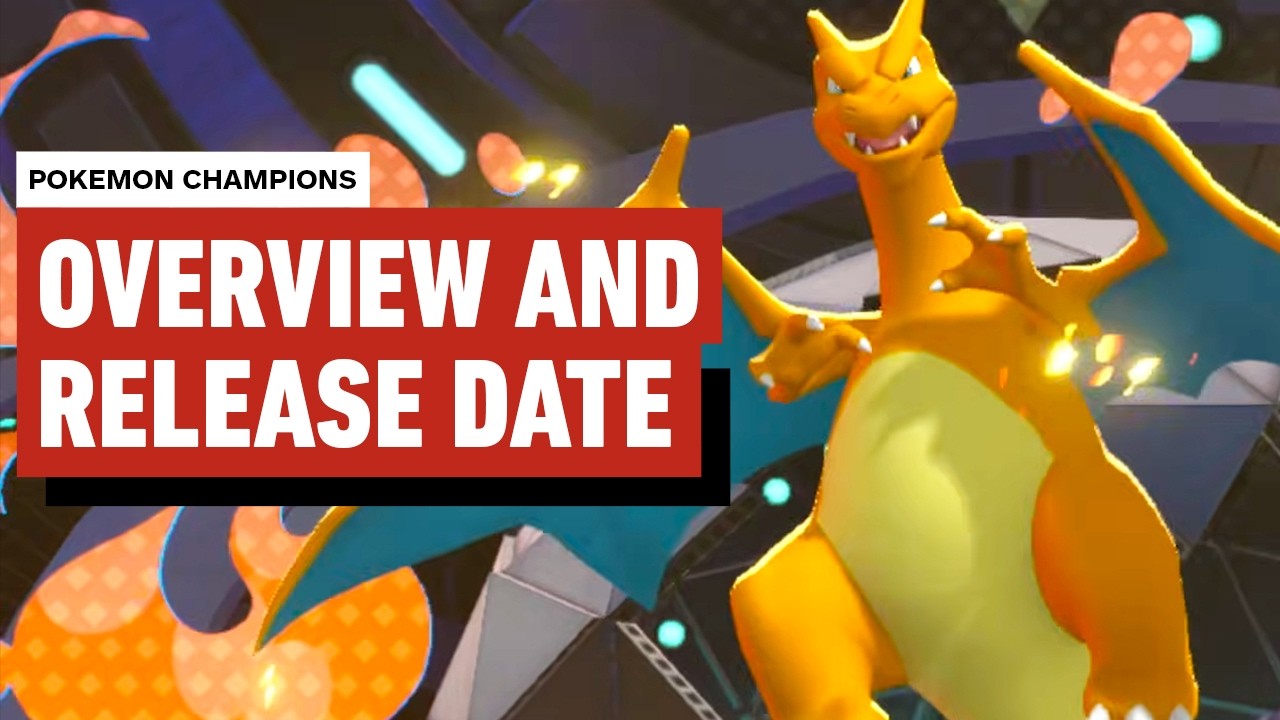
Sector Intelligence Report // Pokémon Champions
Pokémon Champions is no spin-off side quest—it’s The Pokémon Company’s most calculated push yet into real-time competitive space. Over the last week, a clear picture has emerged: this isn’t a simple mobile arena brawler, it’s a purpose-built onboarding funnel into high-pressure play, tuned by veterans of the fighting game scene and deployed across Nintendo Switch and mobile in a synchronized strike.
Launch Window: A Clean Shot Before Switch 2
Pokémon Champions is now locked in for an April 8 deployment across Nintendo Switch and mobile, with confirmation that it will land before the next-gen Switch 2 hardware enters the theater. Strategically, that timing matters.
By planting its flag ahead of Switch 2, Pokémon Champions positions itself as a live-service pillar that can straddle generations. Expect a long tail: balance patches, seasonal events, and competitive resets that keep both current and future Switch ecosystems engaged. From a #gamedev perspective, this is classic platform hedging—ship on the widest possible install base now, then ride the hardware transition with an already-entrenched metagame.
Cross-device deployment also signals a clear intent: no friction to entry. Whether you’re on a couch with a Pro Controller or on a commute with touch controls, The Pokémon Company wants Champions to be your default real-time battler.
Director Masaaki Hoshino’s Competitive Blueprint

The most revealing intel this week comes from Director Masaaki Hoshino, who is explicitly weaponizing years of fighting game R&D to expose what he calls Pokémon’s “best‑kept secret”: its deep competitive DNA.
Key pillars of his approach:
- Streamlined Inputs – Expect simplified command schemes that prioritize spacing, timing, and decision-making over finger acrobatics. This is fighting game design translated for a broad audience: low execution barrier, high tactical ceiling.
- Clear Feedback Loops – Visual and audio clarity are being tuned to make cause-and-effect legible even to new recruits. Cooldowns, hit confirms, and advantage states should be readable at a glance—critical for a real-time battler on small mobile screens.
- Dual-Tier Tuning – Systems are being calibrated to serve both "casual recruits" and "ranked predators." That implies layered mechanics: surface-level accessibility wrapped around deeper frame data, synergy, and optimization for those willing to dig.
For developers and #indiegame designers, this is a textbook example of competitive onboarding: build a game that feels approachable on day one, but architect its systems to naturally funnel invested players into ranked play and long-term mastery.
Competitive Core: Draft, Train, Deploy
Field reports describe Pokémon Champions as a tactical simulation arena where players draft, train, and deploy optimized squads in structured battles. The progression loop is tuned for long-term engagement rather than quick-hit novelty.
That loop likely looks something like:
- Acquisition & Drafting – Building a roster with role coverage (frontline, burst, control, support) and synergy.
- Training & Optimization – Investing time and resources into stat tuning, move sets, and possibly passive bonuses or gear-like modifiers.
- Deployment in Structured Battles – Entering ranked and unranked queues where squad composition, timing, and positioning decide outcomes more than raw combat power.
The language around "optimized squads" and "structured battles" suggests a live-service competitive backbone: ladders, seasons, and likely tournament-style events. Balance passes and regional deployment data will be crucial; the team will need to monitor win rates, pick/ban patterns (if drafting is formalized), and regional metas to avoid stagnation.
UX as a Weapon: Making Depth Readable
The recurring phrase in the intel is "translating" Pokémon’s competitive DNA. That’s more than marketing—it’s a UX thesis.
Pokémon has always had hidden layers: EVs, IVs, speed tiers, damage rolls, and synergy webs that only the hardcore really see. Pokémon Champions appears to be surfacing that complexity in a real-time, visually explicit format. Expect mechanics that:
- Surface advantage states (who’s winning the trade) through clear UI/FX.
- Expose synergy—buffs, debuffs, and combo states—in ways that invite experimentation.
- Shorten the loop from experiment → feedback → adjustment, which is critical for retention in a live-service battler.
For #gamedev teams, this is a case study in making invisible systems visible without overwhelming newcomers.
Live-Service Positioning and Metagame Forecast
With a synchronized April 8 launch on Switch and mobile, Pokémon Champions is primed to crystallize its metagame on day one. The early weeks will be decisive:
- Meta Formation – Early dominant comps will shape perception. If the dev team is fast on balance passes, they can prevent a stale "solved" meta.
- Onboarding Funnels – How quickly players move from casual queues into ranked will dictate the health of the competitive ladder.
- Monetization vs. Fairness – The language around "optimized squads" and long-term progression implies monetization hooks. The crucial question: can you buy speed, or only cosmetics and convenience? Competitive credibility will live or die on that answer.
The Pokémon Company is clearly treating Champions as a digital warfront—a persistent touchpoint that keeps the brand in daily rotation between mainline RPG releases.
Strategic Takeaways for Developers
While Pokémon Champions is hardly an #indiegame, its design and rollout carry lessons for studios of all sizes:
- Leverage Existing IP Depth – Don’t just reskin; surface the systems fans already love in new, readable formats.
- Design for Cross-Device Parity – Tune inputs and clarity so the experience holds up on both console and mobile.
- Build a Competitive Ramp, Not a Wall – Use streamlined inputs and clear feedback to onboard, then layer depth for those who stay.
Watch: Transmitting Gameplay footage from the field: Pokémon Champions real-time arena deployment
As April 8 approaches, Pokémon Champions looks less like a side experiment and more like a long-term competitive platform—a real-time battler engineered to weaponize Pokémon’s latent competitive potential for the broadest possible audience.
Sources and corrections
This archive entry does not have a verified article-source list. Images and video embeds alone are not evidence for every claim.
Found an error? Request a correction. Include the passage and a supporting source.
Your games, in one place
Keep up with Pokémon Champions
Follow this game to collect its posts in your personal feed. Come back to see what you missed.