Automated archive / Overwatch 2
Overwatch 2 Season 2 – Summit Pushes the Fight Into Thin Air
Overwatch 2 Season 2: Summit doesn’t just add more maps and cosmetics—it rewires the battlefield around verticality, Talon dominance, and rotating high-intensity modes. This week’s sector intel breaks down how Blizzard is using narrative, balance, and level design to force a meta shake-up in thin air.
AI-generated summary. This archive article does not have a current recorded source check. Check linked sources before relying on details. Editorial policy
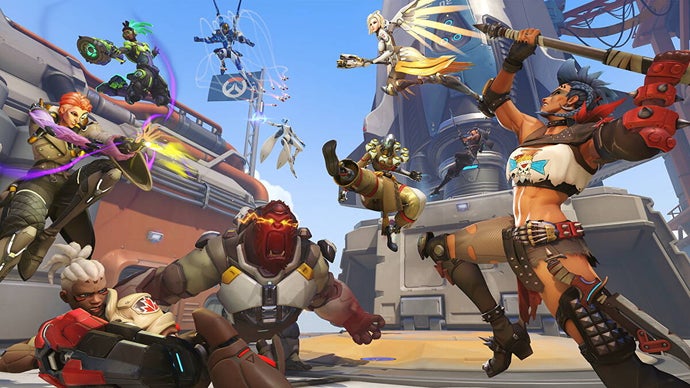
Strategic Overview: Season 2 – Summit Goes Vertical
Overwatch 2’s Season 2: Summit is locking in as a high-altitude escalation rather than a routine content beat. Blizzard is repositioning the live-service cadence around verticality, Talon-driven narrative pressure, and a more aggressive approach to rotating competitive environments. For players and #gamedev watchers alike, this is less about a cosmetic refresh and more about a systemic stress test of the current meta.
Across the last week of transmissions, Blizzard has consistently framed Summit as a conflict escalation: high-altitude warzones, new vertical battlegrounds, and Talon’s "strategic dominance" across multiple fronts. That language points to a design thesis centered on forcing teams to rethink sightlines, mobility picks, and ult-economy pacing in maps that punish static, flat-ground comps.
High-Altitude Battlefields and Meta Turbulence
The activity feed repeatedly calls out “high-altitude warzones” and “vertical battlegrounds,” which is more than marketing copy. In practical terms, that signals:
- Increased value for vertical mobility heroes – Expect Echo, Pharah, Winston, D.Va, and potentially wall-climbers like Genji and Hanzo to gain leverage in both ranked and pro scrims.
- Pressure on bunker and low-mobility comps – Static setups (think Bastion + Sigma + Bap-style anchors) will be harder to maintain if key objectives and power positions are staggered vertically.
- Aim and awareness tax – Vertical map design raises the cognitive load on players. More angles, more off-screen threats, and more punishing mispositioning create a skill-expression gap that will likely widen the distance between coordinated stacks and solo queue.
From a #gamedev perspective, pushing verticality is a deliberate counter to the “choke-and-hold” stagnation that can plague objective-based shooters. It forces iteration on traversal routes, cover placement, and spawn timings, and it’s a clear signal that the Overwatch 2 level design team is leaning into more aggressive experimentation this season.
Talon’s Reign: Narrative Pressure as Design Lever
The “Reign of Talon” framing isn’t just lore dressing. In live-service shooters, narrative arcs increasingly double as design levers: they justify new mission structures, event rulesets, and even balance swings.
The field report notes that Talon has secured “strategic dominance across multiple fronts,” which implies:
- Event modes tuned for high-intensity engagements – Expect limited-time modes where defenders are on the back foot, forced into reactive play with compressed decision windows.
- Heroic operations – Likely PvE-style or narrative-flavored PvP events where specific hero picks are incentivized to match the story beat (e.g., Talon lineups vs. Overwatch strike teams).
- Lore-justified map rotations – Rotating arenas under the guise of shifting Talon control keeps the pool feeling alive while giving designers freedom to retire or rework underperforming maps.
For developers following Overwatch 2 as a live-ops case study, this is a textbook example of narrative and systems design moving in lockstep to sustain engagement.
Watch: Transmitting Gameplay footage from the field: Overwatch 2 Season 2 – Summit Official Trailer
Competitive Operations: Rotations, Balance, and Ult-Economy
The Summit operations brief highlights three critical levers: map rotations, hero balance recalibrations, and rotating modes. Together, they’re engineered to keep the firefight “in permanent overclock,” which is exactly the kind of volatility that reshapes ladder behavior.
Map Rotations and Mode Variants
Rotating maps and modes at a higher frequency is a direct response to meta fatigue. By changing the “where” and “how” of engagements, Blizzard can:
- Break entrenched strategies that dominate specific choke points.
- Spotlight underplayed heroes whose kits sync with new objectives or layouts.
- Gather cleaner telemetry on what players actually gravitate toward under changing conditions.
Mode variants tuned for “high-intensity engagements” likely mean faster respawns, compressed objectives, or altered overtime rules. Those tweaks ripple into ult-economy, forcing teams to rethink their usual timing windows for big combo plays.
Hero Balance Recalibrations
While exact patch notes aren’t in the feed, the language around “meta turbulence” and “recalibrations” suggests meaningful shifts rather than micro-tuning. Expect:
- Mobility and vertical control tools to be either buffed or indirectly empowered via map design.
- Sustain-heavy comps to be nudged away from unbreakable stall setups.
- Burst and displacement (knockbacks, boops, dislodging tools) to gain value in multi-level arenas.
For teams, that means reprogramming ult-economy protocols: fewer guaranteed “free” fights from scripted combos, more scrappy mid-fight ult usage to control space across z-levels.
Battle Pass, Cosmetics, and Player Retention Strategy
Summit doubles down on “fresh tactical cosmetics” and a fully loaded battle pass. The phrasing—“adapt your comp or get buried under the avalanche”—intentionally blurs the line between cosmetic fantasy and mechanical expectation.
- Cosmetics as identity anchors – High-altitude, Talon-focused skins reinforce factional identity, making it easier for players to emotionally invest in specific heroes or sides of the conflict.
- Seasonal events as retention arcs – Rotating events across the season create mini-arcs within the broader Summit narrative, ideal for re-engaging lapsed players at predictable intervals.
For #indiegame devs tracking Overwatch 2 as a reference model, this is an instructive example of how battle passes, narrative beats, and systemic tweaks can be synchronized into a single seasonal thesis rather than shipped as disconnected features.
Watch: Transmitting Gameplay footage from the field: Overwatch 2 – Reign of Talon Season 2 Feature
Sector Outlook: Key Watchpoints for the Coming Weeks
As Season 2: Summit stabilizes, several metrics and behaviors will define whether this escalation lands as intended:
1. Hero Pick-Rate Volatility
If verticality is doing its job, we should see noticeable shifts in hero pick and win rates—particularly among mobility tanks and DPS. Watch for emergency balance hotfixes if any one hero becomes mandatory on new vertical maps.
2. Queue Health and Role Distribution
More complex maps can be a double-edged sword: they deepen mastery but can also raise the barrier to entry. If tank and support queues spike in frustration or drop in participation, Blizzard may need to respond with tuning or educational content.
3. Event Mode Stickiness
Rotating high-intensity modes will either become a staple of the Overwatch 2 experience or a seasonal novelty. Player retention curves around these modes will tell Blizzard whether to fold them into the core rotation or keep them as limited-time experiments.
4. Esports and High-Level Play Adaptation
Pro and high-SR scrim data will be especially revealing. Early adoption of new vertical strategies—triple mobility cores, extreme dive variants, or Talon-themed mirror comps—will likely trickle down to ranked, accelerating meta convergence.
Bottom Line: Season 2: Summit is Blizzard’s attempt to shake Overwatch 2 out of any lingering flatness—literally and figuratively. By elevating the fight into the sky, empowering Talon’s narrative presence, and hard-rotating maps and modes, the team is betting that controlled chaos and constant adaptation will keep both players and designers in a state of productive overclock.
Sources and corrections
This archive entry does not have a verified article-source list. Images and video embeds alone are not evidence for every claim.
Found an error? Request a correction. Include the passage and a supporting source.
Your games, in one place
Keep up with Overwatch 2
Follow this game to collect its posts in your personal feed. Come back to see what you missed.