Automated archive / Overwatch 2
Sector Intelligence: Overwatch 2 Season 2 ‘Summit’ Pushes the Fight Vertical
Overwatch 2 Season 2: Summit pushes the conflict vertical, with Talon’s reign expanding and new support hero Sierra reshaping lane control. This week’s intel shows Blizzard using maps, balance, and narrative in lockstep to force a fresh meta recalibration.
AI-generated summary. This archive article does not have a current recorded source check. Check linked sources before relying on details. Editorial policy
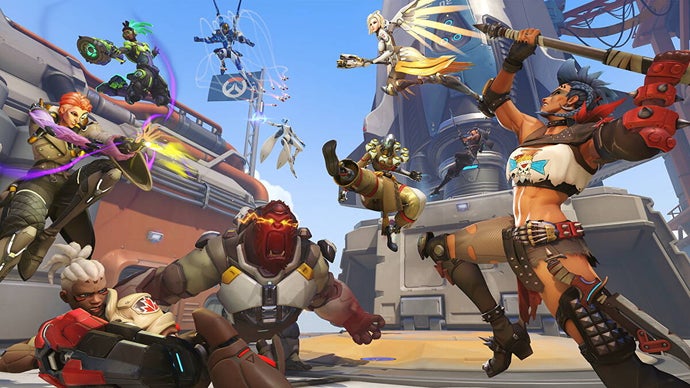
Sector Intelligence Report: Overwatch 2 – Season 2 “Summit” Uplink
Overwatch 2’s latest transmission, Season 2: Summit, pivots the live-service shooter into explicitly vertical warfare, with Talon’s campaign escalating and a new support specialist—Sierra—reconfiguring backline expectations. For #gamedev observers and competitive squads alike, this week’s data points to a deliberate design shift: tighter objective control, sharper role identity, and a renewed focus on elevation as a core system rather than just a map detail.
Summit Goes Vertical: Map & Mode Design Signals
The activity feed frames Summit as a high-altitude warzone initiative, with “new vertical battlegrounds” and “high-altitude engagements” repeatedly emphasized. That phrasing isn’t just marketing flavor; it’s a clear design intent:
- Vertical lanes as primary vectors: The reference to “vertical battlegrounds” and “updated arenas” suggests multi-tier sightlines and more aggressive use of high ground as the default, not the bonus. Expect more flank balconies, drop angles, and layered cover that reward coordinated movement tech (wall climbs, teleports, mobility ults) over static bunker play.
- Meta turbulence by design: Blizzard is signaling “meta turbulence” up front, which is effectively a warning label for rotation-heavy maps and angle-based pressure. Heroes with vertical mobility—Winston, D.Va, Sigma, Echo, Pharah, Widow, Kiriko—will likely gain priority as teams optimize for height control rather than simple choke holds.
- Rotating modes as pacing levers: The feed calls out “rotating modes” and “mode variants tuned for high-intensity engagements.” That points toward curated queues or limited-time rulesets aimed at compressing downtime and amplifying clash frequency, a pattern we’ve seen across modern live-service shooters.
For #indiegame and #gamedev teams, Summit is a live case study in how to re-theme existing systems (maps, modes, rotations) around a single, strong axis—here, verticality—without shipping an entirely new feature set.
Watch: Transmitting Gameplay footage from the field: Overwatch 2 Season 2: Summit – Official Trailer
Talon Ascendant: Narrative and Competitive Pressure
The “Reign of Talon” language attached to Season 2: Summit underlines Blizzard’s intent to keep narrative framing tightly coupled to competitive updates:
- Strategic dominance across multiple fronts: The feed describes Talon as gaining “strategic dominance across multiple fronts,” which doubles as a lore beat and a meta forecast. Expect Talon-aligned heroes to feature heavily in promotional events, challenges, and possibly balance spotlight.
- Heroic operations & event structure: “New heroic operations” likely maps to seasonal PvE-lite or event-style modes. The wording hints at short-form, repeatable operations rather than full campaign content, but still provides a narrative wrapper that keeps seasonal arcs coherent.
- Ult economy & push timing recalibration: Explicit mention of “ult-economy protocols” and “coordinated push timings” in the activity feed is unusually granular. It suggests internal design and balance passes have targeted tempo—how quickly teams build, spend, and re-engage around ultimates—especially in more chaotic vertical layouts.
From a competitive design standpoint, Summit looks like an attempt to shake players out of autopilot macro: rotations, ult cycles, and timing windows are being forced to adapt to new angles and multi-level control.
Sierra Protocol: A New Hardlight Support Rewrites Lane Control
Watch: Transmitting Gameplay footage from the field: Sierra – New Support Hero Gameplay Trailer
The standout development update in this week’s Overwatch 2 feed is Sierra, a hardlight-based support hero who appears tuned as a positional anchor and lane shaper rather than a pure throughput healer.
Key intel from the Sierra briefing:
- Hardlight barriers & positional shielding: The description of “routing barriers” and “positional shielding” implies modular, placeable cover that can be used to sculpt engagements—cutting sightlines, creating temporary safe corridors, or isolating duels.
- Healing bursts over sustain streams: “Healing bursts” suggests cooldown-based, high-impact packets instead of constant beams. This design supports explosive brawls and rewards timing, making Sierra more about fight planning than passive sustain.
- Coordinated fire & lane control: The emphasis on “coordinated fire” and “lane control” frames Sierra as a macro support—someone who shapes how the team occupies space. If her kit encourages holding specific angles or channels, she may become a cornerstone pick on the new vertical maps where controlling a single lane can deny entire rotations.
From a #gamedev perspective, Sierra is a textbook example of a role-filling hero: she doesn’t just add another healer, she adds a new way to define safe vs. unsafe space. That’s a powerful lever in any team shooter.
Live-Service Cadence: Cosmetics, Battle Pass, and Systemic Tweaks
The Summit transmission also highlights the ongoing live-service scaffolding around Overwatch 2:
- Fresh tactical cosmetics & Talon-themed payloads: Cosmetic drops are explicitly tied into the Summit and Talon framing, reinforcing the seasonal identity. Expect a heavier tilt toward high-altitude, mountaineering, and Talon-op skins that visually signal the season’s narrative.
- Battle pass intel & permanent overclock: The phrase “permanent overclock” around seasonal events and the battle pass reinforces Blizzard’s commitment to constant engagement loops: rotating modes, frequent challenges, and time-limited rewards designed to keep the player base in a steady churn.
- Hero balance recalibrations & map rotations: The feed’s callout of “hero balance recalibrations” paired with “new map rotations” underlines a key design philosophy: macro changes and micro tuning move together. When the environment shifts (vertical maps, new lanes), hero stats follow to keep the sandbox coherent.
For developers watching Overwatch 2 as a reference point, Season 2: Summit is a reminder that live-service health isn’t just about new content; it’s about synchronized adjustments across maps, heroes, modes, and rewards.
Sector Outlook: Adapt or Get Buried Under the Avalanche
Overwatch 2’s Season 2: Summit is positioning itself as a stress test for composition flexibility. With Talon ascendant, Sierra entering the support roster, and verticality pushed to the forefront, squads that cling to flat, ground-based comps risk being out-rotated and out-angled.
For players, the directive is clear: rebuild your comps around elevation control, ult tempo, and lane shaping. For #gamedev and #indiegame creators, Summit is a live, evolving case study in how to:
- Re-theme an existing PvP ecosystem around a single strong seasonal identity.
- Use a new hero (Sierra) to unlock different macro strategies instead of just adding overlap.
- Tie narrative, cosmetics, and competitive balance into one coherent seasonal arc.
Overwatch 2 isn’t just adding content this week—it’s reasserting its identity as a live-service tactics sandbox where the map geometry, hero design, and narrative all pull in the same direction: **uphill, into the Summit.
Sources and corrections
This archive entry does not have a verified article-source list. Images and video embeds alone are not evidence for every claim.
Found an error? Request a correction. Include the passage and a supporting source.
Your games, in one place
Keep up with Overwatch 2
Follow this game to collect its posts in your personal feed. Come back to see what you missed.