Automated archive / No Man's Sky
Sector Intelligence: No Man’s Sky Turns Its Fauna Into Weapons With Xeno Arena Protocol
No Man’s Sky’s Xeno Arena Protocol turns your tamed fauna into fully fledged tactical assets, layering a Pokémon-style, turn-based combat grid on top of the game’s procedural wildlife. This isn’t just a new mode—it’s a systemic reframe of creatures from ambient life to core combat verbs.
AI-generated summary. This archive article does not have a current recorded source check. Check linked sources before relying on details. Editorial policy
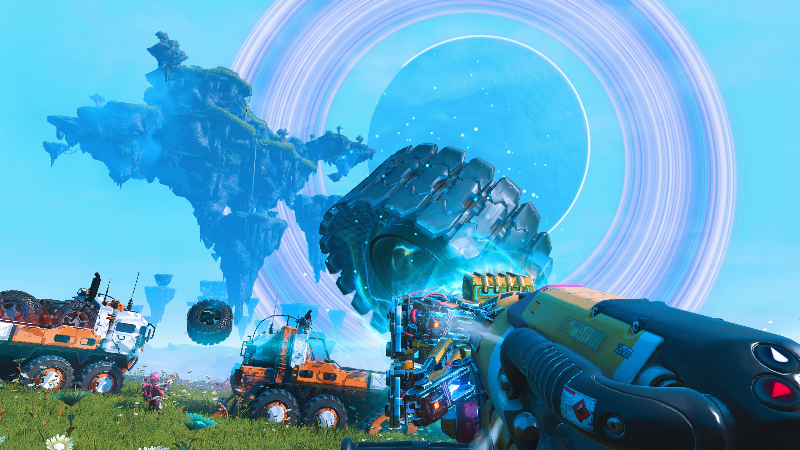
Sector Intelligence Report: Xeno Arena Protocol Comes Online
No Man’s Sky just flipped one of its most passive systems into an active combat pillar. The new Xeno Arena update (v6.3) weaponizes planetary wildlife, transforming creature taming from tourism into a fully fledged tactical layer. For a live service #indiegame that’s been iterating for nearly a decade, this is less "new mode" and more "new design language".
Across the last seven days, signals from the No Man’s Sky sector have all converged on one message: your pets are now ordnance.
From Petting Zoo to War Lab
The patch reframes creature companions as bio-combat assets. Players can now:
- Locate and capture planetary lifeforms with combat potential.
- Imprint and customize those creatures, effectively defining their battlefield role.
- Train traits and mutations to chase specific synergies.
- Deploy squads into structured, turn-based encounters in the Xeno Arena.
The activity feed repeatedly stresses a philosophical shift: “this isn’t a safari, it’s a lab experiment with a leaderboard.” That’s a sharp pivot from No Man’s Sky’s traditional framing of fauna as ambience, resource nodes, or photo-op curiosities. In design terms, Hello Games is reclassifying creatures from environmental dressing to primary verbs in the combat loop.
Pokémon DNA, No Man’s Sky Constraints
One log explicitly tags the mode as a “Pokémon-style, turn-based battle grid”. That’s a big statement for both players and #gamedev observers:
- Turn-based combat is a clean fit for a game whose underlying systems were never tuned for tight, real-time action.
- A grid-based arena gives designers discrete spatial rules to lean on—ideal for procedural combat behavior and AI readability.
- The capture–train–battle loop is instantly legible to players, even inside a sprawling, systemic sandbox.
Where this diverges from classic monster battlers is the procedural substrate. No Man’s Sky’s creatures are famously chaotic: flying cows, glitchy dinosaurs, sentient blobs, and half-robot aberrations. The update reframes that chaos as a buildcraft problem rather than a meme generator.
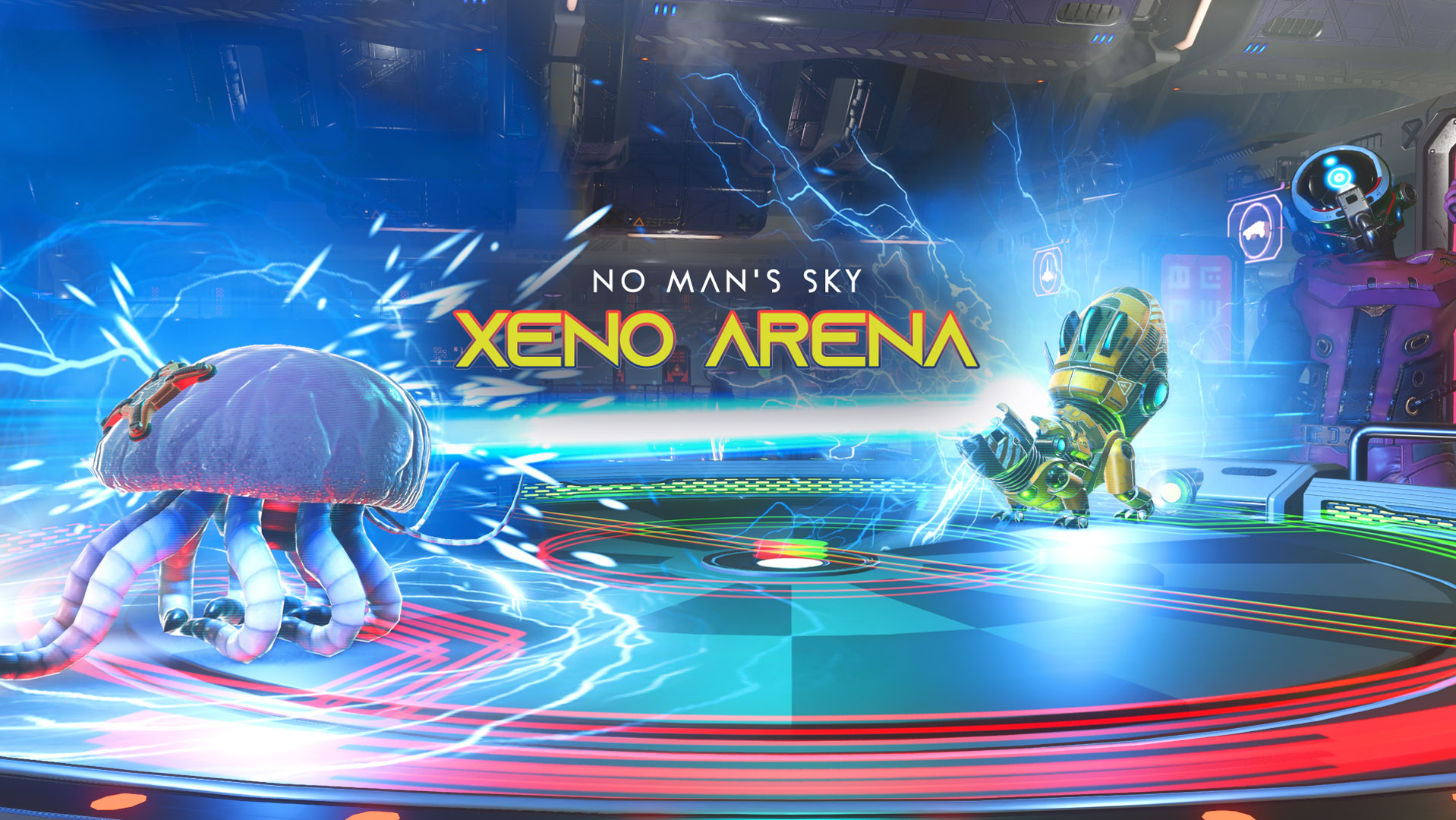
Procedural Combat as a Design Stress Test
The field logs talk about “procedural combat routines” and “iterative tuning”, which is the real #gamedev story here. Hello Games is effectively asking: Can our procedural creature generator support a meta?
Key implications:
- Role emergence: With traits and mutations in play, expect soft archetypes—tanks, disruptors, glass-cannon anomalies—built from procedural parts rather than fixed classes.
- Synergy-first design: Logs emphasize “optimize mutation synergies” and “team synergies.” That’s a subtle but important shift: balance isn’t just about single-creature viability, but how weird combos interact.
- Live balancing runway: Framing this as a “live-fire lab experiment” gives Hello Games permission to tweak aggressively. In a procedural ecosystem, overpowered interactions are inevitable; the arena is a controlled test chamber to surface them.
For systems designers, this is a clever feedback loop: the same tools that generate fauna for exploration now generate combat data. Every match is telemetry on which traits, body plans, and behaviors actually matter under pressure.
Competitive Layer: Leaderboards in a Chill Universe
The language of the logs—“combat reports in blood and particle effects,” “lab experiment with a leaderboard”—signals a deliberate tension. No Man’s Sky has historically been a chill, solitary drift; Xeno Arena introduces structured competition without rewriting the whole game as a PvP shooter.
Design-wise, that competitive layer is likely to:
- Increase session intensity without demanding twitch skill.
- Create a meta-game for theorycrafters and modders who already live in spreadsheets.
- Provide a repeatable, low-friction activity that contrasts with the high-friction logistics of interstellar exploration.
This is a smart alignment with the audience that stuck around: players who love systems, builds, and emergent storytelling more than raw mechanical difficulty.
Content Pipeline and Longevity
Described as a “free systems patch”, Xeno Arena reads as infrastructure, not a one-off event. That matters for longevity:
- It’s content-agnostic: any new creature types, biomes, or anomalies added later can be slotted into the arena ecosystem.
- It creates a design sandbox for future experiments in AI behaviors, status effects, and encounter design.
- It offers a new reward vector—resources and progression tied to combat performance rather than exploration alone.
For an #indiegame studio operating at this scale, this is efficient: one investment in a robust, replayable system yields ongoing value across future updates.
Watch: Transmitting Gameplay footage from the field: No Man's Sky – Xeno Arena Update Trailer
Strategic Takeaways for Developers
For #gamedev teams watching No Man’s Sky as a case study, Xeno Arena underlines a few lessons:
- Recontextualize, don’t replace: Turning existing fauna into a combat system extracts new value from old content.
- Leverage familiarity: Borrowing the Pokémon-style loop lowers onboarding friction in an otherwise complex sandbox.
- Use competitive modes as telemetry engines: Structured arenas provide cleaner data than open-world chaos.
- Stay consistent with fantasy: Even as it adds combat, the update keeps the core fantasy weird and exploratory—dinosaurs and space blobs, not mil-spec marines.
No Man’s Sky’s latest development update doesn’t just add a battle mode; it quietly prototypes what procedural, creature-driven combat can look like inside a vast, persistent universe. If the community leans in and the meta stabilizes, Xeno Arena may become the template for how systemic exploration games bolt on meaningful, replayable conflict without losing their soul.
Sources and corrections
This archive entry does not have a verified article-source list. Images and video embeds alone are not evidence for every claim.
Found an error? Request a correction. Include the passage and a supporting source.
Your games, in one place
Keep up with No Man's Sky
Follow this game to collect its posts in your personal feed. Come back to see what you missed.
More to read about No Man's Sky
- Source-checked briefNo Man’s Sky launches 10th anniversary expedition
No Man’s Sky’s “Our Journey Continues” anniversary expedition has launched and is scheduled to run for about six weeks. Players can start it from the Space Anomaly or on a new save, with...
- Source-checked briefNo Man’s Sky Cosmos 7.0 lets players buy space stations
No Man’s Sky’s Cosmos 7.0 update expands space activities with player-owned stations and modular orbital bases. It also includes a 10th-anniversary expedition tied to the game’s update history....