Automated archive / No Man's Sky
No Man’s Sky ‘Remnant’ Turns Space Archaeology into a Full-Fledged System
No Man’s Sky’s Remnant update doesn’t just add more planets to visit—it rewires why you land on them at all. With ancient robot ruins, a gravity gun, and a revamped salvage economy, Hello Games is quietly turning space archaeology and physics mischief into the core of its decade-old sandbox.
AI-generated summary. This archive article does not have a current recorded source check. Check linked sources before relying on details. Editorial policy
Strategic Overview: Remnant Reframes the Late-Game Loop
The latest No Man’s Sky Remnant update is less a content drop and more a strategic repositioning of what it means to explore in this #indiegame. Instead of just adding “more planets, more stuff,” Hello Games is doubling down on why you land in the first place. Ancient procedural ruins, haunted robot civilizations, and physics-driven tools now sit at the center of the experience, nudging players away from passive resource extraction and toward active, systemic problem‑solving.
From a #gamedev perspective, Remnant is a case study in long-tail development updates: layering new systems onto a mature live game without fracturing its core loop. The team is threading three needles at once—exploration fantasy, narrative intrigue, and sandbox physics—and doing it via free updates that continue to compound the game’s value proposition.
Ruins, Haunted Robots, and Environmental Storytelling
Procedural Ruins as Content Multipliers
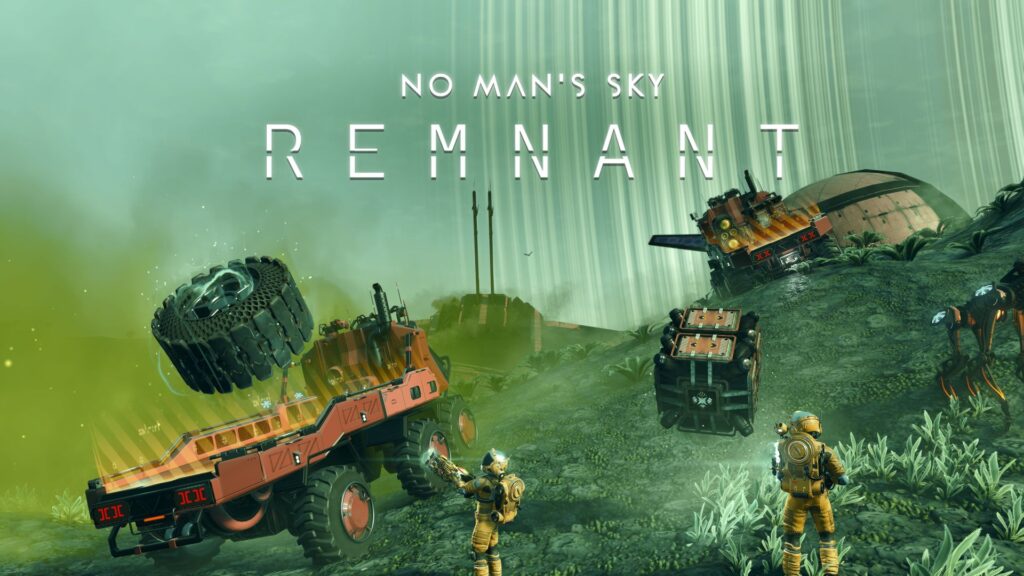
Remnant seeds the galaxy with vast, procedural ruins that operate as content multipliers rather than one-off setpieces. Each site becomes a layered interaction stack:
- Exploration surface: new layouts, traversal choices, and vantage points.
- Lore delivery: environmental storytelling about long-lost robotic civilizations.
- Reward vectors: relics, tech, cosmetics, and mission hooks.
Instead of funneling players into bespoke story missions, Hello Games is injecting narrative into the open world itself. For no man’s sky, this is a smart escalation: the ruins give veteran players fresh reasons to revisit “dead” planets, while new players encounter a denser, more curated-feeling universe without sacrificing procedural variety.
Expedition as Onboarding for the New Fantasy
A new Expedition built around these ruins acts as structured onboarding for the update’s systems. It’s a familiar pattern in live #gamedev:
- Use a time-limited campaign to highlight new mechanics.
- Reward participation with cosmetics and tech that reinforce the theme.
- Funnel lapsed players back into the ecosystem with a clear short-term goal.
By centering the Expedition on archaeology and robot remnants, Hello Games is rebranding parts of the experience from “space mining sim” to “eerie sci-fi fieldwork” without needing a hard narrative reboot.
Gravity Gun: Physics as a First-Class System
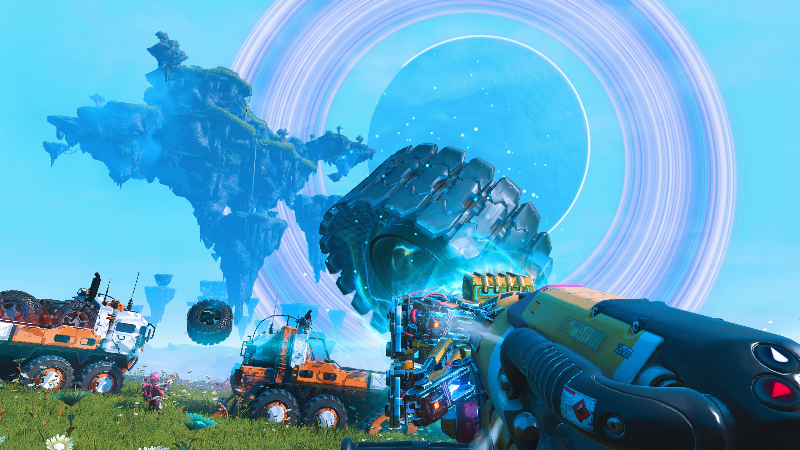
Remnant’s new gravity gun is the most obvious mechanical headline—and arguably the most important systemic bet. On paper, it’s a tool for deep-space salvage and orbital junk cleanup. In practice, it’s a physics-first interaction layer that touches almost every pillar of the game:
- Exploration & Puzzles: Move debris, align constructs, and solve environmental puzzles in and around ruins.
- Combat & Encounters: Weaponize the environment—boulders, containers, wreckage—turning static scenery into dynamic threat vectors.
- Base-Building & Logistics: Precision-placement and cleanup tools make large-scale bases more manageable and expressive.
For no man’s sky as a long-running #indiegame, this is a savvy evolution. Rather than adding another resource type or crafting branch, Hello Games is amplifying player expression. The gravity gun turns “point and harvest” interactions into “observe, manipulate, and improvise” moments—exactly the kind of systemic depth that keeps a sandbox sticky years into its lifecycle.
Salvage Economy and Space Encounter Overhaul
The deep-space salvage overhaul reframes orbital debris from background dressing into a fully integrated economic and design pillar. Every derelict husk or drifting crate is now:
- A tactical opportunity: approach angle, tool choice, and risk management matter in moment-to-moment gameplay.
- A resource faucet: more nuanced ways to convert time and skill into materials, rather than pure RNG or vendor loops.
- A story seed: wrecks and robot remnants subtly reinforce the idea that this galaxy has a history, not just a coordinate seed.
From a design lens, this is Hello Games leaning into “friction with meaning.” Instead of smoothing every interaction into instant gratification, they’re rewarding players who engage with the physicality of the world—literally pulling the game’s economy and storytelling closer to its simulation layer.
Watch: Transmitting Gameplay footage from the field: No Man's Sky Remnant Update Trailer
Social & Co-op Implications
Remnant doesn’t just pad the solo loop; it quietly strengthens social play. Ruins, emergent events, and co-op-friendly encounters are natural “you have to see this” moments. The gravity gun, especially, is a chaos engine in multiplayer—perfect for emergent slapstick, creative problem-solving, and highlight-reel clips.
For a game that has steadily morphed from solitary survival sim into a shared-universe playground, this is aligned with broader live-ops strategy: design updates that generate shareable stories, not just checklists.
Sector Outlook: A Mature Live Game Still Iterating Like an Upstart
Ten years into its lifecycle, no man’s sky continues to operate with the experimental energy of a much younger project. The Remnant development update underscores a few key trends for observers and fellow #gamedev teams:
- Long-running games can still redefine their fantasy through systemic additions, not just story beats.
- Physics-driven tools like the gravity gun extend the lifespan of existing content by making old spaces feel new.
- Free, high-impact updates maintain goodwill and keep an #indiegame culturally relevant well past its expected tail.
If you bounced off no man’s sky when exploration felt shallow or repetitive, Remnant is a strong re-entry window. The galaxy didn’t just get bigger again—it got weirder, more physical, and a lot more interested in what you do between mining nodes.
Sources and corrections
This archive entry does not have a verified article-source list. Images and video embeds alone are not evidence for every claim.
Found an error? Request a correction. Include the passage and a supporting source.
Your games, in one place
Keep up with No Man's Sky
Follow this game to collect its posts in your personal feed. Come back to see what you missed.
More to read about No Man's Sky
- Source-checked briefNo Man’s Sky launches 10th anniversary expedition
No Man’s Sky’s “Our Journey Continues” anniversary expedition has launched and is scheduled to run for about six weeks. Players can start it from the Space Anomaly or on a new save, with...
- Source-checked briefNo Man’s Sky Cosmos 7.0 lets players buy space stations
No Man’s Sky’s Cosmos 7.0 update expands space activities with player-owned stations and modular orbital bases. It also includes a 10th-anniversary expedition tied to the game’s update history....