Automated archive / No Man's Sky
No Man’s Sky ‘Remnant’ Turns Space Archaeology into a Systemic Sandbox
No Man’s Sky’s Remnant update doesn’t just add more planets to poke at—it rewires how you interact with them, from haunted robot ruins to a gravity gun that turns physics into a core mechanic. This is Hello Games doubling down on dense, systemic design instead of shallow sprawl.
AI-generated summary. This archive article does not have a current recorded source check. Check linked sources before relying on details. Editorial policy
Strategic Overview
No Man’s Sky’s latest Remnant development update is less a content drop and more a doctrinal shift in how players read its universe. After years of iteration, Hello Games is now leaning hard into cosmic ruins, haunted robotics, and physics-driven tooling, doubling down on the game’s identity as a living, narrative-rich #indiegame sandbox rather than a pure resource treadmill. For ongoing #gamedev watchers, Remnant is a textbook example of mature live-ops design: deepen existing loops instead of merely widening them.
From a sector perspective, Remnant pushes three major fronts:
- Procedural ruins and ancient robot civilizations that give planets long-tail narrative value.
- A gravity gun and physics-powered tools that meaningfully rewire exploration, combat, and base-building.
- A new expedition and salvage overhaul that convert previously “dead” space into systemic opportunity.
Ruins, Robots, and a Denser Galactic Fabric
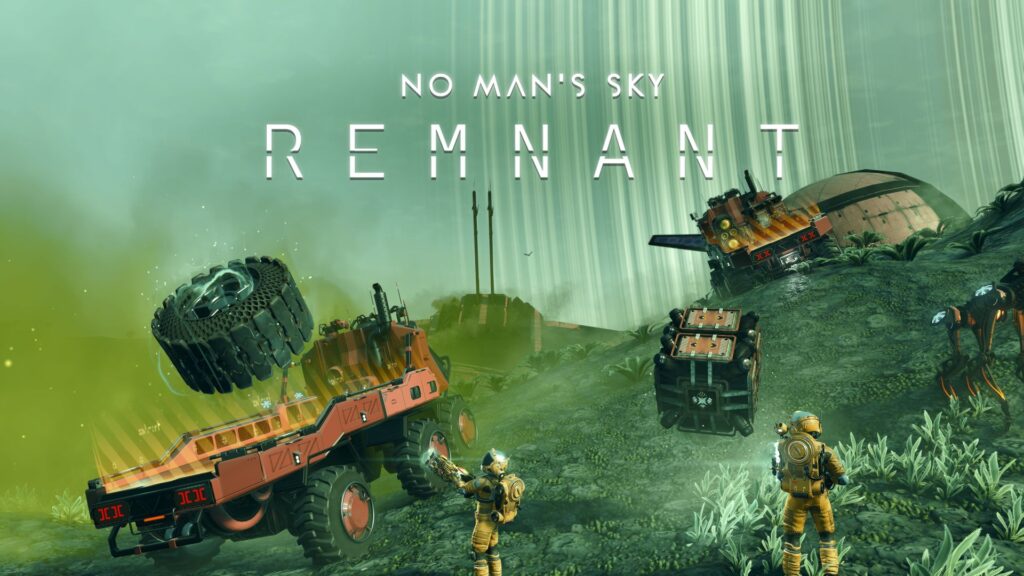
Remnant injects vast procedural ruins across planetary surfaces, framed as relics of long-lost robotic civilizations. This isn’t just set dressing: the design goal is to make “I’ve already seen this biome” a weaker excuse to disengage. Ruins bundle environmental storytelling, lore entries, puzzles, and targeted loot, giving each planet a renewed investigative layer.
For returning players, this is critical. No man’s sky has historically struggled with planets that felt visually distinct but mechanically redundant. Ruins are Hello Games’ answer: point-of-interest density plus narrative hooks. The new expedition doubles down, funneling players through curated routes that showcase the update’s strengths—ancient constructs, eerie robots, and rewards that reinforce that you’re not just mining rocks, you’re unearthing a timeline.
Socially, the ruins also act as co-op magnets. The activity feed highlights more emergent events and co-op-friendly encounters, giving players concrete reasons to ping friends with “come scan this, then help me strip it for parts.” That’s subtle but important live-service thinking.
Gravity Gun: Physics as Design, Not Gimmick
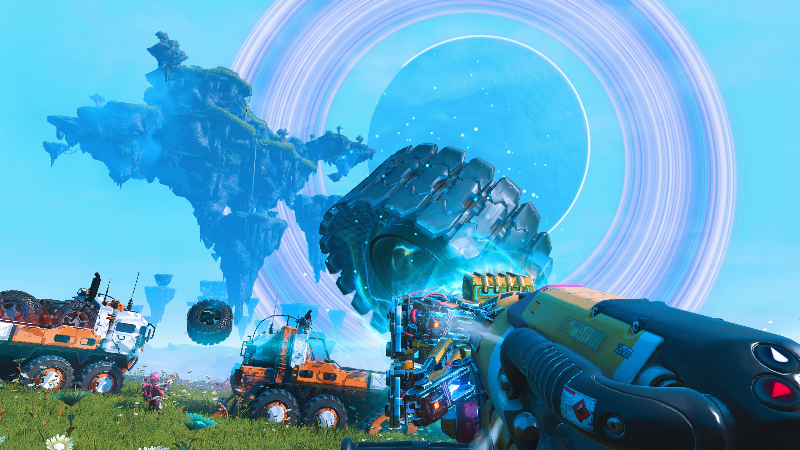
The headline mechanical addition is the gravity gun, and it’s where the #gamedev implications get interesting. Hello Games is clearly positioning this tool as a multi-domain force multiplier:
Exploration & Puzzles
The gravity gun lets players yank, toss, and precisely reposition objects across alien worlds. That instantly broadens the design palette for environmental puzzles—blocked passages, vertical traversal, and physics-based contraptions become fair game. Instead of adding bespoke puzzle gadgets, the team extends a single systemic tool that can solve many problems.
Combat & Emergent Chaos
Combat encounters now have a new axis: terrain as ammunition. Boulders become projectiles, debris becomes improvised cover, and hostile fauna can be managed with spatial control rather than just better DPS. This is a classic systemic design win: one tool, many emergent outcomes.
Base-Building & Salvage Economy
On the construction side, the gravity gun doubles as precision construction gear and a clean-up utility. Players can tidy bases, reconfigure layouts, and—crucially—interact more efficiently with deep-space salvage. The update reworks salvage systems so that derelict ships, battlefield debris, and orbital junk are now resource-rich opportunities instead of background noise.
This dovetails neatly with the new salvage overhaul: every drifting crate or wreck is an invitation to use physics for profit, turning space hoarding into structured, logical optimization. For a long-running #indiegame, this kind of economy-layer refinement is exactly how you extend lifespan without bloating complexity.
Expedition Design and Player Retention
The new Remnant expedition serves as both onboarding and spotlight. It guides players through ruins, robotic lore, and gravity-gun problem-solving in a curated arc. Structurally, this works as a re-engagement funnel: lapsed players get a focused, time-boxed reason to reinstall; active players get a seasonal-style objective track with bespoke rewards and cosmetics.
Crucially, it’s another free update, consistent with Hello Games’ long-term strategy of accruing goodwill through continuous, non-monetized expansion. In the broader no man’s sky narrative—once a cautionary tale, now a redemption case study—Remnant reinforces the studio’s reputation for long-horizon, player-first live development.
Watch: Transmitting Gameplay footage from the field: No Man's Sky – Remnant Update Trailer
Sector Outlook
From a market and #gamedev perspective, Remnant is less about raw feature count and more about density, cohesion, and systemic leverage. Ruins give planets narrative weight; the gravity gun turns space into a manipulable canvas; salvage changes deep space from liminal filler into playable space.
For players, the takeaway is simple: no man’s sky is once again more dangerous, more rewarding, and more interesting to walk through, not just fly over. For developers, Remnant is a case study in how to reinvest in core loops with systemic tools and world-building rather than chasing purely cosmetic novelty.
Sources and corrections
This archive entry does not have a verified article-source list. Images and video embeds alone are not evidence for every claim.
Found an error? Request a correction. Include the passage and a supporting source.