Automated archive / No Man's Sky
No Man’s Sky ‘Remnant’ Turns the Galaxy into a Haunted Archaeology Sim
No Man’s Sky’s Remnant update doesn’t just add more planets to visit—it changes why you visit them. Haunted ruins, a gravity gun, and deep‑space salvage systems quietly rewire the game’s core loop into something closer to eerie sci‑fi archaeology than chill space tourism.
AI-generated summary. This archive article does not have a current recorded source check. Check linked sources before relying on details. Editorial policy
Strategic Overview: Remnant Repositions No Man’s Sky Yet Again
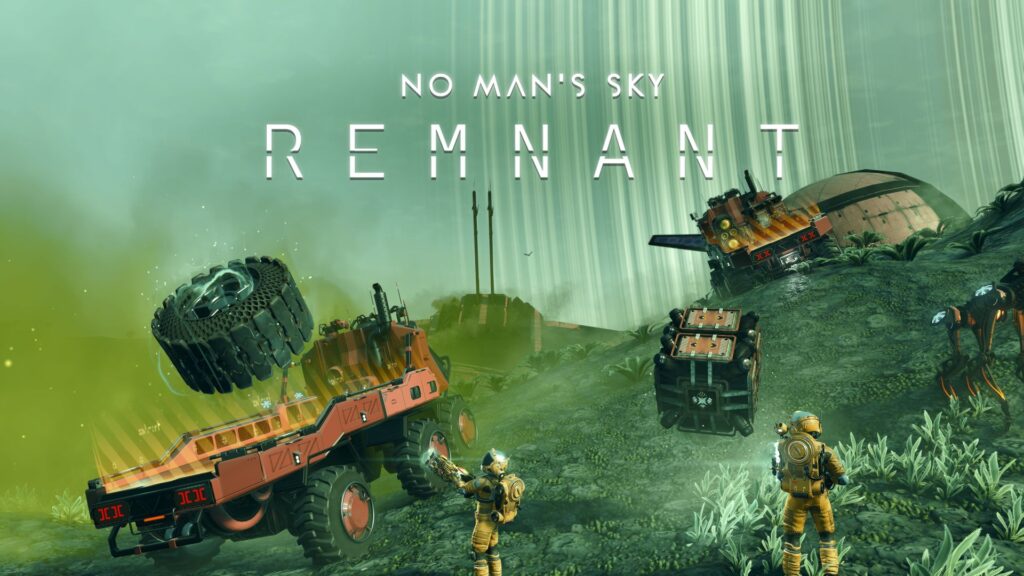
Hello Games has deployed the Remnant update for no man's sky, and it’s less a balance patch and more a doctrinal shift in how players are encouraged to move through its universe. Instead of just strip‑mining planets and warping to the next system, Remnant reframes the loop around cosmic ruins, haunted robotics, and physics‑driven problem‑solving. For a live game this mature, that’s notable: the studio isn’t just adding content, it’s nudging player behavior.
From a #gamedev and #indiegame perspective, Remnant is another case study in long‑tail, systemic expansion. Hello Games continues to avoid paid DLC, opting instead for free, theme‑driven development updates that layer new verbs—explore, excavate, manipulate—on top of existing systems. The result is a universe that keeps broadening horizontally rather than vertically power‑creeping itself into oblivion.
New Ruins, Old Ghosts: Archaeology as Core Loop
Procedural Ruins as Content Multipliers
The flagship feature of Remnant is the spread of vast procedural ruins across planetary surfaces. These aren’t just reskinned structures; they’re positioned as:
- Lore hubs: Anchoring the narrative of long‑lost robotic civilizations.
- Exploration catalysts: Giving players a reason to revisit previously dismissed “dead” worlds.
- Reward nodes: Housing relics, loot, and tech that make on‑foot exploration feel materially worthwhile.
Design‑wise, this is smart. Instead of building bespoke story planets, Hello Games injects handcrafted intentions into procedural terrain. The ruins act as high‑density interaction clusters in an otherwise sparse universe, solving a classic systemic‑game problem: how to make endless space feel curated without hand‑placing every moment.
Expedition as On‑Ramp to New Systems
The new Remnant‑themed expedition functions as a guided tour through these mechanics. Expeditions in no man’s sky have evolved into seasonal tutorials with stakes, and this one appears tuned to:
- Teach players how to read, navigate, and exploit ruin sites.
- Funnel them through environmental puzzles and new mission types.
- Distribute cosmetics and rewards that visually mark early adopters of the update.
For returning players, it’s a low‑friction re‑entry point. For Hello Games, it’s a controlled environment to test how far they can push ruin density, puzzle complexity, and co‑op encounters without overwhelming the broader galaxy.
Gravity Gun & Physics Tools: Systemic Upgrades, Not Just Toys
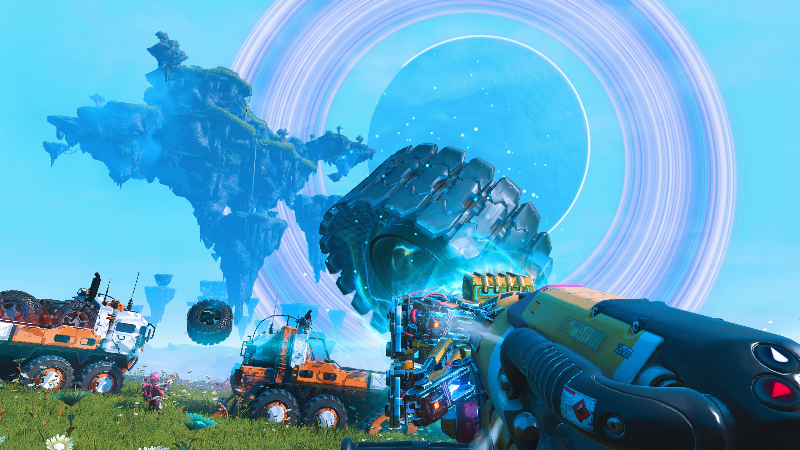
Remnant’s other headline feature is the gravity gun and a suite of physics‑powered tools that meaningfully alter moment‑to‑moment play. This isn’t just a gimmick:
- Environmental manipulation: Players can yank, toss, and precisely reposition objects, turning terrain and debris into puzzle pieces.
- Combat creativity: Hostile fauna and enemies can now be countered with improvised projectiles—think boulders as ballistic solutions.
- Base‑building efficiency: The same toolset doubles as a construction aid, letting players tidy and rearrange structures with less menu friction.
On the systemic level, this is a sandbox multiplier. By giving players a single, consistent interface for interacting with world objects, Remnant deepens emergent gameplay without bloating UI complexity. For #gamedev teams, it’s a textbook example of adding one powerful tool that touches many systems—exploration, combat, building, salvage—rather than siloed features.
The deep‑space salvage overhaul complements this nicely. Derelicts and orbital junk transition from set‑dressing to profit vectors. With the gravity gun, every drifting crate or wreck is now a physics puzzle and an economic opportunity. That keeps space travel from devolving into pure fast‑travel; encounters between stars gain tactical and financial texture.
Atmosphere, Visuals, and Environmental Storytelling
Remnant also invests heavily in atmosphere and environmental storytelling:
- Enhanced visuals around ruins and ancient constructs.
- New environmental puzzles that encourage players to walk, scan, and interpret rather than just mine and move on.
- Haunted robots and relics that hint at a deeper, creepier sci‑fi tone layered over the game’s usual chill exploration.
This tonal pivot matters. It subtly rebrands no man’s sky from “infinite postcard generator” to “eerie archaeology sim in space.” That shift gives writers and quest designers more hooks for future narrative beats while still respecting the game’s sandbox roots.
Watch: Transmitting Gameplay footage from the field: No Man's Sky Remnant Update Trailer
Social & Co‑op Implications
Remnant’s design clearly anticipates shared discovery. More emergent events, co‑op‑friendly encounters around ruins, and salvage opportunities in space all drive players to ping friends with, “You need to see this seed.” The ruins themselves are ideal co‑op content: multi‑entrance, puzzle‑driven, and loot‑heavy.
From a live‑ops standpoint, this strengthens the game’s soft‑multiplayer identity. No Man’s Sky remains neither a traditional MMO nor a purely solitary experience; instead, Remnant leans into parallel exploration with occasional convergence, where community discourse (screenshots, coordinates, expedition routes) becomes a core layer of the game.
Sector Forecast: Where Hello Games Goes Next
As a development update, Remnant reinforces Hello Games’ long‑running strategy: keep the game buy‑to‑play, ship free, thematically cohesive expansions, and let word‑of‑mouth do the heavy lifting. For an #indiegame studio that launched in controversy, this ongoing cadence has become a masterclass in reputation rehabilitation.
Looking forward, expect:
- Further exploitation of the ruin archetype—more biomes, more narrative branches.
- Additional physics‑based tools building on the gravity gun’s tech stack.
- Iterations on salvage and space encounters as data comes in on how players actually farm and fight in the new ecosystem.
For developers watching from the sidelines, Remnant is a reminder that late‑stage systemic updates can still fundamentally reframe a mature game—if they’re rooted in existing strengths and delivered as cohesive, discoverable experiences.
Sources and corrections
This archive entry does not have a verified article-source list. Images and video embeds alone are not evidence for every claim.
Found an error? Request a correction. Include the passage and a supporting source.