Automated archive / Nioh 3
Nioh 3 Tightens the Killbox Around Yokai Combat Design
Nioh 3’s latest intel confirms a ruthless, iterative evolution of Team Ninja’s combat architecture, not a soft reboot. This week’s trailers and community telemetry frame the sequel as a high-friction laboratory for precision play, buildcraft, and punishing Yokai encounters.
AI-generated summary. This archive article does not have a current recorded source check. Check linked sources before relying on details. Editorial policy

Sector Overview: Nioh 3’s Combat Lab Is Now in Full Operation
The last seven days of signal traffic around nioh 3 paint a clear picture: Team Ninja isn’t chasing reinvention, it’s coldly iterating on a proven combat architecture. From Sony’s Share of the Week spotlight to the Accolades and Legacy trailers, the studio is framing Nioh 3 as a high-friction, data-dense testing ground for player execution. For anyone watching the #gamedev side of the series, this week’s intel underlines a philosophy of precision escalation rather than wholesale redesign.
The community’s contributions—screens of ornate armor, slow-motion stance swaps, and clipped boss exchanges—aren’t just pretty captures. They function as emergent telemetry on how players are parsing stance economy, Ki thresholds, and Yokai ability risk windows under live-fire conditions. Nioh 3’s loop remains a hostile environment by design, but the latest trailers suggest a renewed focus on readability and systemic clarity, not softness.
Combat Architecture: Iteration Over Reinvention
High-Friction Loop, Sharpened
The Accolades trailer reinforces a central thesis: Nioh 3 wants you to fail fast, learn faster, and build smarter. Weapon stances and Ki management are still the spine of the experience, but the messaging emphasizes calibration—tighter i-frames, more punitive stamina drops, and more explicit trade-offs when leaning into Yokai skills. From a #gamedev perspective, this aligns with a live-lab mindset: expose player mistakes quickly, then give them granular tools to iterate.
The Activity Feed’s reference to “maximum punishment of human error” is telling. Rather than smoothing difficulty curves for broader appeal, Team Ninja is doubling down on the series’ identity as a controlled environment for testing reaction time, pattern recognition, and mental resilience. That makes Nioh 3 less a traditional action RPG and more a long-form combat training sim wrapped in Sengoku horror.
Legacy Systems Reactivated
Watch: Transmitting Gameplay footage from the field: Nioh 3 – Official Legacy Trailer
The Legacy trailer functions as a design manifesto. It cross-references boss archetypes, stance-driven weapon trees, and Yokai subsystems from prior entries, signaling that Nioh 3 is a structural continuation, not a reboot. The language around “reactivating the Nioh combat architecture” is effectively a promise to veteran players: your existing literacy in stance play, Ki pulse timing, and burst counter windows will matter.
For developers tracking systemic evolution, this is an interesting middle ground. Rather than discarding legacy complexity, Team Ninja appears to be layering refinements on top of established frameworks—micro-adjusted invulnerability windows, more expressive buildcraft, and expanded Yokai integration. It’s closer to a fighting game sequel model than a typical action-RPG refresh, where the meta is expected to shift but the core grammar stays intact.
Field Telemetry: What Player Captures Reveal
Visual Combat Telemetry as Design Feedback
The “Visual Combat Telemetry” callout from PlayStation’s Share of the Week is more than marketing copy. Frames of “precision strikes, ornate armor loadouts, and close-quarters clashes with mounted yokai” indicate three pressure points the team is likely monitoring:
- Stance & Range Legibility – Close-quarters footage against mounted yokai suggests the designers are testing how clearly players can read hurtboxes and attack tells when verticality and mount movement complicate spacing.
- Armor as Build Signaling – The emphasis on ornate armor loadouts doubles as a surface-level fashion statement and a deeper read on how players are distributing stats, resistances, and Ki efficiency. It’s informal data on which build archetypes are emerging as dominant.
- Timing Under Stress – Captured precision strikes in chaotic encounters become unofficial QA clips, surfacing whether telegraphs and punish windows remain fair under visual noise.
This is where Nioh 3’s combat ecosystem overlaps with #indiegame design philosophies: tight feedback loops, brutal clarity, and a willingness to let players self-select into a harsher experience without diluting the core.
Buildcraft and Lethality Curves
Expanded Systems, Narrower Margins
The intel on “higher lethality curves, tighter i-frame windows, and expanded buildcraft” points to a more polarized meta. Players who deeply understand Ki management, stance-switch rhythms, and Yokai ability cooldowns will find more expressive options; everyone else will feel the walls closing in.
From a systems design standpoint, this is a deliberate trade: by tightening defensive margins (shorter i-frames, stricter dodge timing), offensive and utility tools gain more definition. Every stance swap, Ki pulse, and Yokai activation becomes a higher-stakes decision, which is exactly what the series thrives on. The design risk is onboarding—newcomers may bounce hard—but the reward is a combat sandbox that remains strategically dense for hundreds of hours.
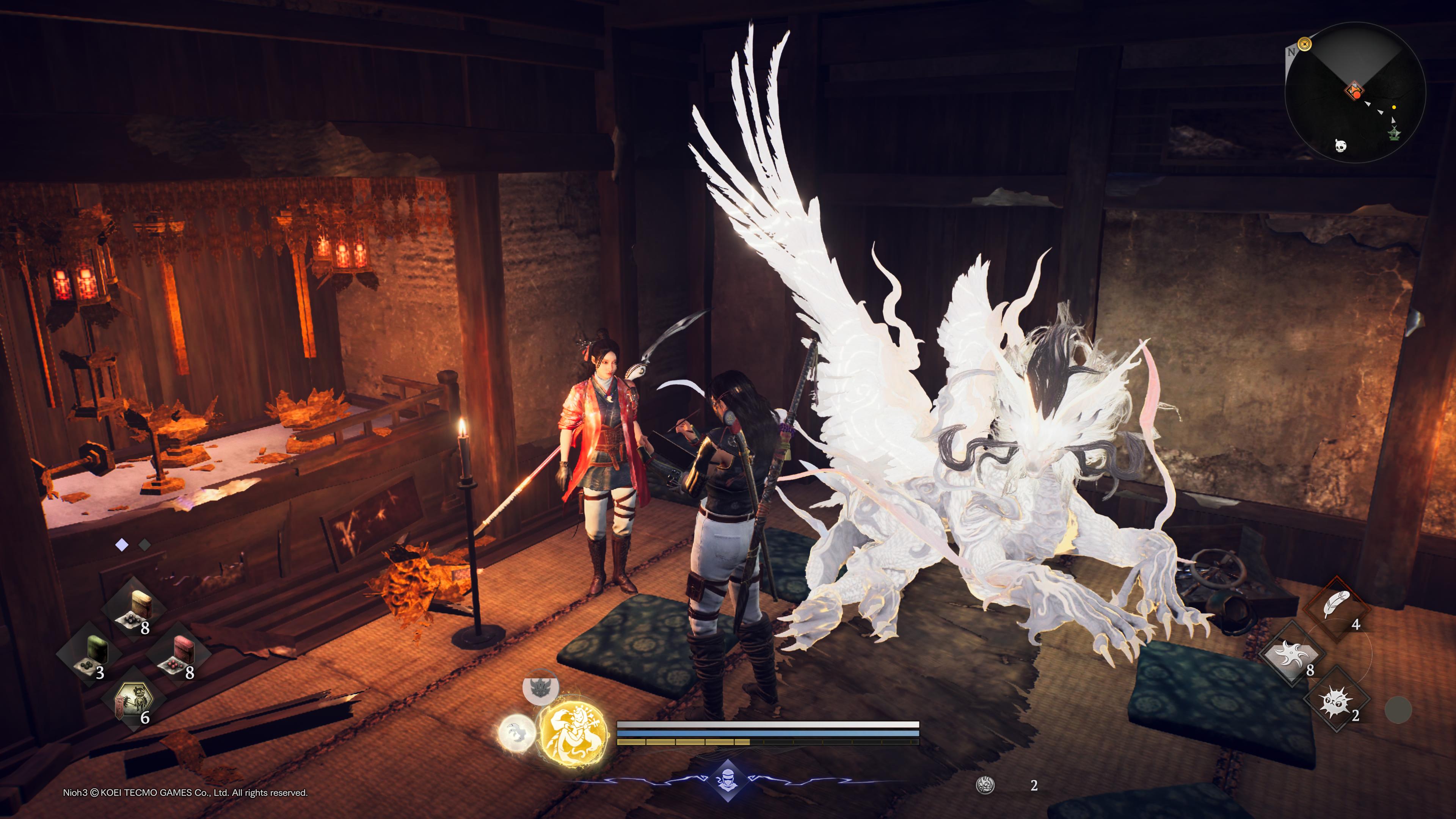
The Guardian Spirit imagery reinforces this: spiritual companions aren’t just flavor, they’re tuning knobs for risk-reward. Expect more granular modifiers tied to aggression, defense, and resource regeneration, further entrenching Nioh 3 as a meta-driven experience where theorycrafting is as important as mechanical execution.
Strategic Takeaways for Developers and Players
For developers tracking nioh 3 as a case study, this week’s transmissions highlight a few key principles:
- Iterative Legacy, Not Reinvention – Preserve core mechanical literacy between sequels to reward long-term mastery.
- Telemetry Through Community Content – Treat screenshots and clips as informal UX and balance data, especially around readability and perceived fairness.
- High-Friction by Design – Use difficulty as a filter and a feature, not a problem to solve, provided the systems remain transparent and internally consistent.
For players preparing to deploy, the message is equally clear: Nioh 3 is not a reset. It’s a harsher, more refined continuation of a combat thesis that’s been in development for years. If you come in expecting a lenient action RPG, the game will break you. If you treat it as a live-fire training ground for precision play, it might be one of the most rewarding combat labs in the genre.
In sector terms, Nioh 3 isn’t expanding the battlefield; it’s tightening it—turning every stance change, every Ki pulse, and every Yokai burst into a make-or-break decision inside a meticulously engineered killbox.
Sources and corrections
This archive entry does not have a verified article-source list. Images and video embeds alone are not evidence for every claim.
Found an error? Request a correction. Include the passage and a supporting source.
Your games, in one place
Keep up with Nioh 3
Follow this game to collect its posts in your personal feed. Come back to see what you missed.