Automated archive / Nioh 3
Nioh 3 Turns Pain Into a Combat Laboratory
Nioh 3’s latest intel confirms a ruthless design thesis: this is a combat laboratory, not a comfort sequel. From legacy systems to new yokai encounters, Team Ninja is tightening every screw instead of sanding down the series’ sharp edges.
AI-generated summary. This archive article does not have a current recorded source check. Check linked sources before relying on details. Editorial policy

This Week in the Nioh 3 Theatre
Nioh 3’s latest signals confirm what the field has been whispering: Team Ninja isn’t chasing a reboot, it’s doubling down on a combat lab built to stress-test human reaction time. Over the last seven days, every official transmission and community capture has reinforced the same thesis: this sequel is a precision-tuned evolution of the series’ high-friction systems, not a comfort patch.
From the Legacy trailer to the new accolades reel, the studio is positioning Nioh 3 as a controlled environment where stance choice, Ki management, and yokai abilities are all levers in a brutal but readable ruleset. For #gamedev teams and combat designers, these are not just trailers — they’re design documentation disguised as marketing.
Legacy Trailer: Iteration Over Reinvention
The Legacy deployment brief makes its intent clear: Nioh 3 reactivates the existing combat architecture instead of replacing it. The activity feed explicitly flags:
- Boss archetype continuity – Returning patterns and silhouettes from prior Nioh ops, now remixed with nastier follow‑ups and reduced forgiveness windows.
- Weapon stance lineage – High/Mid/Low stances remain the backbone, but animations and transitions look shaved down to eliminate dead frames and over-generous i-frames.
- Yokai subsystem expansion – Yokai powers are framed less as panic buttons and more as high-commitment tools with sharp risk/reward curves.
This is classic iterative design: preserve player muscle memory while tightening the screws on execution. It mirrors how many #indiegame combat systems evolve in early access — only here it’s happening at AAA scale with three generations of telemetry behind it.
Accolades Trailer: Telemetry-Backed Difficulty
The new Nioh 3 accolades trailer doesn’t just brag; it quietly outlines the design philosophy:
- “Maximum punishment of human error” – The feed calls this out directly. Every mistimed dodge, greedy combo, or mismanaged Ki is a bill that comes due instantly.
- “Laboratory for reaction time and masochistic persistence” – This framing is key. Nioh 3 isn’t aspiring to broad accessibility; it’s targeting players who enjoy failing forward in a tightly tuned system.
- Weapon stances + Ki + Yokai abilities as one equation – The accolades edit repeatedly cuts between stance shifts, Ki pulse timing, and yokai counters, underscoring that mastery is holistic, not modular.
For combat designers, this is a case study in clarity of intent. The marketing copy aligns perfectly with the mechanical reality the series is known for, avoiding the common trap of promising “approachability” while secretly raising the skill ceiling.
Visual Combat Telemetry: Community as Data Source
The Share of the Week: Nioh 3 feed is more than fan service. It’s a live-fire archive of how real operators are engaging with the system:
- Frames of precision strikes – Screens and clips highlight players committing to long, punishable strings only when they’ve truly internalized boss timing.
- Ornate armor loadouts – Buildcraft remains central. Armor choices telegraph tradeoffs between Ki recovery, toughness, and elemental mitigation rather than pure fashion.
- Mounted yokai clashes – The presence of mounted enemies and multi-axis threat vectors indicates an escalation in encounter design complexity.
The report describes this imagery explicitly as “battlefield data on stance, timing, and posture under pressure.” That’s exactly how a smart team should be treating user-generated content: as ongoing QA and balance telemetry, not just marketing fodder.
Systemic Takeaways for Designers
Nioh 3’s weekly signal traffic offers several actionable insights for #gamedev and #indiegame teams working on high-skill combat:
1. Difficulty as a Contract, Not a Slogan
By foregrounding “maximum punishment of human error” in official language, Team Ninja is making an honest contract with players. The expectation is pain, but pain with consistent rules. That transparency is a design tool in itself.
2. Iteration That Respects Muscle Memory
The Legacy trailer’s emphasis on continuity shows how to evolve a combat system without alienating veterans. Keep the input grammar familiar, then tighten timings, expand enemy movesets, and enrich build options to deepen mastery rather than reset it.
3. Telemetry-Driven Encounter Design
Community captures of mounted yokai encounters and close-quarters duels reveal a focus on positional stress — flanking, elevation, and environmental hazards. This suggests Nioh 3 is using player telemetry from earlier entries to design fights that pressure spatial awareness as much as reaction time.
Field Snapshot: Yokai, Guardians, and Build Expression
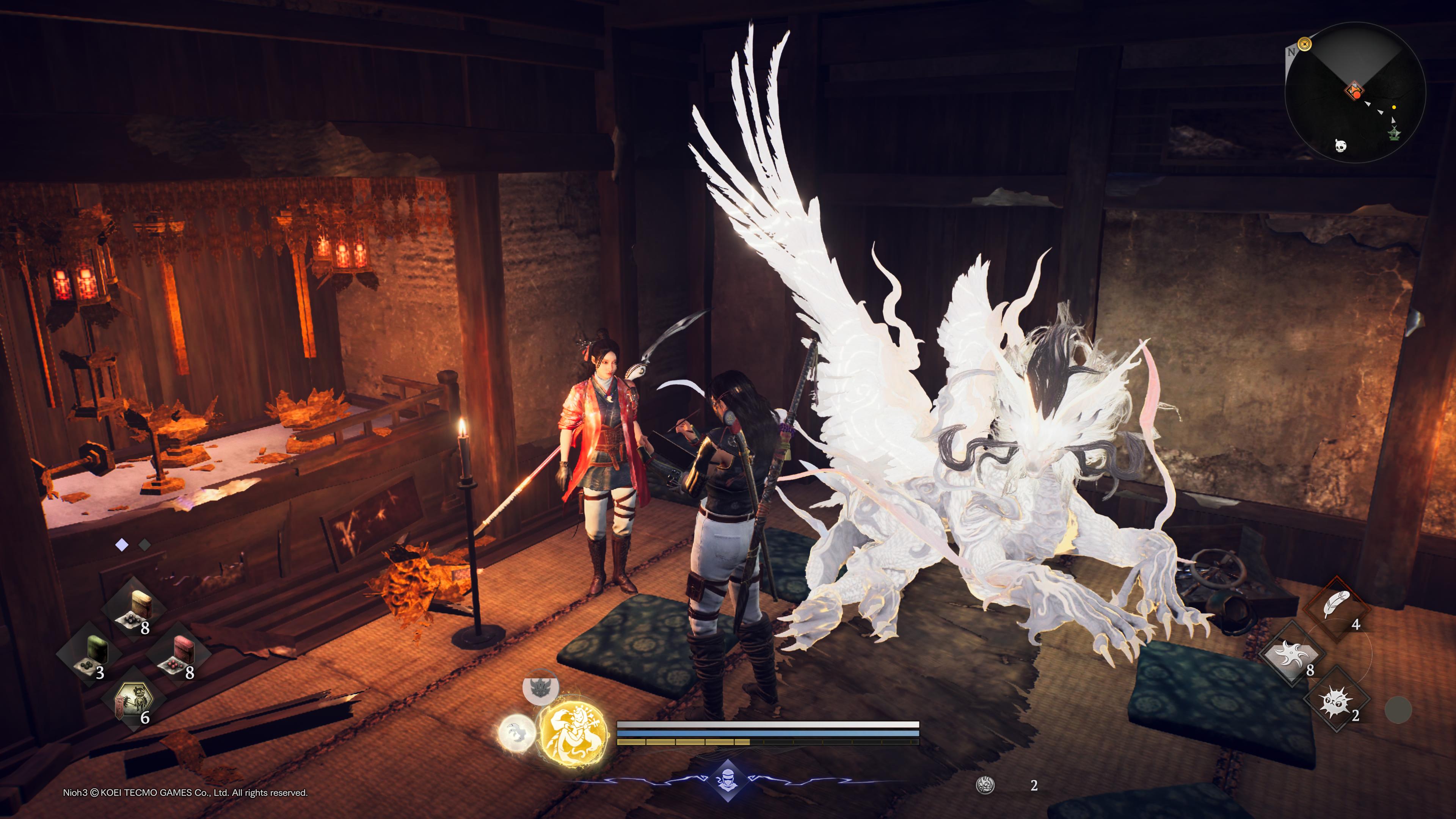
The circulating guardian spirit imagery and yokai engagement logs hint at deeper spirit-driven build diversity. Expect:
- More nuanced passive bonuses tied to guardian choice.
- Stronger synergies between yokai skills and weapon stances.
- A metagame where spiritual loadout is as decisive as raw stats.
For developers, this is a reminder that horizontal progression (more tools and synergies) often yields richer long-term engagement than pure vertical stat inflation.
Strategic Outlook
Nioh 3 is emerging as a combat R&D lab wrapped in a feudal dark fantasy shell. Every trailer and screenshot from this week reinforces a single throughline: if you step onto this battlefield, you’re signing up for a brutally fair exam in timing, resource management, and pattern recognition.
For players, that means a sequel that respects their time by refusing to waste it on empty spectacle. For designers, it’s a live case study in how to evolve a beloved, punishing system without dulling the edge that made it matter in the first place.
Sources and corrections
This archive entry does not have a verified article-source list. Images and video embeds alone are not evidence for every claim.
Found an error? Request a correction. Include the passage and a supporting source.
Your games, in one place
Keep up with Nioh 3
Follow this game to collect its posts in your personal feed. Come back to see what you missed.