Automated archive
AI Chaos Phase, Sony’s Vision Stack, and Take-Two’s Neural Reset
AI in game development just hit a reality check: out of 500+ tools tested, only a handful are truly production-ready, while Take-Two shutters its AI team and Sony doubles down on computer vision. This week’s Sector Intelligence Report breaks down what these moves mean for your pipelines, risk profile, and platform...
AI-generated summary. This archive article does not have a current recorded source check. Check linked sources before relying on details. Editorial policy

Watch: Transmitting Gameplay footage from the field: Xbox ecosystem promo spot
Sector Intelligence Report // Week of April 11, 2026
The last seven days have been a hard reality check for production-facing AI, a strategic power move for Sony’s computer vision stack, and a sobering reset for Take-Two’s internal R&D bets. For teams in active production, this is a week to tighten your tool evaluations, reassess AI dependency risk, and watch the platform holders’ long game.
500+ AI Tools Tested: Keywords Says Most of It Is Noise

Keywords Studios ran more than 500 AI tools through live game development pipelines and concluded that only “about half a dozen” actually help “in the right way.” For #gamedev teams drowning in AI pitches, this is a crucial data point.
Operational takeaways:
1. We’re firmly in the AI chaos phase
- The majority of tools added workflow drag instead of acceleration—extra review passes, integration overhead, and QA uncertainty.
- Many products are clearly optimized for demos, not for sustained production in a real build environment.
2. Benchmarking > branding
- Teams should treat new AI tools like any other middleware: demand hard metrics.
- Practical tests to run before rollout:
- Latency under load: Can it keep up with real asset volume?
- Error rate: How often does output need manual correction?
- Version control behavior: Does it play nicely with Git/Perforce and your CI/CD?
3. Risk profile for #indiegame teams
- For small studios, a bad AI integration can be a schedule trap. The report reinforces a conservative stance: pilot with one vertical (e.g., concept iteration or localization drafts), then expand only if it proves net-positive.
This is a moment to build AI evaluation frameworks, not just AI wishlists. The signal from Keywords: only a tiny slice of the market is truly production-ready.
Take-Two Wipes Its AI Division: R&D Retreat or Vendor Pivot?
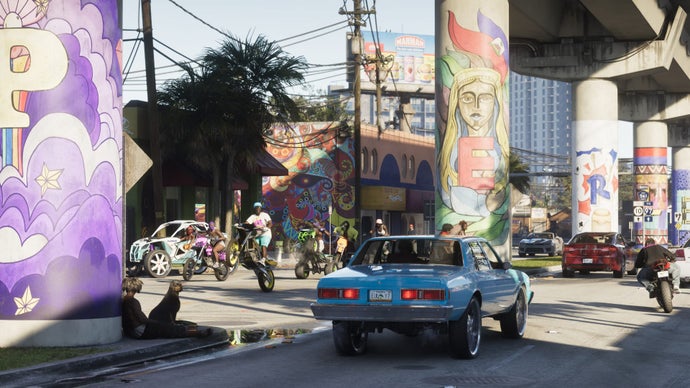
Take-Two Interactive has reportedly eliminated its internal AI team as part of a broader restructuring. Coming in the same cycle as the Keywords data, this looks less like a coincidence and more like a recalibration of how publishers want to engage with AI.
1. From internal labs to outsourced stacks
- The move suggests a pivot toward external vendors, licensed models, and off-the-shelf platforms instead of bespoke in-house research.
- For toolmakers, this is both opportunity and warning: publishers may prefer plug-and-play services but will expect battle-tested reliability and clear IP guarantees.
2. Impact on AAA production pipelines
- Internal AI R&D often fuels experimental systems—adaptive NPCs, procedural narrative, next-gen animation blending.
- With that function trimmed, expect:
- More standardized AI use (content support, localization, QA triage) rather than headline-grabbing experimental features.
- Tighter scrutiny on any AI that touches narrative, likeness, or union-sensitive roles.
3. What this means for smaller studios
- If large publishers are stepping back from speculative AI R&D, #indiegame teams should be even more cautious about betting core systems on unstable tooling.
- Safer bets for now: AI as assistive infrastructure (bug triage, analytics, basic asset iteration) rather than as the core design pillar of a project.
Sony Locks In Cinemersive Labs: Vision, Capture, and XR as Strategic High Ground
Sony’s acquisition of Cinemersive Labs, an AI and computer vision company, is a different flavor of AI play—less about generic productivity tools and more about owning the imaging and immersion stack end-to-end.

1. Why this matters to devs
- Expect better capture pipelines, smarter body/face tracking, and more robust XR input across the PlayStation ecosystem.
- For teams already invested in PS VR2 or future XR projects, this could translate into:
- Higher-fidelity mocap with fewer markers.
- More stable skeletal tracking for indie-scale motion setups.
- Potentially new SDK hooks for environment-aware or camera-aware gameplay.
2. Platform differentiation via perception
- While some publishers are stepping back from broad AI bets, Sony is doubling down on perceptual tech—the layer that understands player movement, gaze, and space.
- This strengthens Sony’s position not just in games but across film, TV, and virtual production, which may lead to more cross-pollination tools reaching devs.
3. Strategic read for studios
- If you’re targeting multiple platforms, treat Sony’s move as a signal: next-gen immersion will be heavily camera- and vision-driven.
- Teams experimenting with mixed reality, volumetric capture, or performance-driven gameplay should track Sony’s SDK and middleware announcements closely.
Xbox Signals: Showcase Absences and a Curious Promo Glitch
The Xbox side of the board delivered two softer, but still notable, signals:
-
Strategic absences in the 2026 Xbox showcase grid
- Several first-party studios are expected to sit out the 2026 window—likely due to recent launches, long-cycle R&D, or deep stealth production.
- For #gamedev market watchers, that implies:
- A staggered reveal strategy rather than one monolithic blowout.
- Potentially longer marketing runways for already-announced titles, as they carry more of the showcase weight.
-
A visual anomaly in a current Xbox promo
- One ongoing Xbox ad reportedly contains a single visual inconsistency that clashes with the usual ecosystem logic.
- Whether it’s an editing oversight or deliberate viral bait, it underscores how brand continuity and UI/UX coherence are now part of the core player trust fabric.
- For devs, especially those building cross-platform UI: small visual mismatches can become big community talking points.
Actionable Intelligence for This Week
- Treat AI tools as critical infrastructure, not magic: Build internal evaluation checklists and only greenlight tools that clear measurable productivity thresholds.
- Watch publisher behavior, not just product announcements: Take-Two’s retrenchment and Sony’s acquisition show two diverging AI strategies—generic productivity vs. specialized perception.
- For #indiegame teams: Focus AI use on low-risk, high-ROI areas (text support, QA, analytics) while keeping core creative systems under human control.
- For all studios: Keep an eye on platform-holder moves (Sony’s vision stack, Xbox’s marketing cadence) as early indicators of where toolchains and expectations will shift next.
The common thread: AI in game development is leaving the hype deck and entering a harsher, metrics-driven phase. Studios that survive this transition will be the ones that treat every new tool, vendor, and platform feature as something to be stress-tested, not just demoed.
Sources and corrections
This archive entry does not have a verified article-source list. Images and video embeds alone are not evidence for every claim.
Found an error? Request a correction. Include the passage and a supporting source.